Audi Q7 Air Suspension Valve Block: Choosing the Correct Part
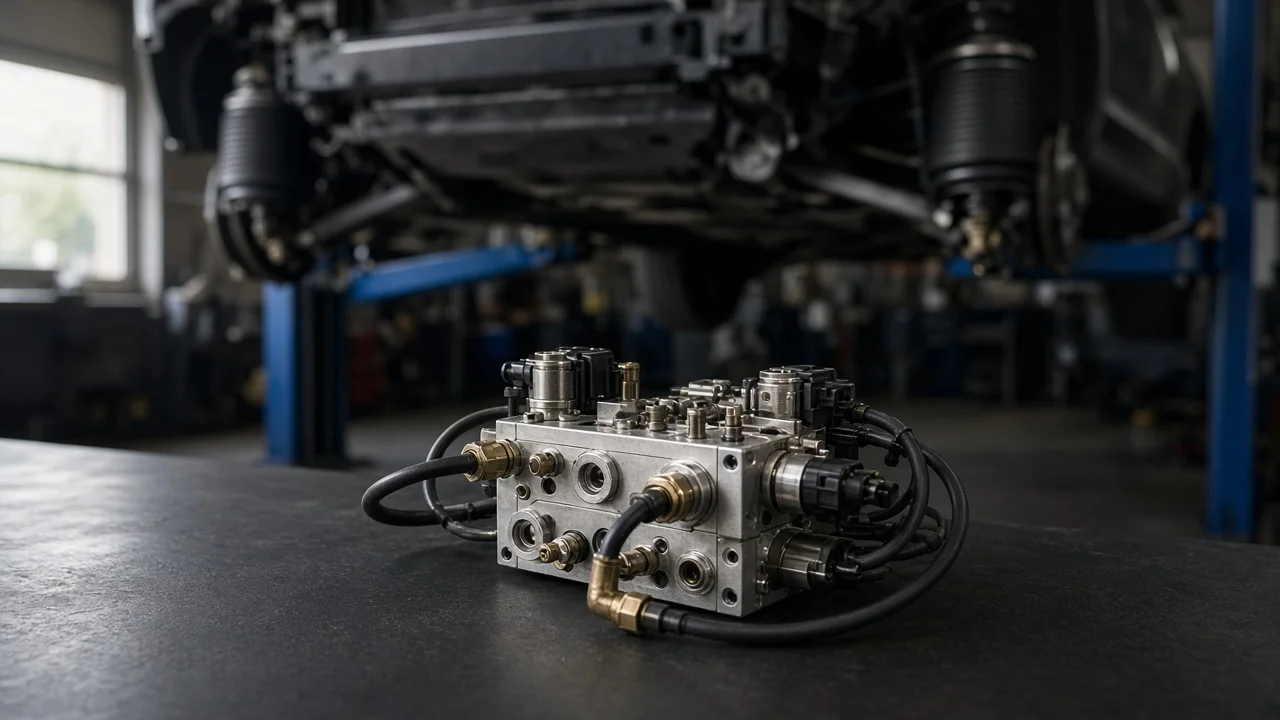
When an Audi Q7 settles at one corner overnight, refuses to reach its normal height or keeps the compressor running longer than usual, the air suspension valve block is one of the parts worth checking. A replacement only fixes the problem if the fault is confirmed first and the new unit matches the generation, equipment and original part fitted to your vehicle. This guide explains how to narrow the choice before you spend money.
Define the job the replacement must do
The valve block is the distribution point of the air suspension system. Air from the compressor passes through it, and electrically controlled solenoid valves inside the block open and close to fill or vent individual air springs and, where fitted, the pressure reservoir. On many designs the block also houses a pressure sensor that reports system pressure to the suspension control module. When a valve sticks, leaks internally or loses its electrical signal, the module can no longer hold or adjust ride height correctly at one or more corners.
Before buying anything, confirm that the block is actually at fault. Similar symptoms come from a leaking air strut, a cracked air line, a tired compressor or a faulty height sensor. A scan of the suspension control module for stored fault codes is the starting point, followed by a leak test of the lines, fittings and block using a soapy water solution while the system is pressurized. If one corner drops while the others hold, checking whether the leak is at the strut or at the corresponding valve port saves you from replacing the wrong component. Note how you use the vehicle as well: a Q7 that tows or regularly carries heavy loads asks more of the system, which makes a durable, correctly specified part more important than a cheap stopgap.
Check compatibility before ordering
The Q7 has been built in more than one generation, commonly identified by the platform codes 4L and 4M, and air suspension was optional on both. Do not assume a valve block interchanges across generations or across different suspension packages within a generation. The most reliable reference is the part number printed on the label of the block currently fitted to your vehicle, cross-checked against the vehicle identification number with a dealer parts department or a parts catalog that decodes the VIN. Original part numbers are sometimes superseded by revised versions, so a different final letter or suffix is not necessarily wrong, but the supersession should be confirmed rather than guessed.
Beyond the part number, compare the physical interfaces. Count the air ports and confirm the line connector type and size match your existing lines. Check the electrical connector shape and pin count, and whether the original unit contains an integrated pressure sensor that the replacement must also include. Look at the mounting points, bracket design and rubber isolators: a block that fits electrically but needs a modified bracket can transmit vibration or chafe against nearby components. Clear photographs of the listed part from several angles, compared directly with your removed unit, catch many mismatches before installation.
Features that affect the choice
Replacement valve blocks generally fall into four groups. Genuine Audi parts carry the original part number and usually the highest price. Parts from the original equipment supplier may be made to the same design but sold without Audi branding. New aftermarket units are produced by other manufacturers to fit the same application, with quality that varies between brands. Remanufactured blocks are used cores that have been cleaned, resealed and tested, and their value depends heavily on what the rebuilder actually replaces, such as solenoids, seals or the pressure sensor. Each option can be reasonable; the deciding factor is how well the seller documents fitment and what happens if the part fails.
Treat labels such as OEM quality, plug and play or premium grade as claims, not evidence. Useful evidence includes a stated cross-reference to the original part number, a clear list of what is included, such as connector seals, O-rings or a mounting bracket, a written warranty with its length and conditions, and a return policy that covers electrical parts. For remanufactured units, ask whether a core return is required and what testing is performed. If a listing cannot answer these questions, it is difficult to judge whether a lower price represents genuine savings.
Limitations and ownership costs
A new valve block cannot fix a leaking air spring, a worn compressor, a damaged line, a faulty height sensor or a control module problem. It also does nothing for worn suspension joints: if the vehicle sits unevenly or handles poorly because of joint play in control arms or bushings, that needs separate inspection. Moisture is a common underlying issue in air suspension systems. If the compressor's air dryer is saturated, water can reach the valve block and corrode the solenoids, so a replacement block fed by a failing dryer may not last. Inspect the compressor and dryer condition as part of the same job.
Installation requires the system to be depressurized before any line is disconnected, and the reservoir may still hold pressure after the springs are vented. Proper vehicle support on rated stands at the manufacturer's lifting points is essential, because the air springs should never be relied on to hold the body while you work. Follow the model-specific procedure and fastener specification from the service information for the mounting bolts and line fittings, and fit new seals where the procedure calls for them. Depending on the vehicle, a diagnostic tool may be needed to refill the system, clear faults and check or adapt ride height. If ride height has been adapted or was incorrect for a long period, a wheel alignment check afterward is a sensible way to confirm the vehicle sits and tracks as intended.
Budget beyond the part itself. Possible extra costs include connector seals, damaged line fittings, a compressor relay or dryer if they are implicated, diagnostic labor and the alignment check. Comparing quotes on the total job rather than the block price alone gives a more realistic picture.
Build a practical shortlist
Once the fault is confirmed, work through a short set of questions for each candidate part. Does it match the original part number or a confirmed supersession for your VIN? Does it have the same number of ports, the same line connectors and the same electrical connector? Does it include the pressure sensor if your original unit had one? Do the bracket and mounting points match your removed block? What seals and hardware come in the box? How long is the warranty, what does it exclude, and can an electrical part be returned if it turns out to be incorrect? For remanufactured units, what components were replaced and is a core charge involved?
Keep two or three parts that answer all of these questions clearly, then choose based on warranty support and total installed cost rather than headline price. Pairing the correct valve block with a healthy compressor, dry air supply and leak-free lines gives the repair the best chance of restoring stable ride height for the long term.