Audi Manual Transmission Models and Years for US Used Buyers
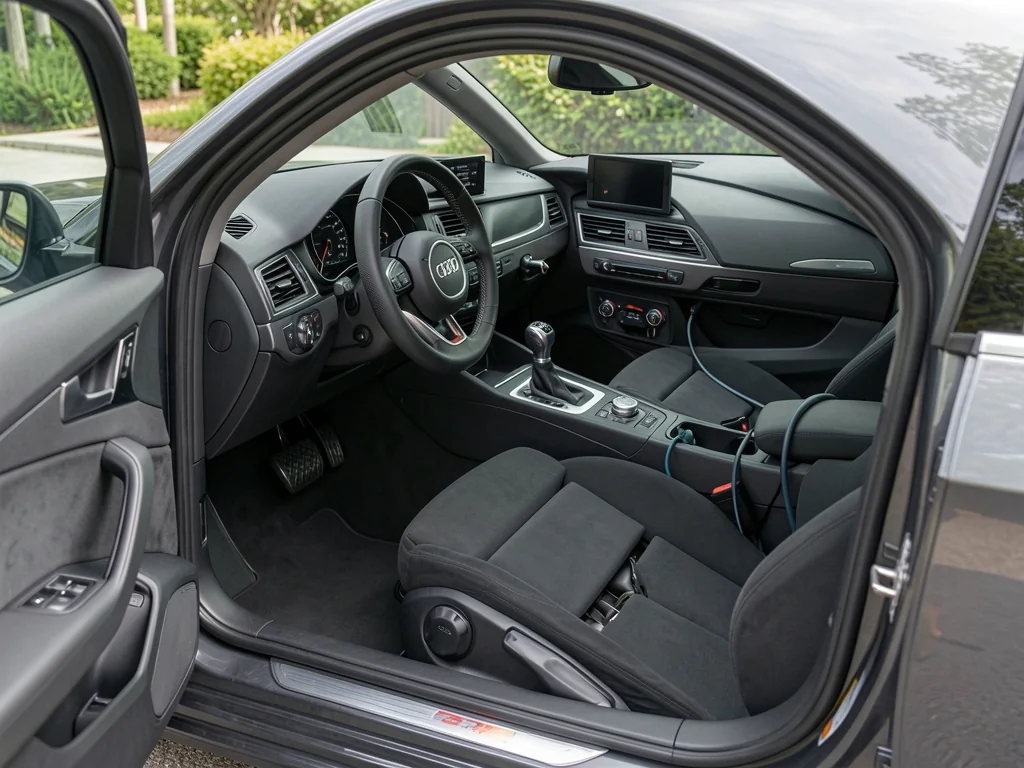
Used shoppers hunting an Audi manual transmission still have a defined US-market pool, limited to older generations and a handful of body styles. A clutch pedal and a six-speed manual distinguish a true stick-shift car from paddle shifters or an automatic's manual mode. Matching the listing to factory build information, model year, and US-market specification is the way to avoid imported exceptions and later automatic-only cars.
Identify US-Market Audi Manual Options by Model Year
This guide treats US-market specification as the default. Overseas manuals, gray-market imports, and conversions are exceptions and should be labeled as such. Among the five nameplates buyers search most often, a factory clutch-operated gearbox was sold on selected A4, A5 coupe, S4, and TT RS cars. A factory manual S3 was not offered to US dealers. Body style and drivetrain still matter, because a sedan, wagon, and coupe can differ even in the same model year.
Used listings mix model year, registration year, and generation codes such as B8 or 8J, and those labels are not interchangeable. A car titled a year after production can look newer than its factory build, and generation names overlap during changeover years. Photographs of three pedals remain the quickest visual check. Paddle shifters and an automatic's manual mode only change how a dual-clutch or torque-converter unit is shifted; they do not prove a clutch pedal is present.
Audi A4 Manual Years and Configuration Limits
US buyers looking for a manual transmission A4 generally find three-pedal cars from the B5 through B8.5 generations, covering about the 1996 through 2016 model years. Later B9 A4 cars sold here used dual-clutch or automatic units only. Within those earlier generations, availability still varied by engine and drivetrain, and a 2.0-liter turbo sedan with a six-speed manual was a common B7 and B8 combination. Not every A4 of those years left the factory with a clutch.
Confirm an individual A4 transmission manual listing with factory build information, the transmission code on the build sheet, and interior photographs that show a clutch pedal rather than a manual-mode gate. Service records that mention clutch work, fluid changes, or linkage repairs help show how the car was used. On a seller-approved test drive, note whether engagement is progressive and gears select cleanly at ordinary speeds; unusual noises still need a technician's diagnosis, not a parts conclusion.
Audi A5 Manual Availability by Body Style
A factory Audi A5 manual transmission in US trim is a first-generation B8 coupe story, not a family-wide option. Those coupes, sold here from the 2008 model year into the mid-2010s, could be ordered with a six-speed manual on selected 2.0-liter turbo cars. The US A5 Cabriolet did not carry that same three-pedal catalog, and the A5 Sportback arrived later as an automatic-only US product. A European Cabriolet or Sportback listing is not proof of domestic availability.
Imported ads and overseas specification sheets often list manuals that never appeared on a US window sticker, especially for Cabriolet and Sportback variants. Before scheduling a viewing, ask for factory build information, the transmission code, and cabin photographs that show three pedals and the shift pattern. A headline that simply says manual can mean paddle-shift S tronic. Matching VIN-based build data to the car in the photos is the practical filter, because badges travel more freely than US-market gearboxes.
Audi S3 Manual Searches and Market Restrictions
An Audi S3 manual transmission search in the United States usually ends at a market restriction. Factory US S3 cars, introduced here in the mid-2010s as the 8V generation, were dual-clutch automatics. A clutch-pedal S3 did exist elsewhere: European 8V cars of roughly the 2013 through 2020 period could be ordered with a six-speed manual, and earlier 8P S3 models sold in Europe also used manuals. Those generations were not US dealer cars, so country of original sale is the first filter.
Paddle shifters and a console selector marked for manual mode are normal on US S3 dual-clutch cars and do not hide a clutch pedal. If a seller claims an imported or converted manual S3, treat original specification, modification records, and registration paperwork as the evidence. Confirm the VIN against factory build information, note whether any conversion was documented, and verify that the car can be titled in the buyer's state before traveling to see it.
Audi S4 Manual Generations and Final US Model Years
Several S4 generations left US dealers with a factory six-speed, then the option ended. B5 through B7 S4 cars of the 2000s offered a six-speed manual, with sedans throughout and wagons or convertibles on some of those generations. The B8 S4, sold here from 2010 through 2016, kept a six-speed on the supercharged V6 sedan only. Later B9 S4 cars here are dual-clutch automatics, so a newer listing with paddles is not a stick-shift S4.
Factory build information and the original transmission code show whether the S4 left as a three-pedal car. Service records then help establish whether that gearbox is still fitted, because a later swap would not always show in exterior badges. Clutch engagement, shift resistance, and unusual noises are observations to record, not proof a particular part has failed. A grinding gear or high bite point can come from the clutch, linkage, mounts, or the gearbox, so diagnosis belongs to a shop.
Audi TT RS Manual Years and Listing Verification
The TT RS search is narrower still. US cars with a factory Audi TT RS manual transmission are the 8J coupe of the 2012 and 2013 model years, sold here with a six-speed manual. That US-market specification does not extend to the later 8S TT RS, which arrived as a dual-clutch automatic. Overseas 8J cars included a roadster and, in some catalogs, different gearbox pairings, so a European listing is not a US window sticker.
Confirm TT RS identity with the VIN, factory build information, and the transmission code rather than RS badges or a headline that only says manual. Cabin photographs should show a clutch pedal. Because these cars are frequently modified, clutch replacement records and documented drivetrain work belong in the file before a deposit. A rebuilt clutch or a different flywheel can change pedal feel without proving the gearbox is original. Treat any mismatch between the build sheet and the car as a reason to pause.
Check a Used Manual Audi Before Committing
Before traveling, match the VIN to factory specification, confirm the transmission code, and obtain three-pedal photographs plus service records and seller disclosures. On a used manual transmission Audi, those documents should agree with the car: same model year, same drivetrain, and a clutch pedal where the build sheet says one belongs. At the viewing, check identity details such as the VIN plate, then sit in the cabin and verify the shifter and pedal layout before the engine is started.
A seller-approved test drive should stay within ordinary use: smooth clutch engagement, consistent shifting in traffic, a clear instrument cluster, and no unexpected noises. Skip launches, clutch abuse, and aggressive drivetrain tests. A slip, grind, or rattle is a reason to investigate, not a diagnosis that the clutch or gearbox has failed, because linkage, hydraulics, mounts, and dual-mass flywheels can produce similar symptoms. Commission an independent pre-purchase inspection and obtain a written estimate for any findings before agreeing to buy.