Audi Haldex Coupling: Which Models Use It and How to Identify It
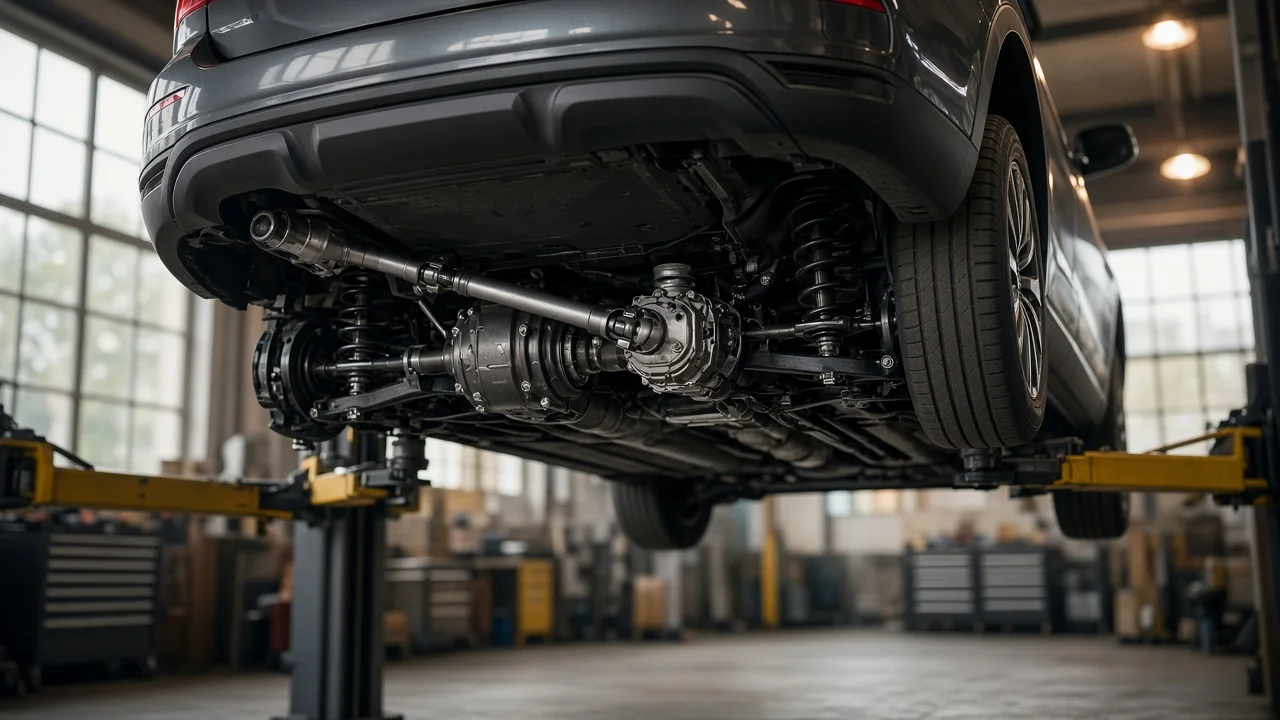
Audi uses the quattro name for several different all-wheel-drive systems, and only some of them rely on a Haldex coupling. Knowing which one your car has matters before you buy fluid, order parts or interpret a warning light. This guide explains which Audi models generally use a Haldex-type coupling, how it works, what changes the answer, and how to confirm the setup on your specific vehicle.
Which Audi models use a Haldex coupling
The short answer is that Haldex couplings are found on all-wheel-drive Audis with a transversely mounted engine, meaning the engine sits sideways in the bay. These cars share Volkswagen Group compact platforms. The group generally includes quattro versions of the A3 and S3, the RS 3, the TT quattro, TTS and TT RS, and the Q3 and RS Q3. In some markets outside the US, the Q2 quattro also belongs here. Audis with a longitudinal engine, mounted front to back, work differently. That covers the A4, A5, A6, A7, A8, Q5, Q7 and Q8 and their S and RS versions. Many of them use a self-locking center differential of the Torsen or crown-gear type, depending on model and year. Some newer four-cylinder versions use quattro with ultra technology, which is a clutch-based system but not a Haldex unit. The mid-engine R8 has its own driveline, and fully electric models drive each axle with electric motors.
Two qualifications matter. First, Audi rarely uses the word Haldex in its marketing; the car is simply badged quattro, and the Haldex business later became part of BorgWarner, so newer units may carry a different name on paperwork. Second, many of these models were also sold with front-wheel drive only, and those versions have no coupling at all. The model name alone therefore does not settle the question; the drive configuration of the individual car does.
How a Haldex coupling works
A Haldex-equipped Audi is front-wheel drive most of the time. A small transfer unit, often called the angle drive or power take-off unit, sits on the front transaxle and turns a propeller shaft that runs to the rear axle. The Haldex coupling sits between that shaft and the rear differential. Inside it is a wet multi-plate clutch pack. When the clutch is open, nearly all torque goes to the front wheels. When hydraulic pressure clamps the plates together, torque passes through to the rear wheels.
The earliest generations built hydraulic pressure mainly from the speed difference between the front and rear shafts, with an electronically controlled valve regulating it. Later generations use an electric pump that can build pressure before any slip occurs, managed by a control module that reads wheel speed, throttle, engine load and stability-control data. In every generation the system depends on clean fluid at the correct level, a working pump and valve assembly, and accurate signals from the rest of the car. Any of those can limit rear drive even when the clutch pack itself is healthy.
What changes the answer
Model generation and year change the details more than anything else. The same nameplate spans several body generations, such as the A3 in its 8L, 8P, 8V and 8Y forms, the TT as 8N, 8J and 8S, and the Q3 as 8U and F3. The coupling generation changed along with them and, in some cases, during a production run. Generation determines the fluid specification, whether there is a serviceable filter or pump strainer, how the pump and controller are built, and parts fitment. Components that look similar are often not interchangeable across generations.
Transmission type is a separate variable. A manual gearbox, an S tronic dual-clutch unit or a conventional automatic changes the front transfer unit and its service items, but it does not determine whether the car has a Haldex coupling. Keep shift behavior out of this diagnosis as well: harsh shifts, flare or slipping between gears point to the gearbox or its controls, not the rear coupling. Market also matters, because quattro availability for a given model and engine differs between the US and other regions.
How to identify the system on your Audi
Start with the engine layout. With the hood open, a sideways engine with the transmission at one end indicates a transverse layout; if that car is a quattro, it almost certainly uses a Haldex-type coupling. An engine running front to back rules Haldex out. Next, look underneath with the car safely supported. A propeller shaft running to the rear confirms all-wheel drive. On a Haldex car, a compact housing is bolted to the front of the rear differential, usually with an electrical connector and a small pump or control unit attached to it. A front-wheel-drive version has no propeller shaft or rear differential.
Paperwork and electronics give firmer confirmation. The vehicle data label, typically in the spare-wheel well or the service booklet, lists the build codes for that car, and a dealer can decode the full configuration from the VIN. A scan tool that can access Audi modules will usually show a separate all-wheel-drive control module on Haldex cars, listed as address 22 in common VAG diagnostic software. Stored diagnostic codes in that module can point toward a pump, sensor, pressure or communication fault, but a code identifies a circuit or condition, not a confirmed failed part.
What the owner can do
Check the service history for coupling fluid changes. Haldex fluid is separate from engine oil, transmission fluid and rear differential oil, and it is easy to overlook because it is not changed at every service. Use the fluid specification for your coupling generation rather than generic gear oil, and confirm whether your unit has a filter or pump strainer that should be cleaned or replaced at the same time. Neglected fluid and a clogged strainer are common reasons for reduced pump output.
Note how the car behaves and under what conditions. Front wheelspin on a wet or loose surface with no help from the rear, an all-wheel-drive or stability warning, or a car that feels like front-wheel drive under hard acceleration are worth recording. Less commonly, binding or scrubbing in tight, slow turns can appear. Before blaming the coupling, check that all four tires are the same size, brand and similar in wear, since mismatched tires can trigger complaints and faults. Read the stored codes, note when the symptom occurs, and take that information to the repair shop.
Repair options usually escalate in cost: a fluid and strainer or filter service, replacement of the pump, replacement of the control module or valve components, and finally a new or reconditioned complete coupling. Wiring, connector and software issues sit alongside these. The right option depends on what testing shows, so avoid ordering a pump or a complete unit on symptoms alone.
Limitations and next step
The model lists above describe general patterns, and exceptions exist across markets, model years and special versions. Fluid capacity, service intervals and part numbers are vehicle-specific, so confirm them by VIN through a dealer or a shop experienced with Volkswagen and Audi all-wheel drive before buying parts or fluid. If a warning light stays on, the car shows noise or vibration from the rear, or rear drive appears to be missing, have the system tested properly. Accurate diagnosis needs live data from the all-wheel-drive module and the ability to check pump operation, which goes beyond a basic code read.