Audi Brake Pad Replacement Cost: Parts and Labor
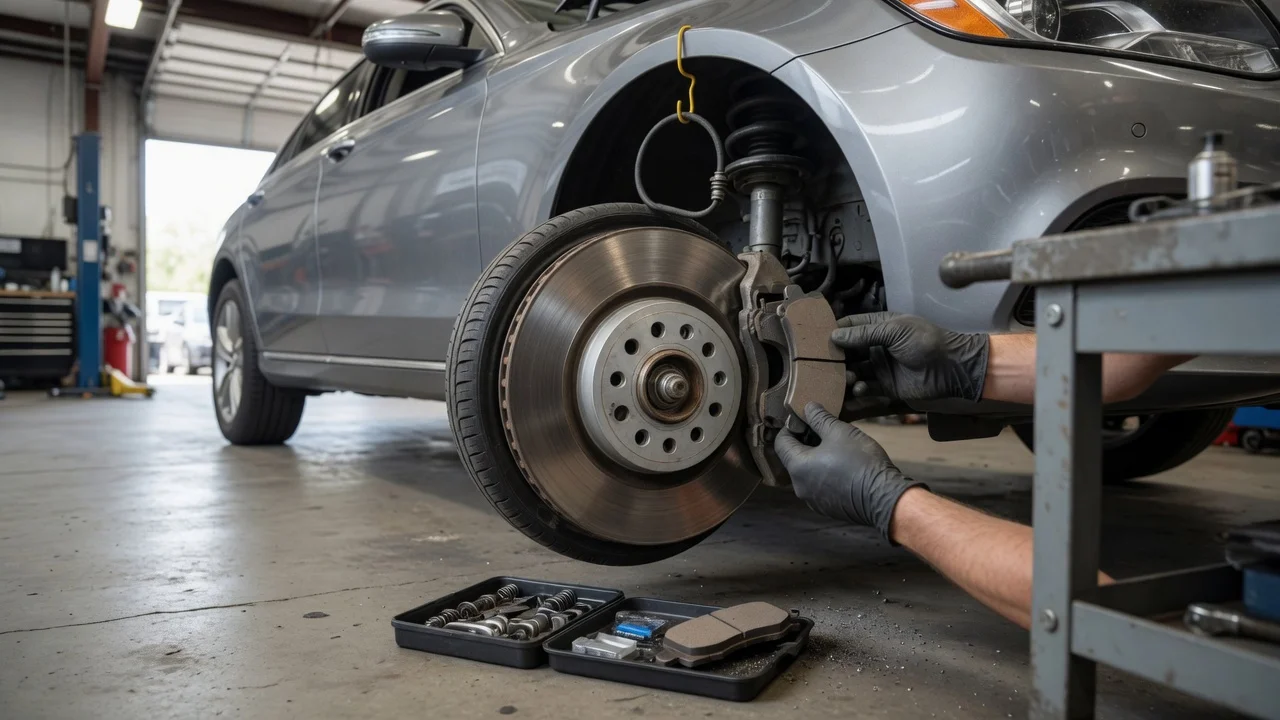
Audi brake pad replacement does not have one standard price. The bill depends on the model and year, whether the front or rear axle is serviced, the pad compound, whether rotors or hardware are replaced at the same time, and the shop’s labor rate. No verified parts or labor dollar figures are available in this article, so treat any quote as vehicle-specific rather than a published average.
What you are paying for
A pad job is the friction material that presses against the brake rotor when you apply the pedal. On most Audis that work is billed as parts plus labor, and often as a per-axle job: both front wheels or both rear wheels together, because pads on the same axle should wear at a similar rate.
Brake pads for one axle, usually sold as a set of four pads (inner and outer for left and right). Related hardware when it is included: pad clips, shims, anti-rattle springs, and sometimes wear-sensor leads. Labor to remove the wheels, unbolt the caliper, swap pads, retract the pistons, reassemble, and road-test. Shop supplies, taxes, and any environmental or disposal fees the invoice lists separately.
Many Audis use an electronic pad wear sensor on at least one corner per axle. If that sensor is due or damaged, it is a separate part. Some models also need a scan tool after the job so the parking-brake or pad-wear warning can be reset; that is labor time, not a pad itself.
Parts versus labor
Parts cost is the pads and anything sold with them. Labor cost is the time the shop books for the procedure on your chassis. Dealers often use genuine Audi or equivalent original-equipment pads and a published labor guide. Independent shops may offer original-equipment, original-equipment-supplier, or aftermarket pads at different price points, with labor that still has to cover caliper work, piston retraction, and a test drive.
Front pads usually cost more in labor and sometimes in parts than rear pads on the same car, because the front axle does more of the stopping work and the calipers and rotors are typically larger. That is a pattern, not a rule for every Audi. Confirm which axle is worn before comparing quotes.
Conditions that change the total
The same “brake pad replacement” line on an estimate can hide very different jobs. Ask which of the following apply before you treat two quotes as comparable.
Model, model year, trim, and engine: pad shape, sensor type, and caliper design differ across A3, A4, Q5, and other lines, and across generations of the same nameplate. Market and brake package: cars built for different regions, or with performance or larger brake options, can use different pad and rotor part numbers. Pad material: organic, semi-metallic, and ceramic (low-dust) compounds are priced and warrantied differently; performance pads can cost more and may increase rotor wear or noise. Rotors: if rotors are below minimum thickness, scored, or warped, shops commonly recommend machining where still legal and in spec, or replacement. Rotor work can exceed the pad line on the invoice. Caliper condition: seized sliders, leaking seals, or a parking-brake mechanism that will not retract adds parts and time. Electric parking-brake calipers on some Audis need a diagnostic tool to wind the pistons back. Wear sensors and clips: a broken sensor or missing hardware is extra parts. Four-wheel job versus one axle: replacing only the worn axle is normal if the other axle still has life; replacing all four corners at once raises parts and labor in one visit.
How to read a quote
A useful estimate names the axle, the pad brand and part number, whether sensors and hardware are included, whether rotors are reused, machined, or replaced, and the booked labor hours. If two shops disagree, the difference is often rotors, genuine versus aftermarket pads, or a dealer versus independent labor rate—not a hidden fee on the pads themselves.
Ask whether the quote is for pads only or for a “brake service” that bundles rotors. Also ask if the price assumes the calipers slide and retract freely. If the shop finds a seized caliper after the wheels are off, the total can change; a written inspection note on rotor thickness and caliper condition is the way to see that risk before you authorize extra work.
Choosing pads without a published price list
Match the pad to how you use the car. Daily commuting in mixed weather favors a quiet, low-dust compound that the manufacturer or a known original-equipment supplier rates for your exact brake system. Track or aggressive mountain driving may call for a higher-temperature pad, with more noise, dust, or rotor wear as the trade-off. Mixing pad types left to right on the same axle is a poor idea; replace the full axle set.
Compatibility is by chassis, model year, and brake option—not by the Audi badge alone. A parts lookup needs the VIN or a catalog that lists your brake package. If a listing only says it “fits Audi,” treat that as unresolved until the part number is checked against your car.
What to do next
Have the pads and rotors measured, not just glanced at. Pad thickness, rotor thickness against the stamped minimum, and whether a wear-sensor warning is already on the dash decide whether you can wait, replace pads only, or budget for rotors too.
Get the VIN and note the model year, engine, and any known sport or larger-brake option. Request written quotes for the same axle, with pad part numbers and a yes/no on rotors, sensors, and hardware. Compare dealer genuine parts against an independent shop using original-equipment-supplier or quality aftermarket pads, using the same job scope. Authorize extra caliper or rotor work only after thickness and condition are documented.
If you need a number for budgeting, only a quote tied to your VIN and inspection can supply it. Published “typical” ranges are not included here because they were not verified for this article and would not hold across models, markets, and shops.