Audi A4 Brake Pad Replacement: What Owners Should Know
Direct answer
Audi A4 brake pad replacement means removing worn friction pads from the front or rear brake calipers and fitting new pads designed for the vehicle. Actual pad life depends on generation, powertrain and driving style; Audi's wear indicators and service displays should be treated as guidance, not an absolute replacement schedule. The answer below covers model-year qualifications, wear symptoms, pad and hardware choices, the general replacement process and post-replacement care.
Why model year and specification matter
The A4 has been offered in multiple generations and trims, and brake hardware is not universal across all of them. Front caliper type can vary between standard single-piston sliding calipers and fixed multi-piston performance calipers on higher-output or sport-equipped cars. Pads are also shaped and sized differently between front and rear axles. Before buying parts, confirm the generation, model year, and whether the car has a wear sensor, because some pad sets include an electrical connector while others do not.
How long Audi A4 brake pads typically last
Audi publishes service interval guidance, but pad wear is not strictly mileage-based. Front pads usually wear faster than rear pads because the front axle handles more braking load. Typical replacement can occur anywhere from roughly 25,000 to 70,000 miles, with highway driving generally extending pad life and repeated stop-and-go driving shortening it. Heavier sedans, all-wheel-drive models and spirited braking also tend to shorten the interval.
Recognizing worn brake pads
Visual and audible signs
A metal squeal from the brake area is often caused by a wear indicator contacting the rotor, which is a deliberate warning that pad friction material is near its minimum. A grinding or scraping sound can mean the friction material is gone and the pad backing plate is contacting the rotor. Visible pad thickness can be checked through some wheel designs; when the friction material is only a few millimeters thick, replacement should be scheduled.
Electronic wear warnings
Some A4s use an electrical brake pad wear sensor that triggers a dashboard warning. When the sensor circuit is completed by pad wear, the system asks the driver to inspect the brakes. Replacing pads on these cars involves either transferring or renewing the sensor and clearing the warning after the repair. Not every A4 trim has this sensor, so replacement part selection should match the original harness.
What usually gets replaced at the same time
New pads are commonly installed with fresh fitting hardware, including anti-rattle clips and slider pins where applicable. Brake discs, or rotors, are often measured at the same time. If a rotor is below its minimum thickness specification, cracked, deeply grooved or unevenly worn, it should be replaced rather than reused. Reusing a worn or uneven rotor can reduce the benefit of new pads and cause noise or pedal feedback.
Pad material choices
Street-oriented replacement pads are generally available as semi-metallic, low-metallic or ceramic compounds. Ceramic and premium organic formulations often produce less visible dust and can be quieter in normal driving. Semi-metallic pads may offer stronger bite under repeated heat, though they can be noisier or dustier in daily use. The correct choice balances the owner's driving environment with the pad's friction behavior and the rotor's compatibility.
Basic replacement sequence
The general process is similar across most A4 brake configurations, but caliper design does affect specific steps. The following sequence describes the common procedure, not a vehicle-specific repair manual.
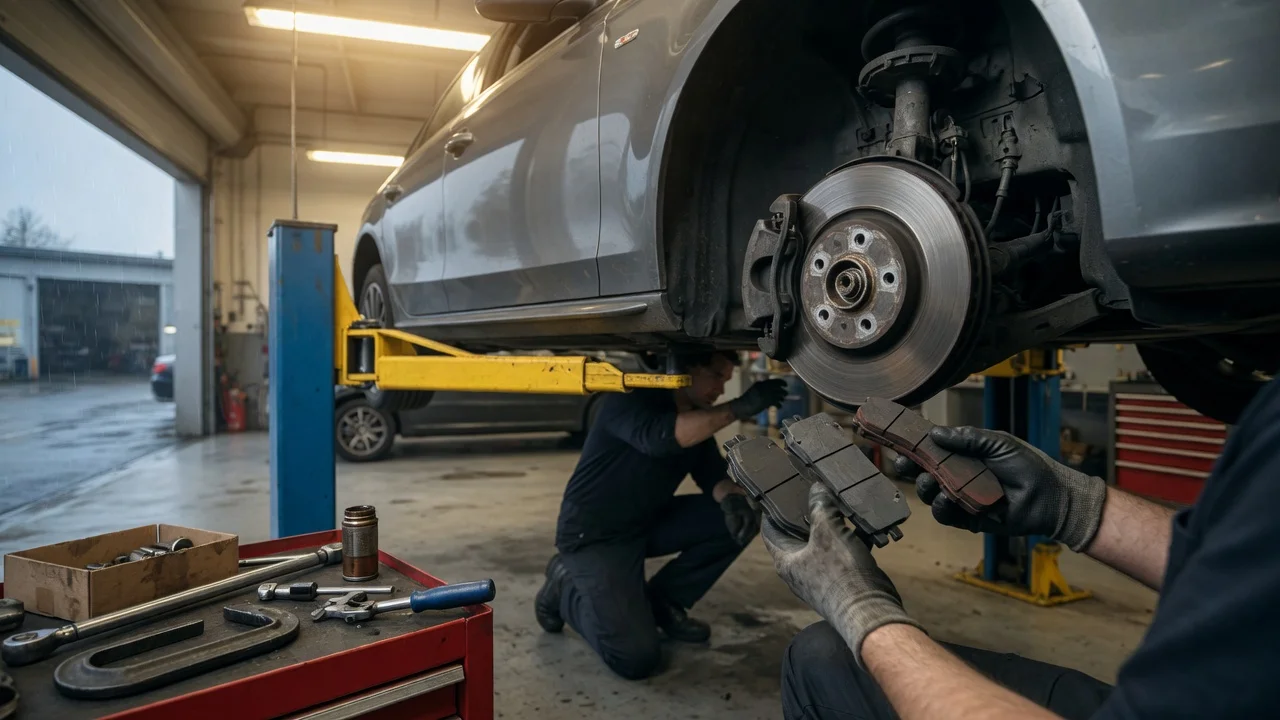
Raise and support the car safely, remove the wheel, and inspect the caliper, pads and rotor for obvious damage. Compress the caliper piston to create room for the new, thicker pads, using the correct method for the caliper type. Remove the caliper or caliper carrier fasteners as required, taking care not to strain the flexible brake hose. Remove the old pads and fitting hardware, noting their position before discarding them. Clean the caliper bracket and slider areas, then fit new hardware and pads in their correct positions. Reinstall the caliper and fasteners to the specified torque, and refit any wear sensor. Pump the brake pedal before driving to seat the piston against the new pads. Refit the wheel and confirm proper fluid level, then bed the pads gently according to the manufacturer's guidance.
Torque, tools and safety notes
Caliper bracket and caliper guide bolts have specific torque values that vary by generation and fastener size. A calibrated torque wrench is preferable to estimation. Because brakes are a safety system, the car must be supported on jack stands or a lift, never on a jack alone, and the wheel must be properly retorqued after the job. The exact fastener values and lubrication points should be checked against the applicable service information for the specific A4.
Bedding in new pads
Bedding, or burnishing, helps transfer a thin layer of pad material to the rotor so the brakes work evenly. A common procedure involves a series of gradual stops from moderate speed without coming to a complete halt, followed by a cool-down drive. Some pad and rotor manufacturers specify a particular bedding routine, so their instructions take priority. Avoiding hard or emergency stops immediately after installation reduces the chance of uneven material transfer.
When to expect a difference in feel
New pads can feel slightly softer or less immediate for the first few miles until the pedal is firm and the pad faces fully contact the rotors. If the pedal remains low, spongy or travels farther than before, the brake fluid level and hydraulic system should be checked before the car is driven. After replacement, periodic inspection during the first few hundred miles helps catch noise, dragging or uneven wear early.
Supported facts and gaps
This article addresses the question of Audi A4 brake pad replacement using general automotive brake system knowledge and clearly qualifies the statements by model year and specification. Specific torque figures, part numbers, and exact intervals are not supplied because no model-specific service data was provided. Substantive uncertainty exists for exact fitment on early cars, performance brake packages and vehicles with special braking systems. Owners should confirm the applicable part, procedure and torque values before beginning work.