Audi A4 Brake Booster Vacuum Hose: Choosing the Correct Part
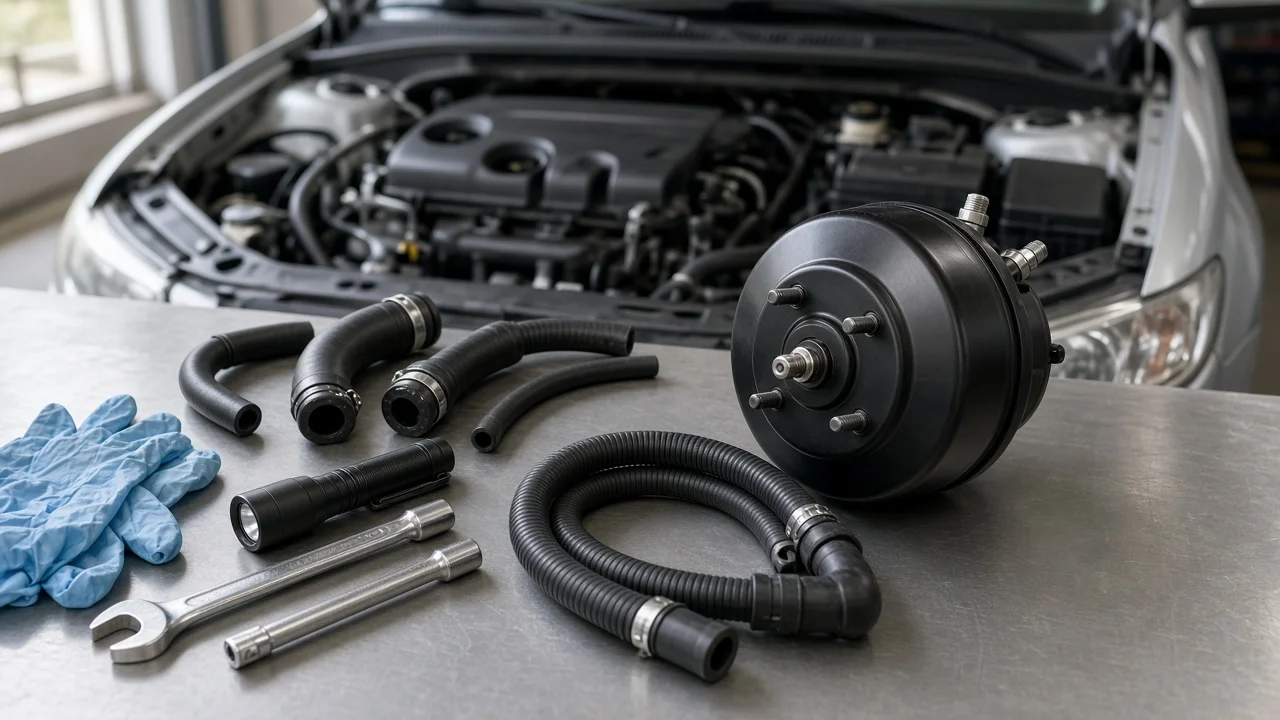
A hard brake pedal, a hiss under the hood or a lean-running fault code can all trace back to a cracked brake booster vacuum hose on an Audi A4. The replacement looks simple, but the correct part depends on generation, engine and vacuum source, and the hose often carries a one-way check valve that must match the original. This guide explains how to choose a hose that fits and works without assuming one part suits every A4.
What the vacuum hose has to do on your A4
The brake booster uses vacuum to multiply the force of your foot on the pedal. The vacuum hose links the booster to its vacuum source, and a one-way check valve, located either in the hose assembly or at the booster inlet, holds vacuum in the booster so assist remains available when source vacuum drops, for example under boost on a turbocharged engine or right after the engine stops. Depending on the A4 generation and engine, that source may be the intake manifold, a mechanical vacuum pump, or a combination with several branches. Diesel and many turbocharged direct-injection engines rely on a pump because manifold vacuum is weak or absent. Whatever the layout, the hose must seal tightly, resist heat and oil vapor, and keep its shape under vacuum without collapsing.
Before buying, confirm the hose is the actual fault. A common check: with the engine off, press the brake pedal several times to use up stored vacuum, hold steady pressure, then start the engine. In a working system the pedal sinks slightly as assist returns. Next, let the engine run, switch it off, wait a minute or two and press the pedal again; it should still feel assisted for at least one or two applications. A hiss near the booster or along the line, a cracked or swollen hose, a loose fitting or a check valve that passes air both ways points to the hose assembly. Lean fuel trim codes or a rough idle can also accompany a leak on engines where the line connects to the intake.
Treat a hard or inconsistent brake pedal as a safety fault. The hydraulic brakes still work without assist, but stopping takes far more pedal force and distance, which can catch any driver out in an emergency. Avoid normal driving until the cause is found and corrected, and have the car inspected by a qualified technician if you cannot confirm the repair yourself. Also weigh the practical side: access to the booster connection behind the engine can be tight, some routings pass under covers or the intake, and aging plastic connectors may break during removal. Decide early whether you are replacing a single hose section or the complete line with its valve and fittings.
Check compatibility by vehicle and engine
Model year alone is not a reliable guide. The A4 sold in the US has spanned several generations, usually referred to by platform codes such as B5 through B9, and within each one Audi used different engines, vacuum sources and production changes. Two cars from the same year can need different hose assemblies. The most dependable route to correct vehicle fitment is a parts lookup by the 17-character VIN, through a dealer parts counter or a supplier whose catalog accepts VIN searches. The engine code, printed on the vehicle data label that Audi typically places in the spare wheel well and in the service records, helps confirm the result. If the original part carries a printed part number, compare it with the catalog listing as a cross-check.
Fitment comes down to the connections at each end and everything between them. At the booster, the line may push into a rubber grommet through a check valve elbow, clip onto a fixed port or use a quick-connect coupling. At the source end it may slide over a manifold nipple, clip to the vacuum pump or join a plastic distribution line. Compare inside diameter, overall length, preformed bends and any branch tees that feed other vacuum consumers. If your original has an extra port, a sensor connection or a molded mounting clip, the replacement needs the same features, or something on the engine will be left disconnected or unsupported.
Pay particular attention to the check valve. It must let air flow from the booster toward the vacuum source and block flow in the other direction. Most valves carry an arrow or similar marking; follow the marking on the new part and compare its orientation with the original before removing the old line. A valve installed backward blocks assist entirely, leaving a hard pedal from the first stop. If the valve is a separate piece, a simple blow test, with air passing in one direction only, confirms it works before installation.
Features that actually affect the choice
Replacement options generally fall into three groups: genuine Audi assemblies, parts from companies that produce original equipment components, and aftermarket parts built to match. Any of these can be correct; what matters is that the listing names your exact model, year range and engine, and that its part number cross-references to the original. Labels such as heavy duty, OE quality or direct fit are claims, not evidence. Useful evidence is a VIN-confirmed part number, clear photos of both ends and the valve, and a seller who states fitment exclusions.
Construction matters more than branding. A preformed molded hose or rigid nylon line holds its route away from hot or moving parts, while generic bulk hose cut to length can kink, chafe or collapse if its wall is too thin for vacuum service. Material should be rated for vacuum and for the heat and oil vapor found in the engine bay; decorative hoses chosen for appearance may not meet that standard. Complete assemblies with an integrated check valve and connectors cost more but avoid mixing old brittle fittings with new hose. Check whether retaining clips, grommets or O-rings are included, since reusing hardened seals is a common source of repeat leaks.
Limitations and ownership costs
A new hose restores a sealed vacuum path and nothing more. It cannot repair a booster with a leaking internal diaphragm, a weak vacuum pump, a faulty master cylinder, low or contaminated brake fluid, a sticking caliper, or brake pads and brake rotors worn past their wear limits. If the pedal is still hard, spongy or travels too far after the hose is replaced, the problem lies elsewhere and needs proper diagnosis rather than more parts. Replacing only the vacuum line does not open the hydraulic system, so no brake bleeding is needed for that job; work on the master cylinder or booster itself is different and requires a correct bleed procedure.
The hose is usually a modest expense compared with a booster or vacuum pump, but the total can grow. Aging plastic quick-connects and nearby lines often crack when disturbed, so plan for replacement clips or neighboring sections. Limited access on some engine layouts can add labor time if a shop does the work. After installation, listen for hissing, confirm a steady idle, clear and recheck any stored fault codes, and repeat the pedal assist test before a careful low-speed drive in a safe place. During routine brake service, while the friction material, rotors and fluid are checked, a quick look at the vacuum hose for cracks, softness and secure fittings can catch a leak early.
Build a practical shortlist
Use this checklist to narrow candidates without relying on rankings. Confirm the part number by VIN and engine code. Match the booster-side and source-side connections, including any quick-connect type. Verify length, bends, branch ports and sensor connections against the original. Confirm a check valve is included if your original has one, and note its flow direction. Look for material described as suitable for vacuum, heat and oil vapor. Check whether clips, grommets and seals come with the part. Finally, review the seller's return policy, since an assembly that looks right in photos may still differ at one fitting.
If two candidates pass every point, choose the one with clearer fitment data and more complete hardware rather than the lowest price or the loudest marketing language. Keep the old hose until the new one is installed and tested, so you can compare connectors and routing if something does not seat correctly.