Audi 0B5 Transmission Adaptation Procedure
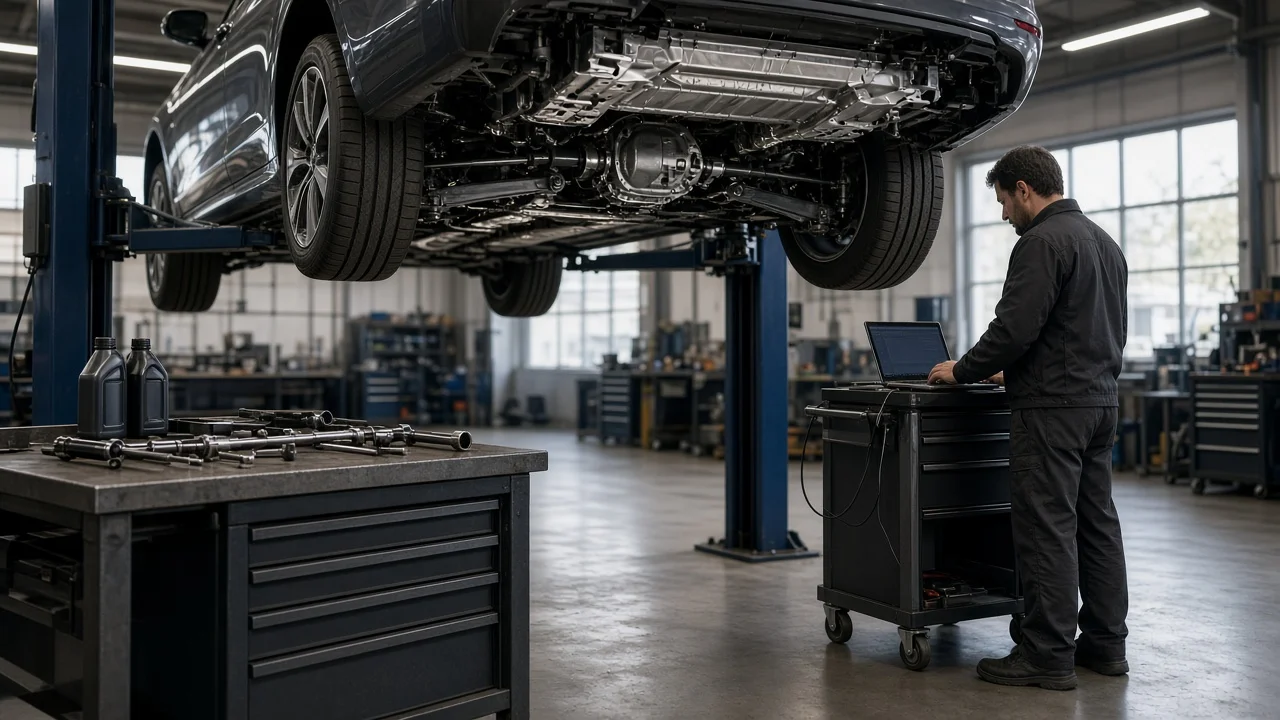
Adaptation on the Audi 0B5 is a learning routine. The transmission control unit measures how the clutches and shift actuators actually behave and stores those values so shifts stay smooth. It is not a repair in itself. It belongs after specific work such as a mechatronic replacement, clutch work, a software update or a correctly performed fluid service. This guide explains what the procedure involves, what conditions it depends on and when an owner should hand the job to a transmission specialist.
The short answer on 0B5 adaptation
The 0B5 is the seven-speed dual-clutch S tronic used on a range of longitudinal-engine Audi models. Its adaptation is done with a diagnostic tool that can access the transmission control module and run its basic settings functions. Typical candidates are the factory system or a capable aftermarket tool. The usual sequence has three parts. A static stage runs with the engine idling and the vehicle stationary, while the module learns actuator and clutch values. A driving stage follows, during which the module refines clutch engagement under real load. Finally, the stored fault memory is checked to confirm the routine completed without errors.
The exact steps, the order of functions and the required conditions depend on the transmission version, its software and the tool being used. Follow the instructions the tool presents for that specific vehicle rather than a generic checklist. Adaptation also cannot fix a mechanical or hydraulic fault. If a clutch is worn beyond its limits or the mechatronic unit has an internal problem, the routine may abort, set diagnostic codes, or finish while the symptom remains.
How the 0B5 learns its clutches and shifts
A dual-clutch transmission works like two gearboxes sharing one housing. One clutch drives the odd gears and the other drives the even gears and reverse. The 0B5 uses wet multi-plate clutches running in fluid. The mechatronic unit combines the control electronics with the hydraulic valves and pressure sensors. It preselects the next gear on the inactive shaft, then hands torque from one clutch to the other. For that handoff to feel seamless, the module has to know precisely how much pressure starts each clutch transmitting torque, often called the engagement or kiss point. It also needs to know where each shift actuator reaches its end positions.
Those values drift as clutch friction material wears and as the fluid ages. Replacing parts can also change them. The module adjusts continuously during normal driving, but a formal adaptation resets the baseline and relearns it under controlled conditions. Right after a reset or a parts change, shift behavior can feel firm, slow to engage from a stop or slightly uneven. That is expected until the learning is complete. A harsh shift that persists after a properly completed adaptation points to something else that needs diagnosis.
What changes the procedure and the result
Start by confirming the transmission type and exact configuration. The code on the transmission identification plate and the vehicle's build data tell you which 0B5 variant is fitted. Engine pairing, drivetrain layout and software level all affect which adaptation functions are available and how they run. Fitment of replacement parts matters too. A replacement or repaired mechatronic unit or clutch pack must match the transmission version, and some replacement units need software coding before adaptation will succeed.
Operating conditions are the most common reason a routine refuses to start or aborts partway. The tool normally checks fluid temperature, engine speed, selector position, brake application and supply voltage before each step. Fluid temperature must sit inside the specified window, and the battery should be supported by a suitable charger so voltage does not sag. The driving stage needs a road where you can safely make gentle starts, upshifts through the gears and coasting downshifts as the tool directs.
Fluid condition also affects the result. Many versions of this transmission keep more than one fluid compartment, and each compartment has its own fluid specification and fill procedure. On a dual-clutch unit, level checks are usually temperature-dependent. A wrong fluid or an incorrect level can change clutch behavior enough to spoil an adaptation, so confirm both against the service information for that exact transmission.
What the owner can do before and after a relearn
Before anyone resets adaptation values, read and save the diagnostic codes from the transmission and engine modules, including freeze-frame data if available. Clearing values erases useful evidence, and it can make the car drive worse until the relearn is finished. Write down the shift behavior you notice and when it happens. Useful detail includes cold versus warm, which gear change, light versus heavy throttle, and pulling away versus rolling. A specific description narrows the diagnosis far more than a general complaint about rough shifting.
Gather the service history. The fluid change intervals, any software updates, and past mechatronic or clutch work all help explain whether adaptation is the logical next step or a step that should follow another repair. If you have a capable scan tool and are comfortable with it, you can run the routine yourself after work that calls for it. Make sure the battery is supported, the fluid is at the correct level and in the specified temperature range, and every on-screen instruction is followed in order. Afterward, complete the driving stage as directed, recheck for codes and note whether the original symptom has changed.
Treat repair options as the outcome of diagnosis, not of a symptom alone. Shudder from a stop, for example, could point toward fluid condition, a software issue, clutch wear or a hydraulic problem in the mechatronic unit. Adaptation may reduce some symptoms caused by drifted learned values. It will not reliably cover worn or damaged components.
Limitations and when to get professional help
This overview cannot replace the service information for your specific vehicle. That information defines the exact functions, conditions, fluid specification, fill procedure and any required software. Results vary by tool, and an aftermarket tool may not support every function on every software level. A routine that aborts repeatedly, reports that a value is out of range, or sets new codes is a diagnostic finding in its own right. It should not be retried blindly.
Take the car to a transmission specialist or dealer in any of these situations: warning messages or emergency-mode operation appear, codes return after a completed adaptation, fluid service requires the temperature-controlled level procedure and you lack the equipment, or parts replacement needs coding. A technician can read live clutch and pressure data, compare it with specification and decide whether the right repair is a fluid service, a software update, a mechatronic repair or clutch replacement, followed by the correct adaptation.