ATE Typ 200, Motul RBF 600, and Castrol SRF Brake Fluids
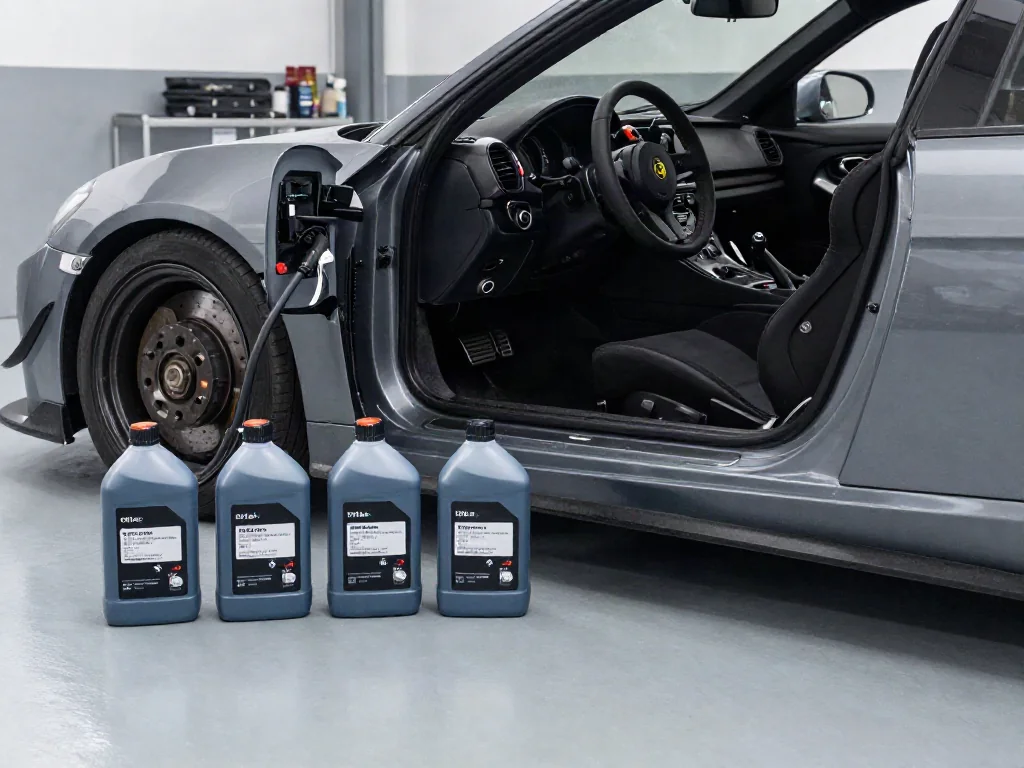
Track-capable brake fluid is chosen for heat tolerance, not because a high published boiling point replaces the vehicle’s required specification. Motul RBF 600, ATE Typ 200, and Castrol React SRF Racing are glycol-based racing fluids sold for performance and track use. Dry and wet boiling points, moisture absorption, viscosity, and brake pedal feel all matter, and heat still drives brake fluid maintenance after a session.
What Dry and Wet Boiling Points Tell You
Dry boiling point describes brake fluid tested in its fresh, unconditioned state. Wet boiling point describes the same fluid after a standardized laboratory moisture-conditioning procedure, not a measurement of the fluid currently in a master cylinder or caliper. Those two figures are part of a brake fluid specification used to compare products under controlled conditions. They do not tell you how much water a particular car has absorbed, how the fluid was stored, or how long a given pad and rotor package can run before vapor forms.
Brake fluid can absorb moisture during service, through the reservoir cap, hoses, and ordinary handling of an opened bottle. Extra water lowers the temperature at which the fluid can tolerate track heat before boiling. When fluid boils, compressible vapor can enter the hydraulic circuit and the pedal can travel farther or feel inconsistent. A published boiling point still does not predict a particular car’s safe track duration, because rotor temperature, ducting, pad choice, and fluid age all change how much heat the hydraulic fluid actually sees.
Motul RBF 600: Specifications and Intended Use
Motul 600 brake fluid, also searched as Motul brake fluid 600 or Motul RBF 600 brake fluid, is Motul RBF 600 Racing Brake Fluid. Current Motul technical information classifies it as a polyglycol DOT 4 fluid for hydraulic brake and clutch systems, including ABS where a DOT 4 fluid is specified. Motul documents a dry boiling point of 312 °C (594 °F) and a wet boiling point of 204 °C (399 °F), and positions the product for motorsport and high-performance driving where repeated heat cycles are expected. Those figures describe laboratory-conditioned samples of that formulation, not a guaranteed temperature at the caliper.
The 600 in the product name should not be treated as a guaranteed operating temperature for the braking system. Hydraulic fluid temperature at the piston can run well below or, in poorly cooled corners, closer to the limit depending on the car. Vehicle approval requirements still apply: the owner’s literature may demand a particular DOT class, low-viscosity fluid, or branded approval for ABS and stability control. Track use does not cancel those obligations. If Motul RBF 600 is chosen for heat capacity, replacement and bleeding still follow the vehicle’s service method plus Motul’s handling notes for an opened container.
ATE Typ 200: Confirming the Exact Fluid
ATE brake fluid is a family name, not a single formula. ATE Typ 200 brake fluid, often shortened to ATE 200 brake fluid, is the specific Continental/ATE Super Blue Racing product covered here. Current ATE documentation classifies Typ 200 as DOT 4, with a dry boiling point of at least 280 °C (536 °F) and a wet boiling point of at least 198 °C (388 °F). Those attributes belong to Typ 200 and should not be extended to every ATE fluid on a parts-store shelf. Other ATE DOT 3, DOT 4, or low-viscosity products exist for different vehicles and service intervals.
Suitability still starts with the vehicle’s required chemistry, viscosity, and approvals. Some ABS and electronic stability systems specify a low-viscosity DOT 4 that Typ 200 may not meet even when its boiling points look attractive on paper. Track heat and fluid condition belong in the maintenance decision even after a high-boiling product is selected. Moisture absorption, contamination from dirty tools, and time in an open bottle all move the in-car fluid away from the published wet figure. Confirm the exact Typ 200 marking on the container before treating any ATE bottle as this racing grade.
Castrol React SRF Racing: Understanding Its Specifications
Searches for Castrol brake fluid SRF, Castrol SRF brake fluid, Castrol racing brake fluid SRF, and Castrol SRF racing brake fluid point to Castrol React SRF Racing, the name printed on the container. Current Castrol technical information identifies it as a polyglycol DOT 4 racing brake fluid with an exceptionally high dry boiling point of 320 °C (608 °F) and a wet boiling point of 270 °C (518 °F). Castrol positions React SRF for competition where hydraulic fluid is expected to see severe, repeated heat. Those laboratory values compare the fresh and moisture-conditioned product; they are not a license to ignore vehicle chemistry or service rules.
A high wet boiling specification does not make installed fluid immune to moisture, contamination, or aging. React SRF still absorbs water in service, and dirt, mixed residues, or degraded rubber debris can change pedal feel independently of boiling. Product-specific handling and replacement guidance on the Castrol data sheet must be read alongside the vehicle’s required DOT class, viscosity, and any stated incompatibilities. Racing use often shortens practical service life because heat cycles and humidity exposure accumulate faster than they do in ordinary commuting, even when the published wet figure remains high.
Compatibility Requirements for Street and Track Use
Fluid selection starts with the vehicle manufacturer’s required specification, including viscosity and approval language that protects ABS and stability-control valves. Motul RBF 600, ATE Typ 200, and Castrol React SRF Racing are high dry and wet boiling point fluids aimed at track and performance driving; that thermal advantage is a tradeoff versus many street fluids formulated for long service, paint compatibility, or low-temperature flow. A high boiling point alone does not establish compatibility or suitability for everyday driving. Cold pedal feel, seal materials, and electronic-brake hydraulic response can differ from the fluid the car was filled with at the factory.
DOT 5 silicone fluid has distinct chemistry from DOT 3, DOT 4, and DOT 5.1 glycol ethers. Similar-looking DOT designations are not sufficient grounds for substitution or mixing. Silicone and glycol fluids should not be combined, and even glycol racing fluids from different makers do not automatically form a blend that retains either product’s published dry or wet boiling point or viscosity. Mixing fluids does not guarantee that the resulting mixture keeps either label’s properties. Uncertain fluid history, including a reservoir of unknown color or an undocumented flush, calls for professional assessment before another heat-intensive session.
Maintenance After Heat Exposure and Warning Signs
Replacement timing should follow applicable vehicle, fluid-manufacturer, and track-use guidance; there is no universal change interval for Motul RBF 600, ATE Typ 200, and Castrol React SRF. Repeated heat exposure, elapsed service time, moisture exposure, and uncertain maintenance history can justify professional evaluation before another track session. Fluid color and a normal-looking reservoir cannot establish boiling performance or rule out contamination. Dark fluid may still have unused thermal margin, and clear fluid can already hold enough water to boil under load. Brake fluid maintenance after track heat is about condition and exposure, not appearance.
An unusually soft or long pedal, a brake warning light, or reduced braking requires ending the session safely and arranging inspection. Pedal feel alone cannot identify fluid boiling, because pad fade, leaks, temperature in the caliper, and ABS intervention can produce similar symptoms. Keep unused Motul, ATE, and Castrol racing fluid tightly sealed according to each product’s storage instructions so moisture absorption does not start before the bottle is even poured. Leave fluid replacement, bleeding, and diagnostic testing to qualified personnel; those steps involve trapped air, contaminated lines, and safety-critical hydraulics that are easy to leave incomplete without the right equipment.