American Supercars: What Defines Them and How They Differ
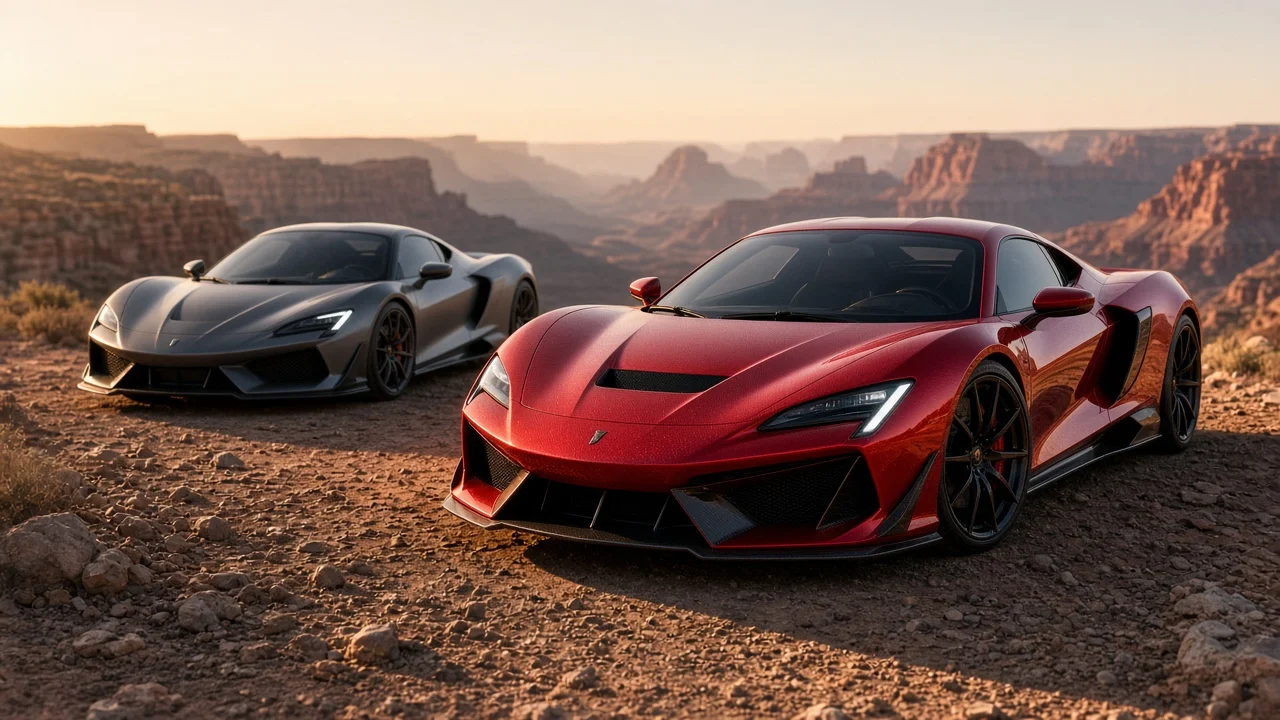
American supercars are high-performance, low-volume sports cars designed and built by US manufacturers, ranging from mass-market flagships such as the mid-engine Chevrolet Corvette to limited-run machines from Ford, small specialist builders and boutique hypercar makers. What unites them is a focus on extreme performance, often from large-displacement or heavily boosted engines, combined with a pricing and engineering approach that frequently differs from European rivals. The term has no official definition, so whether a given car counts depends on how you weigh performance, exclusivity, layout and price.
What Counts as a Supercar
Supercar is an informal market segment, not a regulated vehicle class. Enthusiasts and the motoring press generally apply the label to cars that combine several traits rather than meeting a single threshold.
Performance well beyond ordinary sports cars, in acceleration, top speed and track capability. A powertrain layout chosen for performance, most often mid-engine (engine behind the seats, ahead of the rear axle), though some front-engine cars are included. A low, wide two-door body configuration, usually a coupe or targa, sometimes a roadster. A two-seat seating layout in most cases. Limited production, high cost or both. Advanced materials and aerodynamics, such as carbon fiber structures and active aero.
Above supercars sits the informal hypercar tier: extremely limited, very expensive cars aimed at record-level performance. Several American specialists build primarily in this space, which is why discussions of American supercars often blend the two categories.
Main American Supercar Makers and Models
The American field divides naturally into three groups. Exact specifications, prices and availability vary by model year, generation, trim and market, so treat the descriptions below as general characteristics rather than buying data.
Major Manufacturers
Chevrolet Corvette: Long America's best-known sports car, the Corvette moved from a front-engine to a mid-engine layout with its eighth model generation (C8). Higher-performance variants such as the Z06 and ZR1 push it firmly into supercar territory, and the E-Ray adds hybrid assistance and all-wheel drive. Ford GT: Ford has used the GT name for limited-production mid-engine supercars inspired by its Le Mans racing heritage. The most recent generation used a carbon fiber structure, a twin-turbocharged V6 and active aerodynamics, and was built in small numbers. Dodge Viper: A front-engine, rear-wheel-drive two-seater known for its large V10 and raw, minimal-assistance character. It is no longer in production but remains a reference point for analog American performance.
Specialist and Boutique Builders
Saleen: Best known for the S7, a mid-engine supercar that was among the first modern American cars built from the outset as a dedicated supercar rather than a derivative of a production model. Hennessey: A Texas tuner that evolved into a hypercar maker with its Venom line, focused on very high top speeds. SSC North America: Builder of the Tuatara and earlier Ultimate Aero, likewise aimed at top-speed performance. Czinger: A newer California company whose 21C uses a hybrid powertrain, tandem seating and additive-manufactured (3D-printed) structural components.
How American Supercars Differ From European Rivals
European makers such as Ferrari, Lamborghini, McLaren and Porsche dominate the image of the supercar, but American cars often take a distinct route to similar performance. These are broad tendencies, not universal rules, and the gap has narrowed in recent generations.
Aspect | Typical American approach | Typical European approach; Engines | Large-displacement V8s and V10s, or heavily boosted engines; pushrod designs in some models | High-revving, smaller-displacement engines, frequently turbocharged or hybridized; Pricing | Mass-market flagships like the Corvette offer supercar performance at a comparatively accessible price | Pricing tends to start higher and rise steeply with exclusivity; Production | Ranges from high-volume (Corvette) to tiny boutique runs | Generally limited production with tight allocation; Brand emphasis | Performance per dollar, straight-line speed and top-speed records | Heritage, racing pedigree, craftsmanship and personalization; Dealer and service network | Broad for Chevrolet and Ford; very limited for boutique brands | Concentrated in dedicated franchise dealers
The most significant shift is the mid-engine Corvette. By adopting the layout long associated with European exotics, it brought the conventional supercar formula to a nationally distributed, comparatively attainable car, which changed how buyers compare American and European options.
Powertrain Layouts Explained
Mid-engine, rear-wheel drive: The engine sits between the cabin and the rear axle, concentrating mass near the car's center for sharper handling. Used by the current Corvette, the Ford GT and most boutique hypercars. Front-engine, rear-wheel drive: The engine sits ahead of the cabin, often set far back (front-mid). This is the traditional American sports car layout, used by the Viper and earlier Corvette generations. Hybrid and all-wheel drive: Electric motors add torque, traction or both. Examples include the Corvette E-Ray and the Czinger 21C.
Ownership Considerations
Buying a supercar involves more than the purchase price, and the experience varies sharply between a mainstream flagship and a boutique hypercar.
Service access: Corvette owners can generally rely on the wide Chevrolet dealer network, though high-performance variants may need technicians with specific training. Low-volume and boutique cars may require factory or specialist service. Running costs: Tires, brakes, insurance and fuel are typically far higher than for ordinary vehicles, especially for track-focused trims. Practical limits: Low ground clearance, limited cargo space and two-seat cabins restrict everyday use; some models offer a front-axle lift system to help with driveways and speed bumps. Allocation and resale: Limited-production models may be sold by application or allocation, and values on the used market can rise or fall depending on rarity, condition and demand. Model year differences: Engines, equipment and outputs often change between model years and trims, so confirm the exact configuration of any specific car you consider.
Which American Supercar Fits Your Goal
Best entry point to supercar performance: A mid-engine Corvette, particularly a higher trim, offers the layout and performance of an exotic with mainstream support. Analog, driver-focused character: A Dodge Viper on the used market delivers a raw, front-engine experience with few electronic aids. Collectible, racing-derived exclusivity: The Ford GT appeals to buyers seeking rarity and a direct motorsport link. Record-level performance and extreme exclusivity: Hennessey, SSC and Czinger build hypercars for buyers prioritizing outright speed or cutting-edge engineering, with corresponding cost and limited availability.
In short, American supercars span a wider price and volume range than most European rivals, from widely available performance flagships to some of the rarest cars on the road. Deciding which one suits you starts with whether you value accessibility and support, analog character, collectibility or absolute performance.