Allison Transmission Torque Converter Shudder Diagnosis
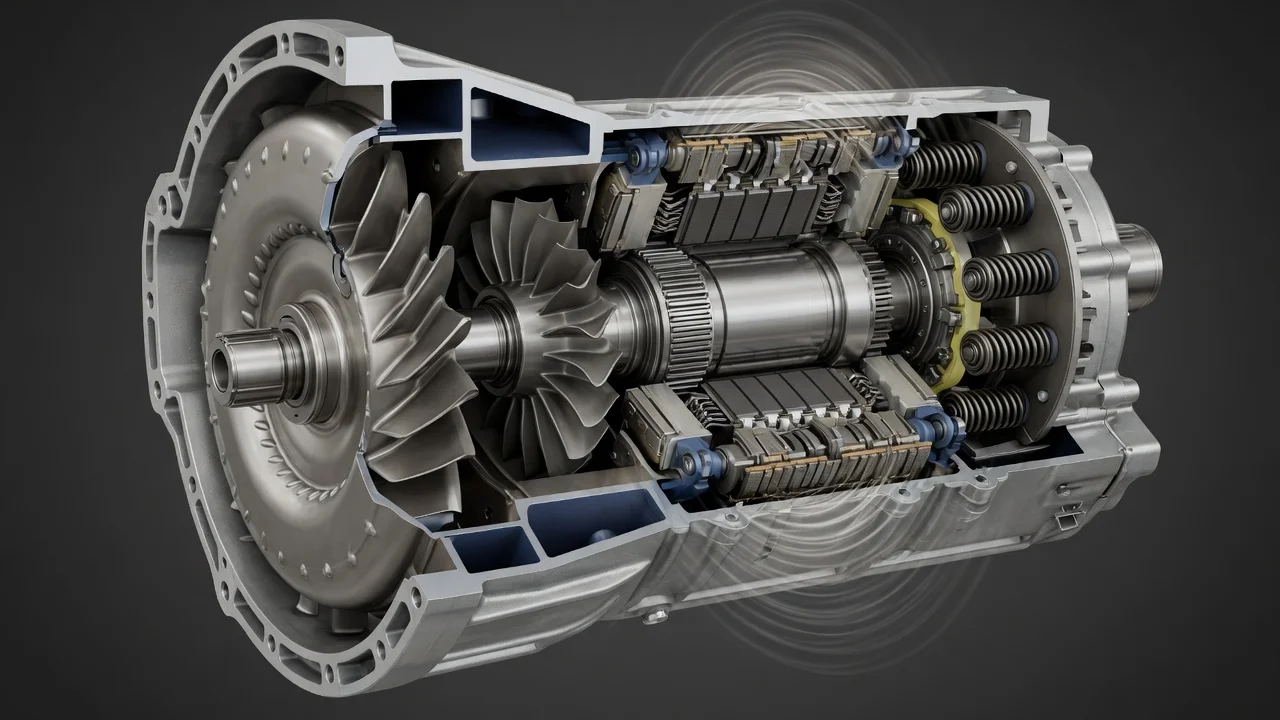
Torque converter shudder in an Allison automatic often feels like driving over rumble strips while cruising at steady, light throttle. The vibration is real, but it is a symptom, not proof of a failed converter. Engine misfires, fluid problems, control faults and driveline vibration can all feel similar. This guide explains how to record the shudder, compare the likely causes, run checks in a sensible order and decide what to do before any parts are replaced.
Establish the symptoms
Start by identifying the exact transmission type and configuration. Allison builds several families: the 1000/2000 series used in heavy-duty pickups and medium-duty trucks, and the 3000/4000 series used in heavier trucks, buses and motorhomes. Model year, number of forward gears, control generation, power takeoff equipment and any engine or transmission tuning all change the fluid specification, check procedures, diagnostic paths and parts fitment. Note the model and serial number from the transmission identification plate along with the vehicle VIN.
Then document the shudder itself. Write down the road speed, gear if known, throttle position, whether the fluid was cold or at operating temperature, and whether you were loaded or towing. Note whether the shudder appears at the moment the converter clutch seems to engage, during steady cruise, or on light acceleration, and whether a small throttle change makes it stop. Record related signs such as a flickering tachometer, warning lights, stored codes, unusual shift behavior or a burnt fluid smell. Finally, list recent changes: fluid service, fluid brand, tire replacement, a lift kit, driveshaft work or a new engine tune. Good service history often narrows the search faster than any single test.
Distinguish plausible causes
The most direct suspects are the torque converter clutch and the fluid it runs in. Worn or glazed clutch friction material, fluid that has broken down from heat or age, or fluid that does not meet the required specification can cause the clutch to grab and release rapidly instead of applying smoothly. Evidence that supports this group: the shudder occurs only when the converter clutch is applied, it changes with fluid temperature, or it started after a long service interval or a fluid change with an unapproved product. Evidence that weakens it: the vibration continues when the clutch is released.
Control and hydraulic faults are the next group. A sticking or weak converter clutch control solenoid, valve body problems, low fluid level, or bad input from speed, throttle or temperature sensors can make clutch apply pressure unstable. Stored transmission codes, erratic data on a scan tool and other shift complaints support this direction.
Two outside causes are easy to mistake for converter shudder. Engine misfires, including injector or ignition problems, become more noticeable once the converter locks because it no longer cushions engine pulses; misfire counts, engine codes, or shudder tied to engine speed in several gears point here. Driveline issues such as worn universal joints, incorrect driveshaft angles after a lift, a failing carrier bearing, tire defects or broken mounts produce vibration tied to road speed that persists whether or not the converter is locked, and often during coasting.
Checks in a useful order
Begin with safe observations an owner can make. Read diagnostic codes with a scan tool; light-duty applications use standard OBD-II access, while some heavier units also display codes through the shift selector or require Allison-capable software. Check fluid level using the procedure for your model at the specified temperature, since some use a dipstick and others a check plug or an electronic level readout. Look at fluid condition: dark color, burnt odor or visible debris are worth noting. Inspect for leaks, check tire condition, and with the vehicle secured, feel for play in the universal joints.
A simple road observation helps sort causes. On a quiet, safe road with a passenger recording notes, hold a steady speed where the shudder occurs and lightly touch the brake pedal without slowing much; on many applications this releases the converter clutch. Note whether the shudder stops immediately or continues. Do not attempt this in traffic or while towing.
Deeper tests need tools, service specifications or a qualified technician. These include logging converter clutch command, slip speed (engine speed compared with turbine speed) and fluid temperature; commanding the clutch off with a scan tool; pressure testing; checking engine misfire and injector balance data; measuring driveline angles; fluid analysis; and checking for control software updates or required adaptive relearn procedures.
Interpret the findings
If the shudder stops when the converter clutch releases and slip data oscillates while it is applied, the problem is likely in the converter clutch, its fluid or its control. That result does not identify which one. A common next step is a fluid and filter service with fluid that meets the required specification, followed by a re-evaluation drive. If shudder remains, control circuit and pressure testing come next. Converter replacement is generally justified only after fluid and controls have been ruled out.
If the shudder continues with the converter clutch released, look away from the converter toward the driveline, tires or engine. A converter clutch performance code means slip was outside the expected range; it does not say which part failed. Fluid containing metal or heavy friction debris suggests internal wear that may extend beyond the converter, and replacing the converter alone may not cure it; the cooler and lines also need attention. Engine misfire data that lines up with the shudder shifts the diagnosis to the engine. When results conflict, more testing is cheaper than a wrong part.
Urgency and next action
Stop driving and arrange inspection if you see a transmission overheat warning, a transmission warning light, slipping or engine flare between gears, loss of drive, a fluid leak, a burning smell, limp mode or harsh clunks. A slipping or shuddering converter clutch generates heat that can degrade fluid and damage other components, especially when towing or hauling. There is no reliable way to promise how far the vehicle can safely be driven once these signs appear.
When you contact a repair shop, bring the VIN, transmission model and serial number, mileage, fluid type and date of last service, any codes with freeze frame data, your log of shudder conditions, and a list of modifications and recent work. Repair options range from fluid service and control repairs or software updates to converter replacement or transmission rebuild. Ask the shop to confirm the cause with test data before replacing the converter, and confirm replacement parts fit your specific transmission model and serial range.