Allison Transmission Relearn Procedure: How It Works and When to Do It
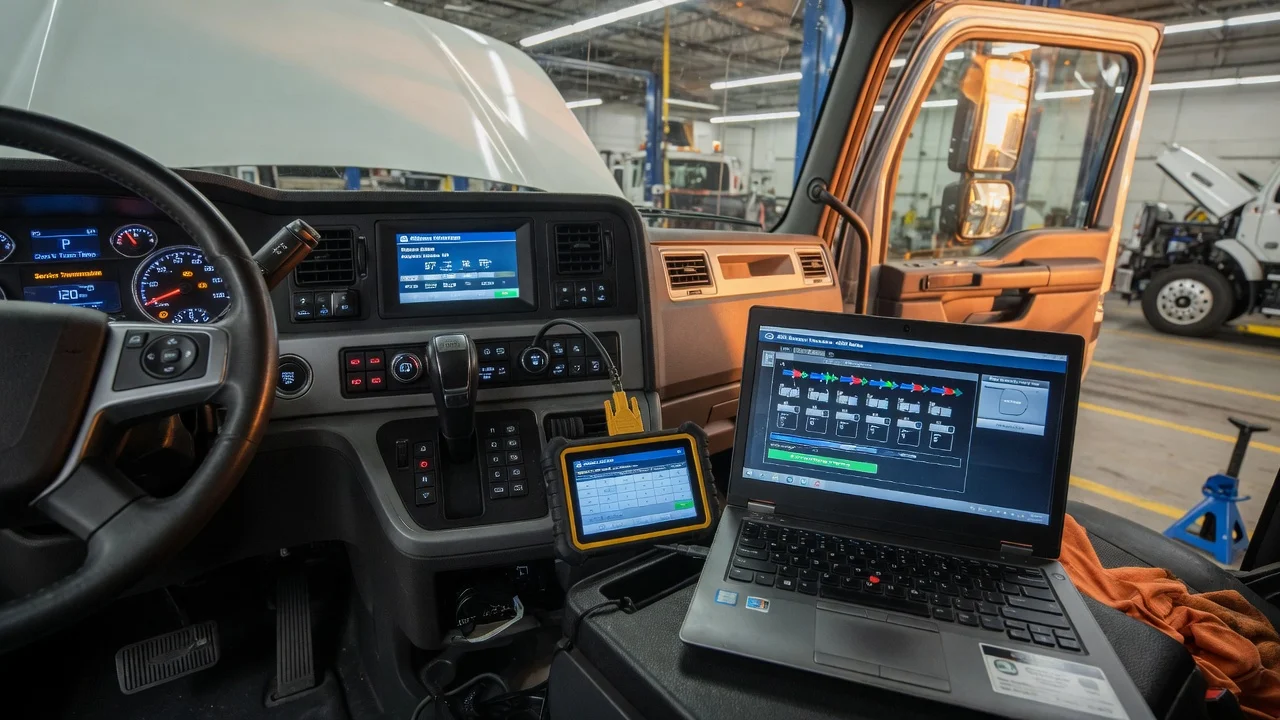
An Allison transmission relearn is a reset followed by a learning period. The transmission control module stores adaptive values that fine-tune each shift, and those values can be cleared and rebuilt after repairs, software updates or certain service work. This guide explains what a relearn involves, how the steps differ between Duramax pickups and commercial Allison units, and where a relearn stops being the right answer.
Short answer: how an Allison relearn is done
On most electronically controlled Allison transmissions, the relearn starts with a scan tool command that resets the adaptive shift values stored in the transmission control module. On GM Duramax pickups with the Allison 1000, that reset is done through dealer-level software or a capable aftermarket scan tool. On commercial Allison units it is normally done through Allison's own diagnostic software. After the reset, the module rebuilds its values while the vehicle is driven, so the second half of the procedure is a deliberate drive cycle rather than a button press.
The drive cycle generally means warming the fluid to normal operating temperature. You then make repeated light-to-moderate throttle upshifts through every gear and let the transmission downshift naturally as the vehicle slows. Shifts may feel firm or soft at first and should gradually smooth out. The exact conditions the module needs depend on the model and software level, including fluid temperature limits and how many shifts it must see. The service information for the specific vehicle governs those details.
How Allison adaptive shift learning works
Allison automatics shift by releasing one clutch pack while applying another. To make that handoff smooth, the control module must fill the oncoming clutch with fluid at the right moment and pressure. It watches turbine and output speed to measure how long each shift actually took and whether the engine flared or the shift tied up. It then adjusts fill time and pressure for the next shift of the same type. Those corrections are the adaptive values.
Over time, the stored values compensate for normal clutch wear, fluid condition and small variations between units. That is why a reset matters after certain work. New clutch plates, a rebuilt valve body, a replacement module or a software reflash can leave the old corrections mismatched to the hardware. Clearing them lets the module start from base values and learn the current state instead of fighting outdated adjustments. Learning only happens during shifts that meet the module's conditions, which is why steady highway cruising teaches it little.
Duramax pickups versus commercial Allison units
Confirm the transmission type first. GM heavy-duty pickups with the Duramax used the Allison 1000 in five-speed and later six-speed forms. The controls, software and available scan tool functions differ between those generations. Later heavy-duty pickups moved to a ten-speed automatic, which is a different unit with its own procedures, so instructions written for the older Allison 1000 should not be assumed to carry over.
Commercial applications include the 2000, 3000 and 4000 series in trucks, buses and motorhomes. These use Allison controls that are serviced through Allison's diagnostic software, and some generations also have prognostics features that track fluid and filter life. Resetting those service monitors is a separate task from resetting shift adaptives, and mixing them up is a common source of confusion. Key-and-pedal sequences are also described online as a way to reset adaptives without a tool. Whether such a method works on a given model year cannot be confirmed without the vehicle's service information, and it gives no way to verify the reset actually happened.
The reason for the relearn also changes the answer. After a rebuild, module replacement or reflash, a reset is typically part of the job. After a routine fluid change on a healthy transmission, many technicians leave the adaptives alone, because the existing values still describe the hardware.
Practical steps before and after a reset
Before resetting anything, check the fluid level using the method in the owner's manual. For many Allison applications this is a hot check with the engine running. Confirm the fluid meets the required fluid specification: many GM pickups call for a DEXRON specification, while many commercial Allison units require a fluid approved under Allison's own TES standards. The manual or the transmission's documentation is the authority on fitment. Read and record any diagnostic codes, because a relearn does not remove the cause of an active fault.
If your scan tool supports the function, perform the adaptive reset under the engine and transmission conditions the tool specifies. Then drive a route where you can safely make repeated stops and starts. Use light, consistent throttle for most upshifts, include some moderate-throttle shifts, and let the truck coast down through the gears. Avoid towing or heavy loads during the early part of the learning period unless the procedure directs otherwise.
Keep notes on shift behavior. Record which shifts are harsh, slipping or delayed, whether the problem happens hot or cold, and whether it improves over several drives. That record, along with the service history of fluid changes, repairs and software updates, gives a technician far more to work with than a description of a single bad shift.
Limits of a relearn and when to get help
A relearn only adjusts how the module controls healthy hardware. It cannot correct worn clutches, a sticking solenoid, internal leaks, a failing sensor or wiring faults. A symptom such as a flare or harsh engagement does not by itself identify which part is at fault. If shifts do not improve after a properly completed reset and drive cycle, or if codes return, the next step is diagnosis rather than another reset.
Vehicle-specific service information is necessary for exact steps, temperature ranges and tool requirements, and some functions are available only through dealer or Allison-authorized software. Get help from a transmission specialist if you lack a capable tool, cannot confirm the transmission configuration, or see warning lights, limp mode, or fluid that smells burnt or looks contaminated. A specialist can verify the condition and lay out the repair options before more driving adds damage.