Allison Transmission Fluid: TES 668, TranSynd, and Allison 1000
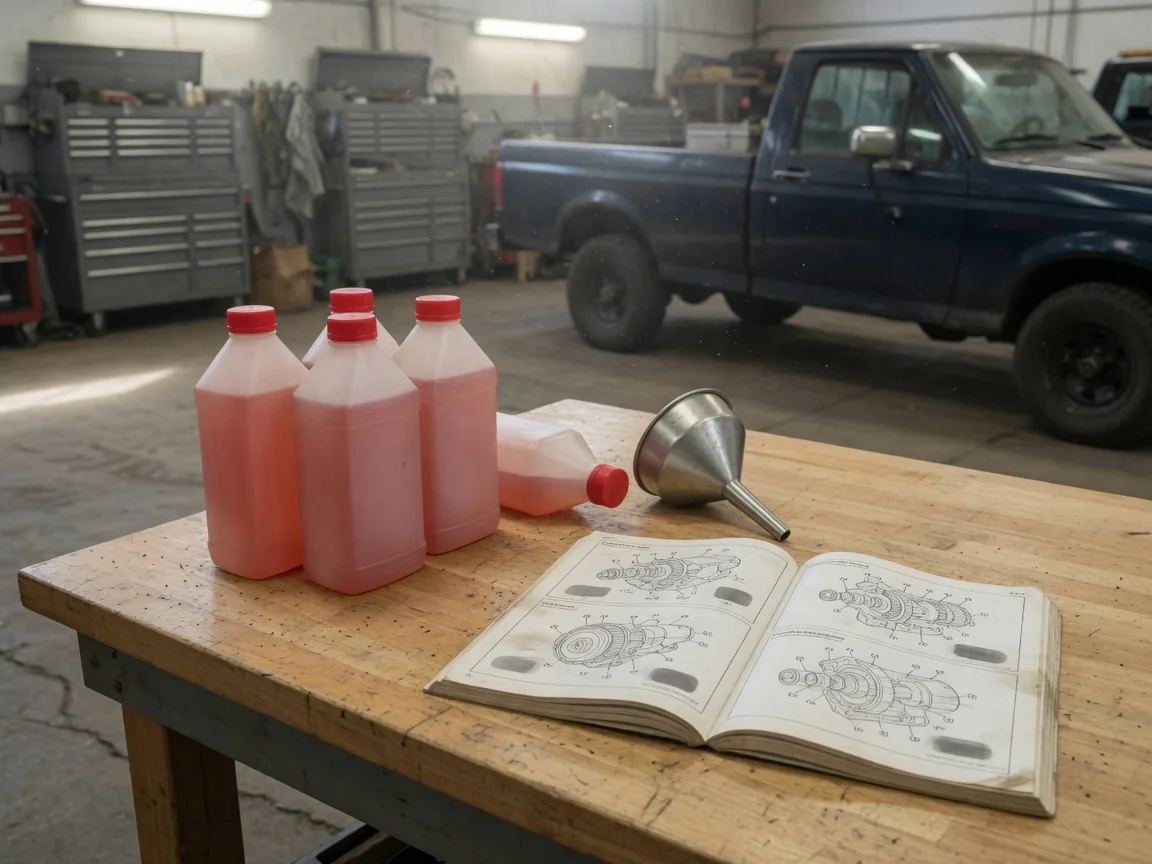
Allison automatics serve in pickups, medium-duty trucks, buses, and vocational equipment. Each installation has a fluid requirement tied to its model and application. Choosing the right fluid takes four steps: identify the transmission, understand the specification behind a TES designation, verify the exact product, and service it with the correct quantity and level-check method. The sections below follow that process from identification through recordkeeping.
Find the Fluid Requirement for Your Allison Transmission
The fluid requirement comes from the transmission itself, not the truck it sits in. Allison builds several families of automatics, and a single family can be specified differently for a pickup, a delivery truck, a school bus, or a refuse unit. Three sources together establish which fluid specification applies: the owner's manual, the vehicle maker's service information, and Allison's operator and service literature. If these sources disagree or look outdated, follow the most current documentation for your specific application rather than a parts-counter lookup.
Shoppers often use the terms transmission oil and transmission fluid interchangeably, and both usually describe the same hydraulic service fluid. Neither term tells you whether a product meets the approval your unit needs. Before buying, record the vehicle year, the transmission model and serial information, the specification named in the documentation, and any known service history. Color and branding prove little. Many fluids are dyed red, a familiar brand often sells several formulations, and a generic automatic transmission fluid label doesn't show that the contents meet an Allison specification.
Confirm the Transmission Installed in a Freightliner or Other Truck
Freightliner and other truck makers may install any of several transmissions in the same chassis, so the badge on the hood doesn't tell you which unit is fitted or what lubricant it needs. The safest starting points are build sheets, the original invoice, dealer service records, and a build lookup by VIN. Allison units typically carry an identification plate on the case. If the plate can only be reached from underneath, have a shop with proper lifting equipment read it instead of crawling beneath a truck held up only by a jack.
Some trucks that show up in these searches actually use an Eaton transmission, including automated manual designs that work very differently from a torque-converter automatic. An Eaton-equipped truck needs lubricant guidance written for its specific model. An Allison TES specification says nothing about whether a fluid suits that gearbox. For a Freightliner, the practical goal is to confirm that an Allison is installed, identify which model it is, and find the fluid requirement in that transmission's documentation. Once fitment is confirmed, the steps are the same as for any other Allison-equipped vehicle.
Read TES 668 and TES 295 Approval Information
TES designations such as TES 668 and TES 295 are Allison fluid specifications. They set the performance and approval requirements a fluid must meet. They don't name a transmission model, a refill amount, or a change interval. Allison maintains approval information for its specifications, and each product is approved under a specific name. To check a purchase, compare the exact product name, including any suffix or number, against current Allison approval information. Similarly named products from the same brand can carry different approvals, or none at all.
A newer specification isn't automatically interchangeable with an older one in every application. If your documentation names TES 295, check the applicable Allison or vehicle-maker guidance before treating TES 668 as an authorized service fill. Whether it's suitable depends on what that guidance says for your transmission. The same caution applies to mixing products or topping off with a different specification. If the existing fill is unknown, adding a fluid that seems close enough can leave an undocumented blend in the transmission. That complicates diagnosis and any later warranty discussion.
Check the Exact Castrol TranSynd 668 Product Before Purchase
Searches for Castrol TranSynd 668 point to a specific full-synthetic product that Castrol markets in connection with Allison's TES 668 specification. Before buying, read the full product name on the container and confirm it matches the name in current Allison approval information. Don't assume every TranSynd-branded bottle is the same product. The TranSynd name has appeared on more than one formulation, so the numeric suffix and the approval wording on the label and product data sheet matter. If the container cites a different specification than your transmission requires, verify before ordering.
A full-synthetic label describes the base oil, not the approval. Many synthetic automatic transmission fluids are built for other manufacturers' specifications and don't qualify for an Allison application just because they're synthetic. Once the product is confirmed, find out how much fluid your planned service actually needs so you don't order based on a guess at total capacity. After the work, record the product name, approval wording, and container or batch details with the service paperwork. That helps the next technician avoid mixing or mismatching fluids.
Verify Allison 1000 Fluid Type and Service Quantity
The Allison 1000 appears in a range of pickups and medium-duty trucks across many model years. The fluid specification and fill details can vary with the vehicle year, the chassis application, and revisions to service documentation. Don't assume one truck's guidance applies to another just because both use an Allison 1000. Hardware also affects how much fluid a service needs. Pan depth differs between configurations, auxiliary or remote coolers and their lines hold fluid, and the scope of work, such as a filter change or a cooler flush, changes how much comes out.
Two quantities are easy to confuse. The drain-and-fill quantity is roughly what leaves the transmission when the pan or drain is emptied. Total system capacity also includes fluid held in the torque converter, the cooler circuit, and internal passages that a routine drain doesn't reach. Pouring in the full capacity figure after a drain-and-fill can overfill the transmission, which can cause aeration and overheating. Set the final level with the documented check procedure, done at the specified fluid temperature and operating conditions, before deciding whether more fluid is needed.
Plan Fluid Checks, Filter Service, and Professional Testing
Fluid checks vary by transmission and vehicle. Some units use a dipstick with cold and hot ranges, while others give an electronic level reading, and the required fluid temperature, engine state, and parking conditions differ. Follow the prescribed method, and stay clear of hot exhaust parts, moving components, and any unsupported position under the vehicle. Fluid and filter service timing should come from the applicable maintenance schedule. Heavy towing, stop-and-go delivery, extended idling, and high heat often call for a severe-duty schedule, and past service history also affects the next interval.
Visible leaks, harsh or delayed shifts, slipping, and temperature warnings all justify an evaluation, but fluid color or smell alone can't pinpoint an internal fault. Get a professional inspection if the fluid history is unknown, contamination is suspected, the level keeps dropping without an obvious leak, or symptoms persist. Stored diagnostic codes are useful evidence, but they need vehicle-specific interpretation and don't prove a part has failed. After any service, record the fluid product and approval, the filter details, the date, and the mileage or operating hours for future reference.