Airbag Non-Deployment in a Collision: Why It Happens and What It Means
The Short Answer
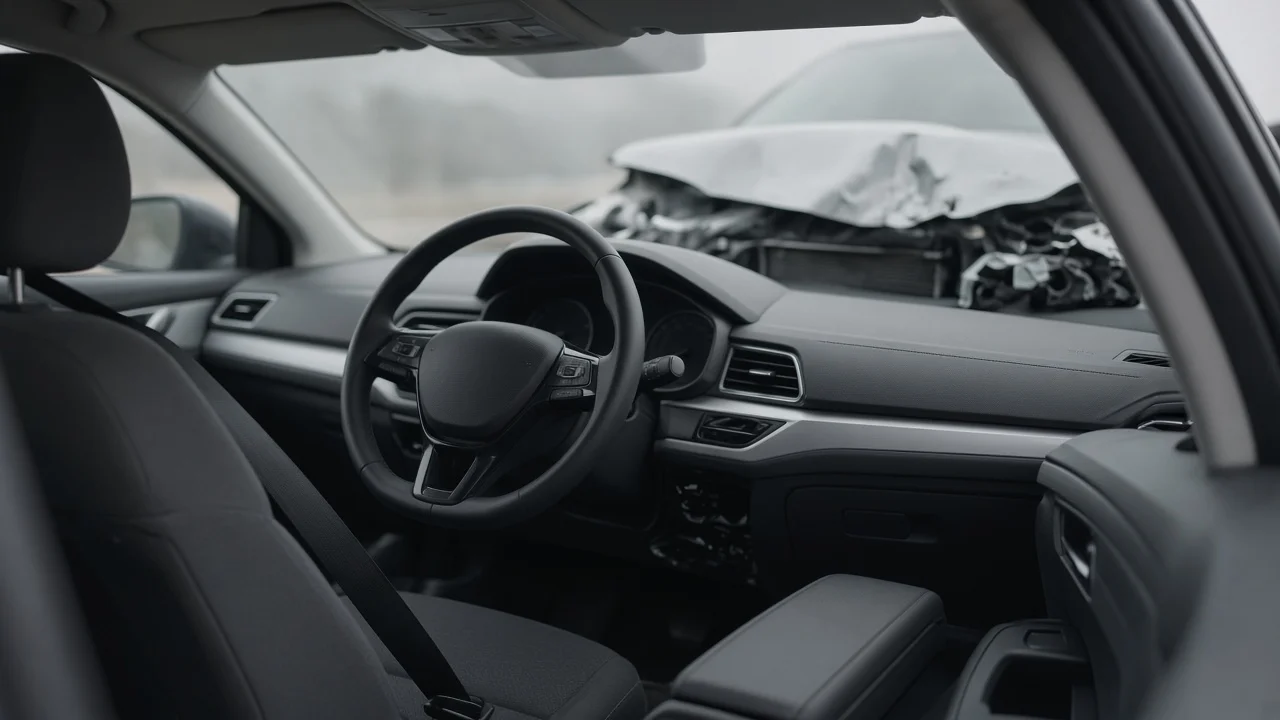
An airbag that does not deploy in a collision is not automatically a malfunction. Airbags are designed to deploy only when the vehicle's crash sensors and control module judge that a crash is severe enough, and coming from the right direction, for the airbag to add protection beyond the seat belt. Many low-severity impacts, and many impacts from angles a particular airbag is not meant to cover, are expected to produce no deployment. However, non-deployment can also result from a system fault, an inactive or suppressed airbag, prior repair problems or a recall-related defect. Telling these situations apart usually requires a professional inspection and, in many cases, a reading of the vehicle's stored crash data.
How Deployment Decisions Are Made
Modern vehicles use a supplemental restraint system, often shortened to SRS. "Supplemental" means the airbags are meant to work together with seat belts, not replace them. A control module receives signals from crash sensors, typically accelerometers that measure how quickly the vehicle slows down or is pushed sideways. The module compares that data with deployment criteria programmed by the manufacturer and decides, within a fraction of a second, which airbags, if any, should fire.
Because these criteria are set by each manufacturer and vary by model, model year and airbag position, there is no single universal speed or damage level at which every airbag deploys. Visible damage to the car is also not a reliable guide: a vehicle can look badly damaged after a crash that spread its forces over a long time or a wide area, while the sensors registered a deceleration below the deployment threshold.
Common Reasons an Airbag May Not Deploy by Design
Crash severity below the threshold: the sensors detected a deceleration that the system judged manageable by the seat belt alone. Impact direction: frontal airbags are generally intended for frontal and near-frontal crashes, and side or curtain airbags for side impacts or, in some vehicles, rollovers. A rear-end impact, for example, is often not expected to deploy frontal airbags. Underride or glancing impacts: when a vehicle slides under a taller object or strikes something at a shallow angle, the deceleration pattern may not meet deployment criteria even if the body is damaged. Occupant classification: many vehicles use seat sensors to suppress the front passenger airbag when the seat is empty or occupied by a person or object below a set weight or size. The specific behavior depends on the vehicle. Seat belt status: some systems use belt buckle information to adjust deployment thresholds or stages, so the outcome may differ depending on whether an occupant was belted. Manual deactivation: some vehicles, particularly certain pickups and two-seat models, provide a key-operated switch to turn off the passenger airbag. If it was switched off, the airbag will not deploy.
When Non-Deployment May Indicate a Problem
Non-deployment is more likely to point to a fault when the crash was clearly severe and in a direction the airbag is designed to cover, or when there were warning signs beforehand. Possible causes include a malfunctioning sensor or control module, damaged wiring or connectors, an airbag module that was removed or replaced improperly after an earlier repair, or a manufacturing defect covered by a safety recall.
Situation | More likely explanation; Low-speed bump, frontal airbags stayed stowed | Normal design behavior; Rear-end impact, frontal airbags stayed stowed | Normal design behavior in many vehicles; Passenger airbag did not deploy with an empty or lightly loaded seat | Likely occupant-classification suppression; Airbag warning light was on before the crash | Possible system fault; the system may have been disabled; Severe frontal crash, no frontal deployment, no warning light | Uncertain; needs professional diagnosis and crash data review; Airbag previously replaced after another accident | Possible repair or parts issue; needs inspection
The Airbag Warning Light
The SRS or airbag warning light normally illuminates briefly when the vehicle starts and then turns off once the system completes a self-check. If the light stays on, flashes or never comes on at all, the system may have detected a fault, and some or all airbags may not deploy in a crash. Owners should have the system diagnosed promptly rather than waiting for a collision to reveal the problem.
What to Do After a Crash Without Deployment
Attend to injuries and safety first, and seek medical evaluation even if no airbag deployed. Note whether the airbag warning light was on before or after the crash. Check for open safety recalls using the vehicle identification number through the manufacturer or the National Highway Traffic Safety Administration's recall lookup. Ask a dealer or qualified repair facility to scan the SRS for stored fault and crash codes. If the cause is disputed, an injury occurred or a claim is involved, consider having the event data recorder read by a qualified specialist before the vehicle is repaired or disposed of, since repairs can affect the evidence. If you believe the system should have deployed, you can file a vehicle safety complaint with the National Highway Traffic Safety Administration and inform the manufacturer.
Limits of This Overview
No model-specific data was available for this article, so it does not state deployment speeds, sensor thresholds or recall details for any particular vehicle. These vary by manufacturer, model, model year and airbag position. The owner's manual describes the airbag system for a specific vehicle, and only a diagnostic inspection and crash data review can establish why a given airbag did or did not deploy in a specific collision.