Airbag Light Repair Cost: What Drives the Price and How the Fault Is Found
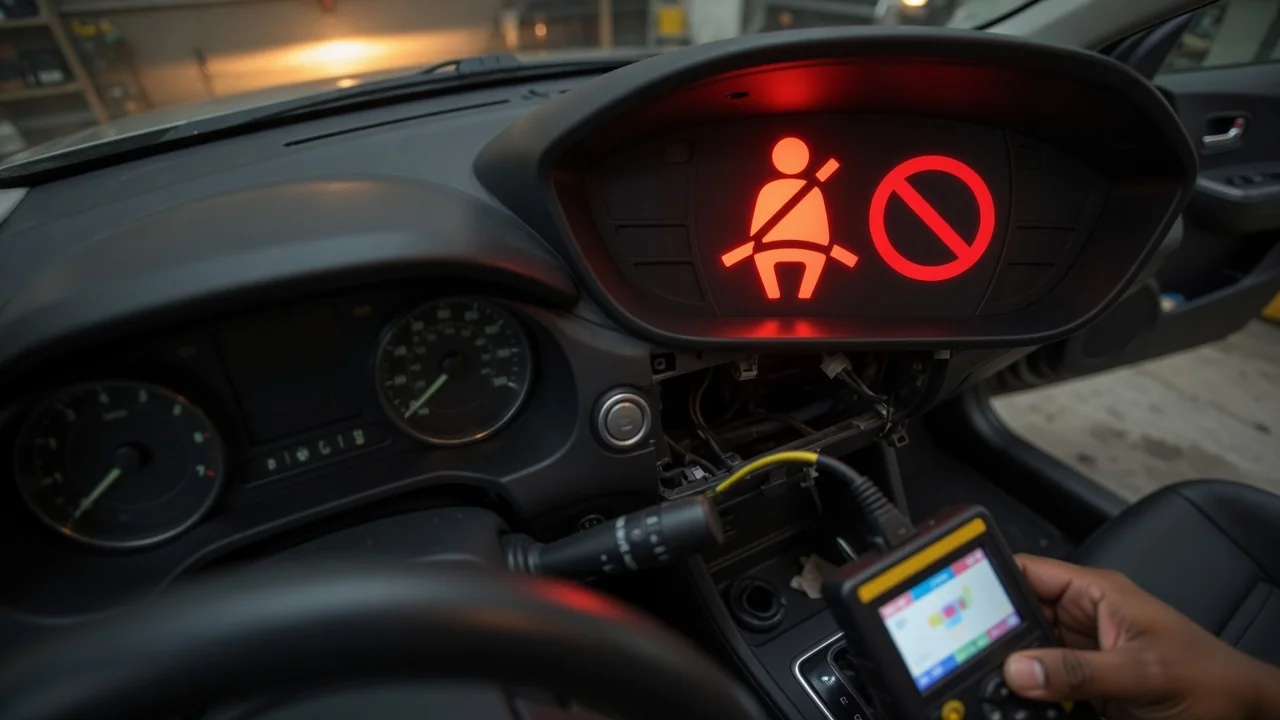
If you are wondering how much it costs to fix an airbag light, the honest answer depends on what is behind the warning. The SRS warning light only signals that the supplemental restraint system has detected a problem. Your airbag light repair cost depends on the diagnosis, the parts involved, labor time and your vehicle. Understanding each of these makes it easier to read a repair estimate with confidence.
Why Airbag Light Repair Cost Starts With an Accurate Diagnosis
The SRS warning light is a symptom, not a diagnosis. The supplemental restraint system monitors airbags, seat belt pretensioners, crash sensors, the clock spring, seat wiring and its own control module, and a fault in any of those circuits can turn on the same light. A loose seat connector and a failed control module can produce the identical dashboard warning, so no single price covers every car. The cost to repair an airbag light is really the cost of fixing whatever the system has flagged, which is why diagnosis comes first.
There is also a safety reason to act quickly. While the light stays on, the airbags may not deploy as designed in a crash, so this repair should not be put off. Some owners try to save money by buying a likely part based on a forum post or a generic code reading. Guessing often raises the cost to fix an airbag light rather than lowering it, because a part that was never faulty still goes on the bill and the real problem remains.
What a Professional SRS Diagnostic Scan Involves and Why It Has a Fee
Reading stored airbag codes requires a scan tool that can communicate with the SRS control module. Many basic code readers access only engine and emissions data, so they show nothing useful about restraint faults. A professional airbag diagnostic scan retrieves the diagnostic trouble code and shows whether it is current or stored. From there, a technician typically inspects connectors, follows wiring harness routing and checks component circuits using equipment and procedures suited to airbag systems, which call for more caution than routine electrical testing.
Diagnostic fees and how they are charged vary by shop. Some charge a flat diagnostic fee, others bill by labor time, and some apply the fee toward the repair if you approve the work, so ask about this before the car goes in. Keep in mind that a code alone may not show which part has failed. A code describing a circuit resistance problem, for example, could involve a connector, a wire or a component, so extra testing time may be added before the shop can name the fix.
Common Repair Categories That Shape the Final Bill
Most airbag light repairs fall into a few broad categories. Connector and wiring faults include corroded, loose or damaged terminals, often under seats where harnesses are disturbed by seat movement and cargo. Seat-related circuits can involve the occupant classification sensor or seat belt buckle components. The clock spring, a coiled ribbon in the steering column, keeps the driver airbag circuit connected while the wheel turns. Other repairs involve crash sensors, seat belt pretensioner circuits or the SRS control module itself, and how often each occurs depends on the vehicle.
Which category your fault falls into affects the final bill more than almost anything else. A seat wiring connector that a technician only needs to clean or reseat usually costs far less than replacing a sensor, pretensioner or module, because the parts and labor involved shrink considerably. Labor time rises when trim panels, seats or steering wheel components must be removed to reach the faulty part. That work belongs with a trained technician who follows the manufacturer's safety procedures for handling restraint components.
Why the Cost of Fixing an Airbag Light Varies by Make, Model and Year
The cost of fixing an airbag light varies by make, model and year because vehicles are built differently. Part design, location and access all affect labor time, so a clock spring or seat sensor replacement may be quick on one vehicle and involved on another. Some designs combine several components into a single assembly, which changes what has to be replaced. Where you have the work done also matters, since dealer and independent shop labor rates can differ noticeably for the same job.
The choice between dealer parts and aftermarket parts also affects the price, and whether a particular part suits your vehicle is something the shop should confirm. Replacement modules or sensors may need programming or setup on certain vehicles before the system accepts them, which can add cost, so check whether yours requires it. Ask for a written repair estimate that lists diagnosis, parts, labor and any airbag module programming as separate items. An itemized quote makes shops easier to compare and shows exactly where your money goes.
Airbag Codes, Resets and Why Clearing the Light Is Not a Fix
Airbag trouble code meanings can depend on the manufacturer. The same code number may describe different circuits or conditions on different brands, and generic lookup tables can be misleading. Before acting on any code, confirm what it means for your exact vehicle using manufacturer-specific service information or a shop with access to it. Even a confirmed definition does not prove that a part has failed. It tells the technician which circuit to examine and what to measure next, which keeps testing focused and avoids unnecessary parts.
Clearing codes or resetting the light without repairing the cause rarely helps. If the fault is still present, the module usually detects it again and the light returns, while the system remains faulty the whole time. Avoid shortcuts such as bypass resistors, removed bulbs or tape over the warning light. These tricks hide a real safety fault from you and from any future owner, and the airbags may still fail to work as designed when they are needed most.
Safe Owner Observations and When Professional Testing Is Required
Owners can still help the technician without touching the system. Note when the light comes on, whether it stays on or flickers, and whether it changes after moving a seat or turning the steering wheel. Mention any recent battery work, seat removal, steering repair or collision. Do not unplug, probe or remove airbag modules, inflators, pretensioners or their connectors yourself. Restraint components can deploy accidentally if handled incorrectly, and an unexpected deployment can cause serious injury.
These observations can point a technician toward a likely area, such as seat wiring when the light reacts to seat movement, but they cannot confirm which part has failed. Only proper SRS testing can do that. After any collision, airbag deployment, or seat or steering work, have a qualified shop inspect the system. The shop should also confirm that the light comes on briefly during the startup check and then goes off, which shows the system finished its self-check without reporting an active fault.