Air Suspension Compressor Relay: Identification and Testing
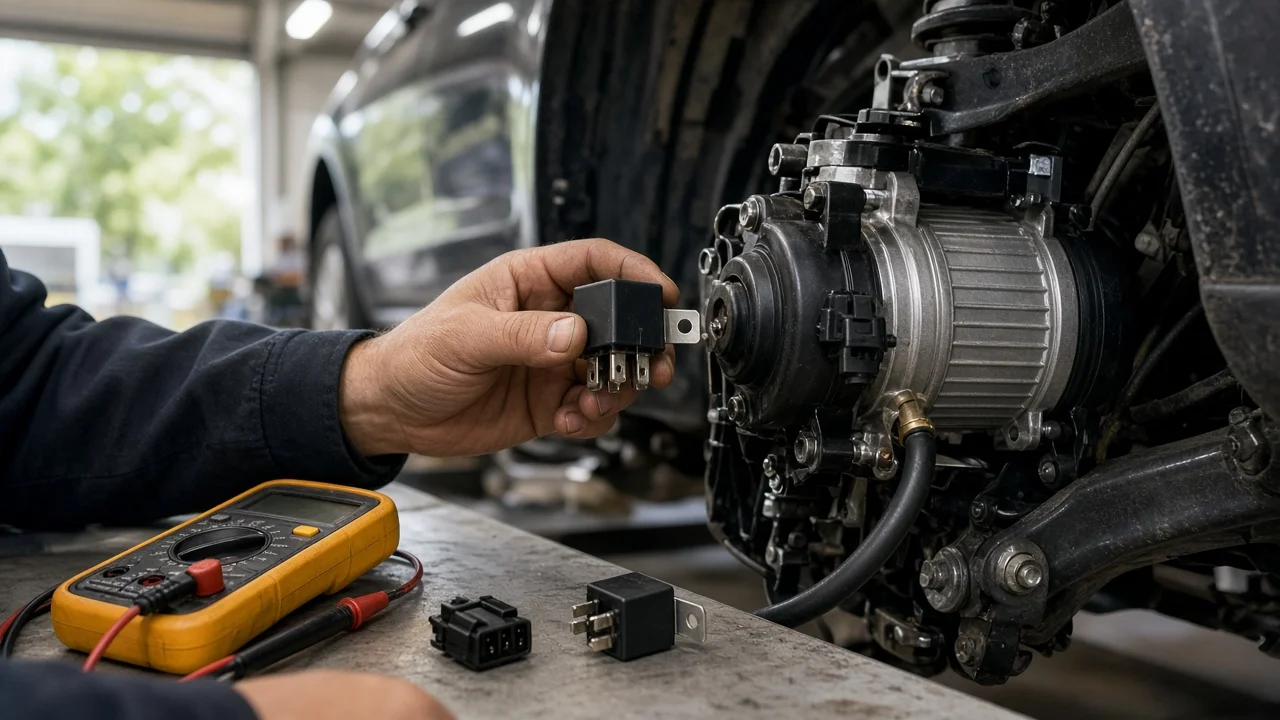
The air suspension compressor relay is a small electrical switch. It lets a low-current signal from the suspension control module switch the high current the compressor motor needs. When it fails, the symptoms can look like a leaking air spring, a worn compressor or a module fault. This guide explains how to recognize relay-related problems, test the relay in a sensible order, and decide what still needs confirming before you buy parts.
Establish the symptoms
Start by writing down exactly when the problem appears. A relay stuck closed usually shows up as a compressor that keeps running after the vehicle is level, sometimes even with the ignition off. That can leave you with a flat battery overnight or a compressor that feels very hot. A relay that fails open or has a weak coil does the opposite. The compressor never starts, the vehicle sits low after being parked, and a suspension warning message or light appears. An intermittent relay may work when cold and quit when hot, or fail only after a long drive.
Note the associated signs as well. Check whether the vehicle sags at one corner or across a whole axle. Listen for a click from the relay or fuse box when the system should be filling, and for hissing from the air springs or lines. Record any recent changes, such as a battery replacement, a jump start, wiring for aftermarket accessories, collision repair, water getting in, or a new compressor. These details help separate an electrical fault from an air leak.
Distinguish plausible causes
Several faults compete with a bad relay. A leak in an air spring, line or valve block makes the compressor run far longer than it was designed to. That extra running is a common reason relays and compressors fail together. A blown fuse, a corroded relay socket or damaged wiring can stop the compressor even when the relay is healthy. The compressor itself may have worn brushes, a seized piston or an open thermal protection circuit. The control module may also be holding back the command because of a faulty ride height sensor, a stored fault code or low voltage.
Your observations shift the weight between these causes. A compressor that runs with the ignition off points strongly to a relay stuck closed or a wiring short feeding the compressor, because the module would not normally command it then. Sag at one corner after parking, while the compressor works normally, points to a leak rather than the relay. If you hear the relay click but the compressor stays silent, the coil is working. Suspicion then moves to the relay contacts, the fuse, the compressor or its ground. No click at all suggests a coil fault, a missing command or no power reaching the coil.
Checks in a useful order
Begin with checks that need no tools. Park on level ground and use the owner's manual or service information to find the compressor relay and its fuse. Some vehicles put them in an under-hood box, others near the compressor or in a trunk or cabin panel. Inspect the fuse, and look for melted plastic, discoloration or corrosion on the relay and socket. Listen for a click when the system is asked to raise the vehicle. If the same box holds an identical relay with the same part number and pin layout, swapping the two temporarily is a reasonable quick test. Never substitute a relay with a different rating or pin layout.
Circuit and bench tests need a digital multimeter and the wiring diagram for your exact model. Terminal numbering varies, and so does whether the module switches the power or the ground side of the coil. On a common four- or five-pin relay, measure coil resistance between terminals 85 and 86 and compare it with the specification. Then power the coil from a fused supply and confirm continuity between terminals 30 and 87. A continuity test alone can miss burnt contacts. Measuring the voltage drop across the contacts while the compressor runs gives a better picture. At the socket, confirm there is battery feed and a command signal from the module.
Some checks need a scan tool that can read suspension codes, show ride height sensor values and command the compressor. This is often the only way to confirm whether the module is actually asking the compressor to run. Measuring the compressor's current draw, its output pressure and how quickly the system loses air also needs proper equipment. If any check means getting under the vehicle, first put the suspension in its service or jack mode if the manufacturer specifies one. Support the vehicle on jack stands at the correct support points, and never rely on the air springs to hold it up. If you are unsure about any of these steps, have a qualified technician do them.
Interpret the findings
A relay that clicks, shows continuity and passes a voltage-drop test under load is unlikely to be the cause. Attention then moves to the fuse, wiring, compressor and possible leaks. A relay that fails the coil test, or shows high resistance or no continuity across its contacts when powered, is faulty. If a non-stop compressor stops when you pull the relay and behaves normally with a known-good replacement, the old relay was stuck closed. If the compressor keeps running with the relay removed, the fault is in the wiring, not the relay.
Confirming a bad relay still leaves a question: why did it fail? Relay contacts often weld shut because the compressor ran too long or drew too much current. Before treating the repair as finished, confirm three things. The compressor should fill the system in a normal time, switch off at the correct ride height, and the vehicle should hold its height overnight. If it does not, a leak or a struggling compressor is likely to destroy the new relay as well.
Urgency and next action
Stop driving and arrange repair if the vehicle sits on its bump stops, leans noticeably, the tires rub the bodywork, or a warning message advises against driving. Deal promptly with a compressor that runs continuously. Removing its fuse or relay as the service information describes prevents overheating and battery drain. It also leaves the system unable to correct height, so the vehicle may settle lower. There is no general rule for how far you can drive with a failed relay; it depends on ride height, load and the particular system.
When booking a repair or ordering parts, have the following ready: the VIN, the model year, the relay's part number and location, and any stored fault codes. Add your test readings and a description of when the compressor runs or stays silent. Mention any signs of a leak and any recent electrical work. After the repair, ask for the ride height to be checked and for any calibration the manufacturer requires, because incorrect height can affect handling and wheel alignment.