Adaptive Suspension vs Air Suspension: What Is the Difference?
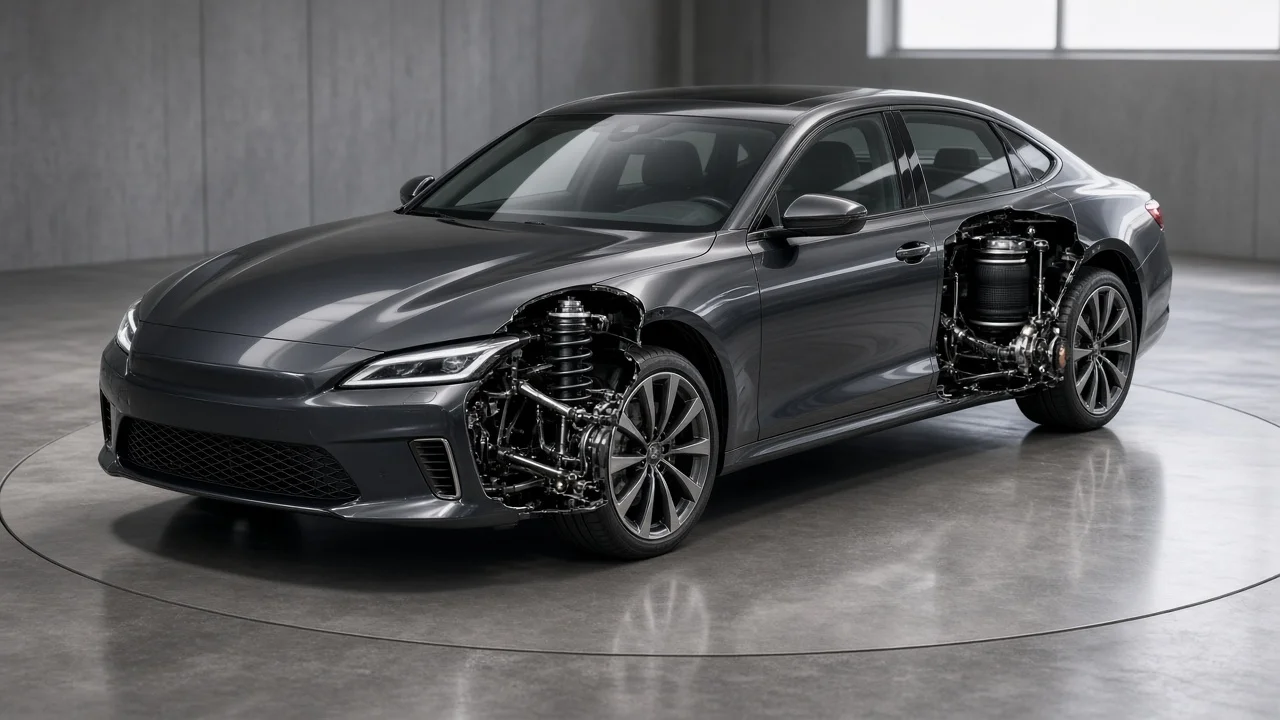
Shopping for a vehicle or chasing a ride complaint often brings up two terms that sound interchangeable: adaptive suspension and air suspension. They are not the same thing. One changes how firmly the suspension resists movement, and the other changes what actually holds the vehicle up. Some vehicles have one, some have both, and the option name on a window sticker rarely tells the whole story. Here is how the two systems differ and how to tell which one your vehicle has.
What is being compared
Adaptive suspension usually means electronically controlled damping. The shock absorbers or struts contain either electrically operated valves or a magnetically responsive fluid, and a control module changes their damping force based on inputs such as wheel movement, body motion, speed, steering and the selected drive mode. The springs themselves are typically conventional steel coils, so the vehicle sits at a fixed ride height. What changes is how quickly the body is allowed to move over bumps, during braking and through corners.
Air suspension replaces some or all of the steel springs with rubber air springs, often called bags or bellows. A compressor, air lines, a valve block, height sensors and frequently a reservoir work together to add or release air. Because the spring itself can be inflated or deflated, the system can raise or lower the vehicle and keep it level as load changes. Air suspension by itself says nothing about damping; the shocks may be conventional or adaptive.
So is adaptive suspension air suspension? Not by default. Manufacturers use names such as adaptive air suspension for packages that combine air springs with electronically controlled dampers, while other adaptive systems use only steel springs. To know what is fitted, check the owner's manual, the factory option codes tied to the VIN, or the service information for that build. A visual check also helps: rubber bellows where a coil spring would sit, a compressor under the vehicle, and electrical connectors on top of the dampers each point to specific hardware.
Compare on the same criteria
Performance: adaptive damping controls body motion and ride comfort in real time but does not change ride height or correct sag under load. Air suspension controls ride height and leveling, and on many systems lets the driver or the control module lower the vehicle at speed or raise it for clearance. Ride quality from air springs depends heavily on the dampers paired with them, which is why premium systems often combine both technologies.
Fitment and components: an adaptive damping system adds sensors, wiring, a control module and electronically controlled dampers to an otherwise conventional layout. An air system adds air springs, a compressor, lines, valves, height sensors and its own control logic. Parts for either system are specific to the vehicle and its option code, and they are not interchangeable with the base suspension of the same model.
Service and ownership: adaptive dampers can leak or develop electrical faults, and the system typically sets a warning and may operate in a fallback mode. Air suspension adds more wear items, including bellows that age and crack, fittings that leak and a compressor that can overwork when chasing a leak. A slow leak often shows up as a corner sitting low after the vehicle is parked. Both systems usually require a scan tool for diagnosis, and air systems often need height calibration after component replacement.
Where the differences matter
Towing and hauling show the clearest split. Self-leveling air suspension can restore ride height when the rear is loaded, which helps keep headlight aim and steering feel closer to normal. Adaptive damping can manage how a loaded vehicle moves, but on steel springs it cannot lift a sagging rear end. Off-pavement driving and steep driveways favor air suspension where a raised height setting is available, while easier entry, exit and loading benefit from systems that can lower the vehicle when parked.
On broken pavement and winding roads, adaptive damping does most of the visible work by firming up to limit body roll and softening over sharp impacts. For long-term ownership, climate and age matter. Air springs are rubber and live in road spray, grit and temperature swings, and moisture in the system can affect valves and compressors. Adaptive dampers have fewer parts outside the strut body, but a failed unit is usually replaced rather than rebuilt. Either system adds cost compared with passive suspension when parts eventually wear out.
Compatibility comes first
An appealing option can be ruled out by what the vehicle was built with. Adaptive dampers need the wiring, module and software that support them, so installing them on a vehicle built without that package is rarely a simple bolt-in job. Going the other way, fitting passive shocks or a coil-spring conversion to a vehicle built with adaptive or air suspension can trigger warning lights, disable drive modes and change load capacity unless the conversion is designed for that exact vehicle. Confirm parts by VIN and option code, not by model name alone.
Service work brings its own requirements. Many air-suspended vehicles have a jack or service mode that must be enabled before lifting, and the vehicle should always rest on proper vehicle support at the manufacturer's specified lift or mounting points, never on the air springs alone. Use the published fastener specification and tightening procedure for every suspension bolt; some bushed joints are specified to be tightened only with the suspension loaded at normal ride height. Before blaming either system for poor handling, inspect ball joints, tie rods and bushings for joint play, because worn parts behave badly regardless of damping or spring type.
Wheel alignment depends on correct ride height. On air-suspended vehicles, the system must be at its normal height setting and calibrated before alignment is checked, and replacing height sensors or springs may require a calibration procedure with a scan tool. Follow the vehicle's service information for both the calibration and the alignment specifications.
Which option fits which use
If you regularly tow, carry heavy loads or need to change ground clearance, air suspension with leveling addresses problems that adaptive damping cannot. If your priority is controlled handling and a comfortable ride at a fixed height, adaptive damping on steel springs delivers much of that with fewer components to maintain. If you want both height control and responsive damping, look for a vehicle that combines air springs with adaptive dampers, and budget for the extra upkeep that comes with it.
For a used purchase, the condition of the existing system matters more than the label. Have it scanned for stored faults, check that every corner holds height after the vehicle sits, and ask for service records on dampers, air springs and the compressor. If the vehicle you already own has one of these systems and it is acting up, diagnose the specific failed component before considering a conversion, and make sure any replacement or conversion part is listed for your exact build.