Adaptive Cruise Control Not Working: Causes, Warnings and Safe Checks
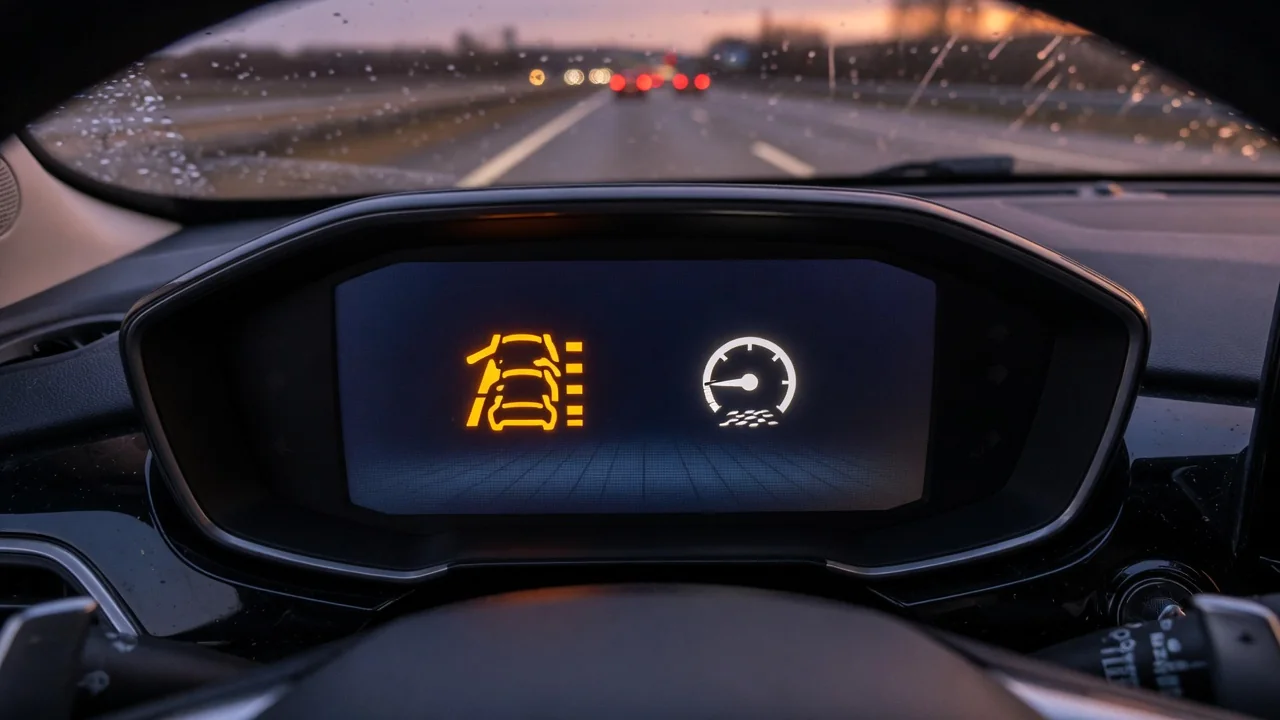
An adaptive cruise control problem message can appear without warning. It leaves you with a dashboard alert and no automatic following distance. The cause may be as simple as a dirty sensor or as involved as a fault that needs calibration. Here is what the warning means, why your adaptive cruise control may not be working, and which safe checks make sense before you visit a dealer.
What an Adaptive Cruise Control Problem Message Means
When adaptive cruise control becomes unavailable, the vehicle has switched the feature off or limited it. Either it can't trust what its front radar sensor or windshield camera reports, or it has detected an internal fault. The message doesn't identify a failed part. A temporary condition, such as a blocked sensor, usually clears once the cause is gone. A stored fault tends to return after every restart, so watching whether the alert comes back is a useful first clue.
Wording, icons and system behavior differ by manufacturer and model year, so the owner's manual is the best place to confirm what your exact message means. In many vehicles, conventional cruise control or ordinary manual driving still works while adaptive cruise is off. Treat the warning as a reminder that speed and following distance are entirely your job until the system is confirmed working again. Don't assume it will brake for traffic ahead.
Why Adaptive Cruise Control Stops Working
Many adaptive cruise control problems start with something outside the car. Dirt, snow, ice, mud, bugs or road salt over the front sensor area or windshield camera zone can trigger a sensor blocked message. Heavy rain, fog, low sun glare and roads with few lane markings or vehicles to track can also cause dropouts. Operating rules matter as well. Driving below the minimum set speed, having the feature switched off in settings, or traction and stability control intervening can all prevent engagement. On some models, an open door or unbuckled belt can too.
Physical changes are another possibility. A minor front-end bump can disturb a sensor's view or alignment. So can a replaced bumper, grille or windshield, a grille guard, a thick license plate frame, or tint across the camera area. Electrical conditions are worth considering too. Low battery voltage after a jump start or battery replacement can bring up a driver assistance warning. Treat each of these as something to check, not as a confirmed diagnosis.
When Adaptive Cruise and Collision Mitigation Warnings Appear Together
When an adaptive cruise control problem shows up together with a collision mitigation system problem, the link is usually shared hardware. Many vehicles use the same front radar and camera for adaptive cruise, forward collision warning, collision mitigation braking and lane keeping assist. One obstruction or fault can therefore light up several alerts at once. A message telling you to see your dealer means the system is asking for professional inspection. That matters most if the message stays after you've cleaned the sensor areas and restarted the vehicle.
Losing collision mitigation means automatic emergency braking may not step in. Leave more following distance and pay closer attention, especially in heavy traffic. Before any appointment, note when the warnings appear: in rain or snow, at certain speeds, right after a car wash or after recent repairs. A clear pattern gives a technician far more to work with than a general complaint, such as alerts that appear only on cold mornings or only after bodywork.
Honda Adaptive Cruise Control System Problem Messages
Honda vehicles equipped with Honda Sensing may show an adaptive cruise control system problem message alongside related assist warnings. No single cause explains every case. Owners searching for this message on a Honda Accord, for example, are seeing the same kind of general alert that other models display. Check the owner's manual for your model year. It shows the exact wording, where the radar and camera sit, and which conditions turn the system off temporarily.
The safe checks are simple. Gently clean the front emblem or grille area covering the radar, then clean the windshield section in front of the camera. Restart the vehicle and see whether the message clears after driving in clear weather. If the Honda adaptive cruise control problem keeps coming back, contact a Honda dealer or qualified shop. Look up recalls and service campaigns by VIN through official channels rather than relying on forum claims.
CR-V, Civic, Odyssey, Pilot and Acura MDX Owners: What to Check
If you drive a CR-V, Civic, Odyssey, Pilot or Acura MDX, the same general logic applies. Sensor placement and equipment vary by generation and trim, so confirm details in your vehicle's own documentation. Recent front-end work, a windshield replacement or any change to how the camera or radar is mounted can require radar or camera calibration. That work needs a shop with the proper targets and software. A sensor that is slightly misaimed may behave inconsistently before it sets an obvious warning.
Before visiting a dealer, write down the exact dashboard message, any other warning lights and the conditions when it appears. A photo of the instrument cluster keeps the wording accurate. Don't assume a CR-V, Pilot or Civic alert has a known model-wide fix. Each case deserves its own diagnosis based on that vehicle's symptoms, stored fault codes and repair history, not on another owner's experience with a different generation or trim.
Chevy and GMC Adaptive Cruise Control Not Working
When Chevy or GMC adaptive cruise control isn't working, the dashboard may show messages such as front radar blocked, adaptive cruise unavailable or service driver assist. Check the owner's manual for the exact wording on your vehicle. Start by cleaning the front radar area and windshield camera zone. Where the vehicle lets you switch, make sure adaptive cruise is selected rather than regular cruise. Also confirm the feature hasn't been turned off in the settings menu.
Trucks and SUVs often carry equipment that can interfere with forward sensing. Trailers, grille guards, light bars and plows may block or confuse a front sensor, so rule them out before assuming a fault. If the warning still won't clear after cleaning and a restart in good conditions, arrange professional diagnosis. Also run an official VIN-based recall and campaign check, keeping in mind that it may or may not turn up anything related.
How to Fix Adaptive Cruise Control Problems Safely
Fixing an adaptive cruise control problem safely starts with a set order of checks. Clean the sensor areas by hand with mild soap, water and a soft cloth. Restart the vehicle and review the driver-assist settings. Then test only in clear conditions where using cruise is legal and safe. DIY work should stop at cleaning and observing. Removing, aiming or calibrating radar and camera units takes specific equipment and procedures, so leave it to a dealer or qualified shop.
A scan tool can read stored fault codes, but codes and their meanings are specific to each manufacturer. Check any code against the vehicle's service information rather than a generic chart. A code is evidence to interpret, not proof that a part has failed. Never test adaptive cruise or emergency braking by deliberately approaching vehicles or obstacles. Drive attentively and keep normal following distances until a professional confirms the system works.