Accutire Tire Gauge with Tread Depth Gauge
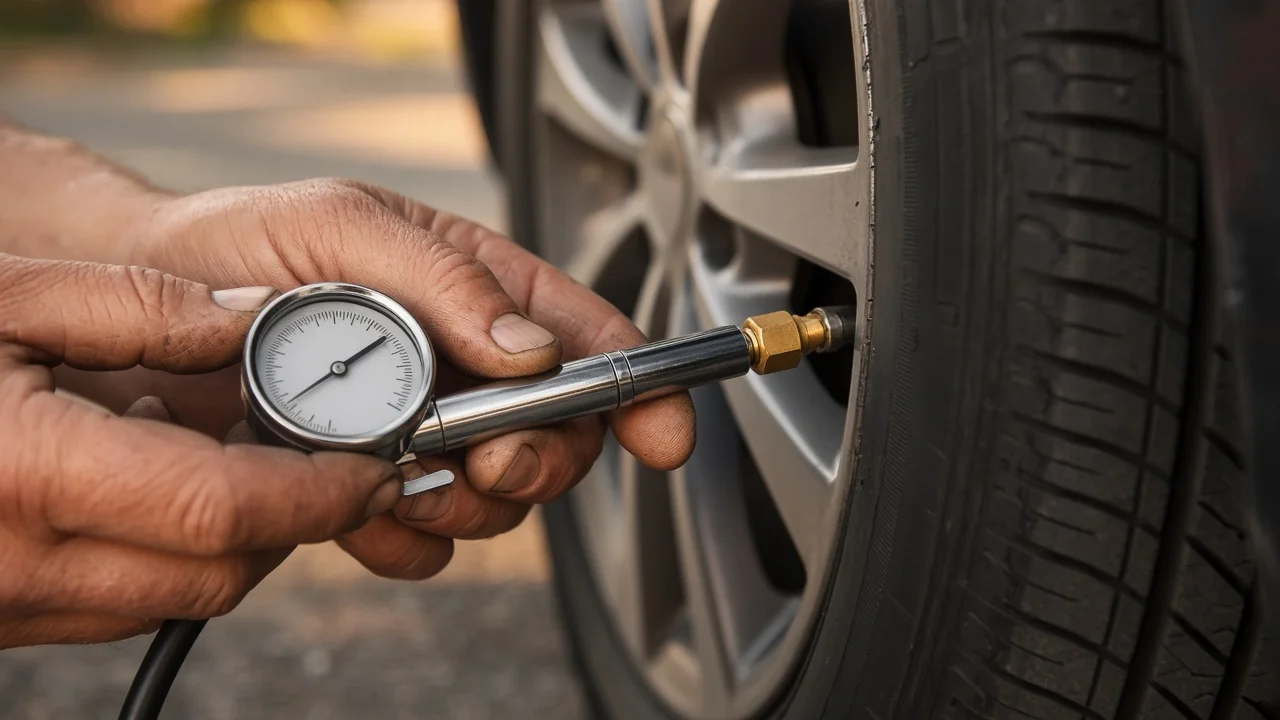
Choosing a combination tire pressure gauge and tread depth gauge means evaluating two separate measurements that affect tire life, fuel use, and wet-weather traction. The Accutire design pairs a digital inflation reading with a tread wear indicator so you can check both conditions before a trip. For drivers comparing this style of tool, the key questions are whether the readout suits your usual pressure range, how the connection seals on the valve stem, and whether the tread probe slides far enough into shallow grooves. This guide explains what to look for before you buy.
The direct answer
A combined gauge is useful because low inflation and worn tread are related but different problems. The pressure side measures air inside the tire, while the depth side checks the rubber that actually contacts the road. One affects load capacity and rolling resistance; the other affects water evacuation and stopping distance. Buying a single tool that covers both checks makes sense for a glovebox kit, but it only helps if the pressure reading is stable and the depth scale is readable in poor garage lighting.
Before choosing this Accutire style, confirm the measurement range fits your vehicles. Passenger-car pressures usually run lower than light-truck or trailer pressures, so the gauge should cover the highest cold setting you plan to use. On the tread side, the probe must reach the bottom of the main grooves, not sit on top of wear bars. A digital display can resolve small changes, but the useful result depends on a clean valve connection and a repeatable zero reading.