ABS Wheel Speed Sensor Testers: Choosing the Right Diagnostic Tool
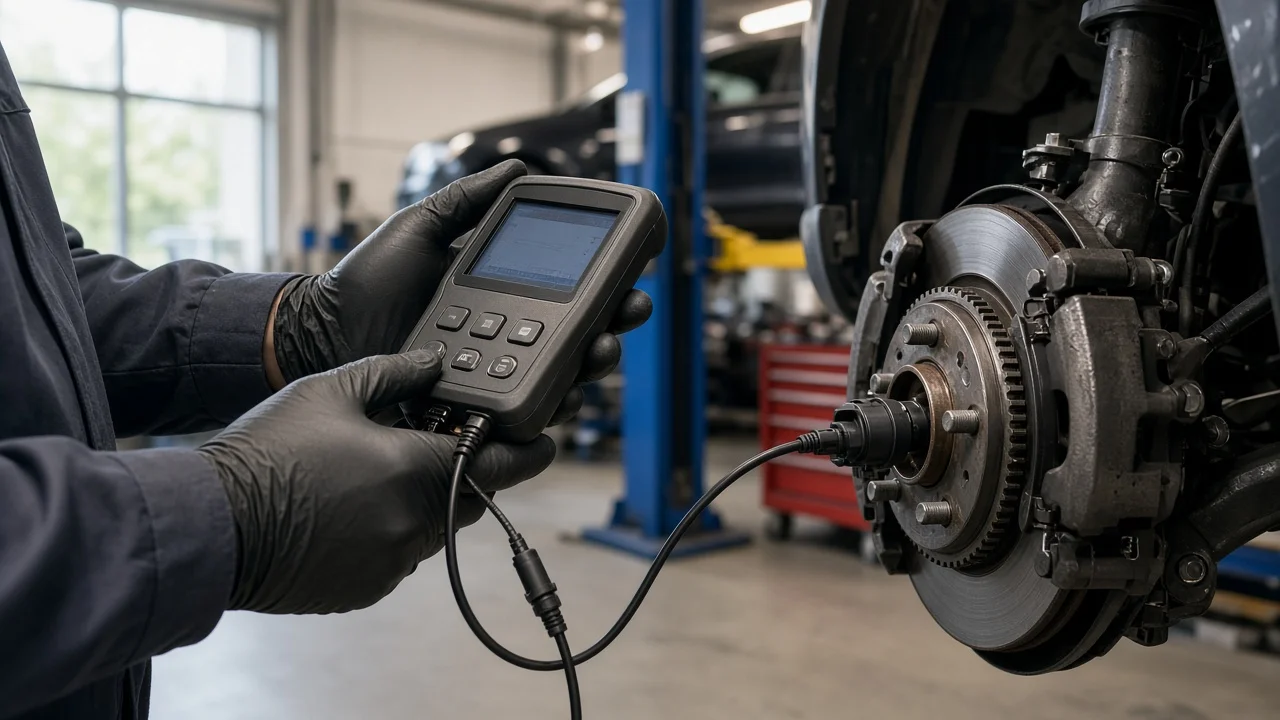
An ABS warning light and a wheel speed trouble code tell you that the control module saw a problem with a signal. They do not tell you which part failed. A sensor, its wiring, the connector, the tone ring or magnetic encoder, wheel bearing play, or the module itself can set the same code. The right tester helps you move from possible causes to a confirmed finding before you spend money on parts. This guide explains how to choose one that fits your vehicle and the job.
Define the job the product must do
Start with what you actually need to prove. Some owners want to check one suspect sensor before replacing it. Others are chasing an intermittent ABS or traction control light that only appears on rough roads or at highway speed. Some want to verify that a newly installed sensor reads correctly. A home mechanic with one or two vehicles has different needs from someone who works on many makes, and the cheapest tool that answers your specific question is usually the right starting point.
Keep three things separate: the code, the possible causes and the tests that confirm or rule each one out. Record the trouble code and any freeze-frame data the ABS module stores, then note the symptom conditions, such as speed, temperature, turning or bumps. Those conditions decide which tool you need. A fault that appears only above a certain speed is unlikely to be reproduced by a bench resistance check or a slow hand spin. It calls for live data captured while driving. A sensor that shows no signal at all on a lifted wheel may be found with simpler equipment.
Check compatibility
The sensor type on your vehicle determines which tester can evaluate it. Passive, or inductive, sensors generate their own alternating voltage as the tone ring passes, so a multimeter can check coil resistance and AC output, and an oscilloscope can show the waveform. Active sensors, which use Hall-effect or magnetoresistive elements, need power from the ABS module and produce a switched or current-based signal. A resistance reading on an active sensor is not a meaningful pass or fail test and can mislead you. For these you need a tester that safely powers the sensor and reads its output, or a way to monitor the signal with the circuit connected. Service information for your exact vehicle should give the sensor type, connector pinout and specifications.
If you plan to use a scan tool, confirm that it communicates with the ABS module on your make, model and year. Many basic OBD-II code readers only access engine and emissions data and will not show ABS codes or individual wheel speeds. Check the manufacturer's coverage list for the specific functions you need: reading and clearing ABS codes, live data for each wheel, freeze-frame data where the module supports it, and any bidirectional tests. For hands-on testers, check that the leads, back-probe pins or adapter harnesses suit your connectors, since some kits only include adapters for a limited set of connector styles.
Features that affect the choice
Signal display is the biggest practical difference between tools. A simple LED or buzzer indicator shows whether the sensor output switches as you turn the wheel slowly, which is enough to find a dead sensor or an open circuit. A graphing display or oscilloscope shows the shape of the signal, so you can see dropouts, an irregular pattern from a damaged or contaminated tone ring, or electrical noise. A scan tool's live data shows the speed the module calculates for each wheel, which is the most useful view for intermittent faults and speed comparison codes because you can watch all four wheels during a real drive. Recording, min and max capture or data logging makes it much easier to catch a brief dropout than watching a screen while driving.
Treat marketing labels such as universal, works on all ABS sensors or professional grade as claims to verify, not evidence. Useful evidence comes from the specification sheet and manual: which sensor types are supported, what supply voltage the tester provides to active sensors, whether the output is current limited or protected, input range and sampling rate for scope functions, the published vehicle coverage list and the software update policy. A magnetic field viewer card is an inexpensive aid for encoder rings built into wheel bearing seals, but it only shows that a magnetized pattern is present, not that the sensor reads it correctly.
Limitations and ownership costs
Most sensor tests need the wheel off the ground and free to turn, so plan for a jack, proper stands and safe access to connectors in the wheel well, which are often corroded or clipped in awkward places. Driving tests with live data need a helper or a securely mounted display. Ongoing costs include batteries, replacement back-probe pins and test leads, extra adapter harnesses and, for some scan tools, paid subscriptions or updates needed to cover newer vehicles. Avoid piercing wire insulation to take readings, because the damage can let moisture in and create the kind of fault you were trying to find.
No sensor tester diagnoses the whole system. A clean signal during a slow hand spin does not prove the sensor works at speed, when hot or while the harness flexes with suspension travel, so wiggle tests and road tests still matter. A tester cannot measure wheel bearing play, inspect a cracked tone ring or diagnose an internal module fault; those need physical inspection and the diagnostic steps in service information. After any repair, run a confirmation test: clear the codes, drive under the original symptom conditions, check that the wheel speeds agree in live data and verify the code does not return. Follow service information for any procedure required after a component replacement.
Build a practical shortlist
Before comparing products, confirm whether your vehicle uses passive or active sensors and whether the fault is constant or intermittent. Then check each candidate against the same points: it supports your sensor type and safely powers active sensors if needed; a scan tool lists ABS coverage for your exact vehicle, including live wheel speed data; leads or adapters fit your connectors without damaging them; the display shows what your fault requires, from a simple pulse indicator to a waveform or logged data; specifications are published rather than implied by labels; and update, subscription and consumable costs fit your budget.
Many owners get good results by combining a multimeter for wiring and passive sensor checks with a scan tool that reads ABS codes and live data. A dedicated sensor tester or a graphing meter becomes worthwhile if you work with active sensors often or need to see the signal shape. Whichever tool you choose, use it to confirm the cause before replacing parts, and finish every repair with a confirmation test.