ABS Light On a Semi Truck or Tractor: Freightliner and International
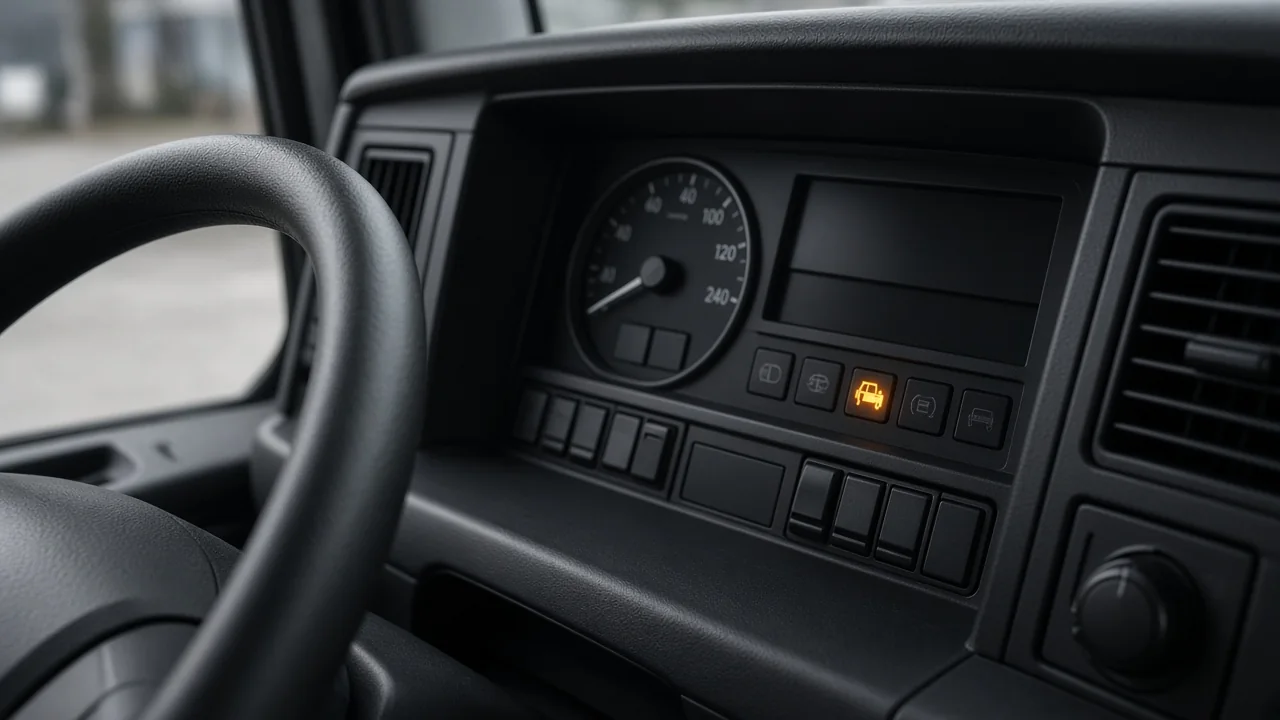
When an ABS light on a semi truck stays on, the warning belongs to the tractor's air-brake ABS, not a verdict on every brake. A tractor ABS warning lamp on a Freightliner or International unit can mean antilock function is limited while foundation braking may still operate. Meaning, nearby warnings, likely fault areas, brand identification, and Freightliner ABS light reset behavior after a fault all matter.
What a Tractor ABS Warning Light Means
On a semi truck, the tractor is the powered unit that pulls the trailer. An ABS light on tractor equipment is the tractor ABS warning lamp for that powered unit's air-brake ABS, not a trailer lamp and not a full brake-health report. When the ABS light on a semi truck is illuminated, antilock function on the tractor may be unavailable or limited. Foundation service brakes can still apply air, so the lamp alone cannot establish overall brake condition or whether a low-air warning is also present.
Many air-brake ABS controllers run a startup lamp check, so a brief tractor ABS light at key-on can be expected self-test behavior. Persistent illumination after that check, or an intermittent ABS light on tractor after movement, is different and needs diagnosis. Expected timing depends on the installed ABS system, not a generic truck rule. Identify the tractor ABS indicator by its label and the vehicle manual so a trailer ABS lamp is not mistaken for the tractor warning.
Safety Decisions When the ABS Light Appears
A semi truck ABS light on is not the same event as a low-air warning, a red brake warning, pulling to one side, or audible air loss. Those signs point to a braking or air-supply problem that can affect stopping, so stop in a protected location and obtain professional assistance. Do not crawl under the vehicle, work on pressurized air components, or attempt roadside brake tests. Limit observations to a safely parked truck with the parking brake set per the vehicle manual.
An amber ABS light on a tractor does not give enough information to declare the truck safe to dispatch or continue operating. The lamp can mean antilock control is limited while other brake warnings remain dark, or it can appear with messages that change the decision. Follow the vehicle manual and fleet procedures, record every accompanying warning, and contact maintenance before the unit rolls. Note whether the tractor ABS light came on at startup, after a stop, or during a trip.
Fault Areas That Require ABS Diagnosis
An ABS light on a semi truck can point toward several tractor-side fault areas without naming a failed part. Wheel-speed sensor signals, sensor wiring and connectors, electrical supply to the ABS control module, ABS modulator function, and module communication are all investigation paths. None of those areas can be ranked from the lamp alone. Timing still helps: a warning at startup, a lamp after the wheels turn, or an intermittent tractor ABS light each steers the next check, yet timing cannot identify a failed part by itself.
Useful notes for a technician include recent battery work, wheel-end service, weather exposure, and visible damage seen without disassembly. Corroded connectors, a disturbed wheel-speed sensor after a hub job, or a damaged harness near a steer or drive axle can produce an active fault that keeps the lamp on. Professional scan data, electrical checks, and wheel-end inspection are needed when the warning persists. Replacing a modulator, sensor, or ABS control module because the lamp is on, without confirming the fault path, can leave the original problem in place.
Freightliner Tractor ABS: Identify the Installed System
An ABS light on Freightliner equipment is not a single diagnostic story. Before selecting procedures, record the truck model, model year, and the installed ABS system or controller identification from the cab, the module label, or the build information. A Freightliner tractor ABS light on a newer dash can look different from an older analog cluster, and different controllers store faults differently. One controller's lamp behavior cannot be copied onto another unit. Without that identification, blink codes and display messages stay unconfirmed.
Document the exact lamp label, any warning messages, and the illumination pattern when the ABS light on a Freightliner tractor appears: steady, flashing, only at key-on, or after the truck moves. Supported driver displays or a qualified technician can retrieve diagnostic information for that installed system. Blink-code retrieval belongs only when the vehicle and ABS controller documentation describe that method. Verify every code against the specific Freightliner tractor and controller documents before interpretation. Universal blink-code charts are not a substitute, because manufacturer-dependent codes require vehicle-specific confirmation.
International Truck ABS: Record Warnings and Verify Codes
International trucks require model, year, and ABS controller details before anyone interprets an ABS light on an International truck. An International truck ABS light on one vocational chassis can be driven by a different controller than a highway tractor of another year, so the same amber lamp is not interchangeable evidence. Record the controller family from the module label or supported electronic information rather than assuming a shared International definition. Until those details are known, the lamp is a tractor-side ABS warning, not a named failed sensor, modulator, or module.
From supported dash displays, write down the complete code, its source, and whether the screen shows an active fault or a stored fault when that distinction is available. Checking vehicle-specific and ABS-system-specific definitions comes next; a code is evidence to interpret, not proof a part has failed. Code availability and retrieval methods depend on the installed equipment. If blink codes, display menus, or scan paths are unsupported or unclear on that International truck, a qualified heavy-truck technician should retrieve and confirm them rather than forcing an undocumented sequence.
Freightliner ABS Reset Behavior After a Fault
A Freightliner ABS light reset after a code is cleared does not repair the cause. If the condition remains, an active fault can turn the Freightliner tractor ABS light on again when the controller retests the circuit. Lamp clearing may require a successful self-check, system-specific operating conditions after repair, or a supported diagnostic procedure. Distinguishing an active fault from stored fault history matters: stored history can remain after the lamp goes out, while an active fault should keep the warning present until the original issue is confirmed corrected.
Battery disconnection, fuse removal, wiring jumpers, and improvised reset sequences are not a Freightliner ABS light reset method and can add electrical damage or hide an active fault. Any movement validation the controller needs after repair belongs to an appropriate professional procedure for that tractor. Confirm the original issue has been corrected with scan data or documented tests for the installed system before treating the lamp as resolved. If the ABS light on Freightliner returns after a clear, the stored-versus-active distinction still governs the next step.