ABS Light Flashing or Coming On and Off Intermittently
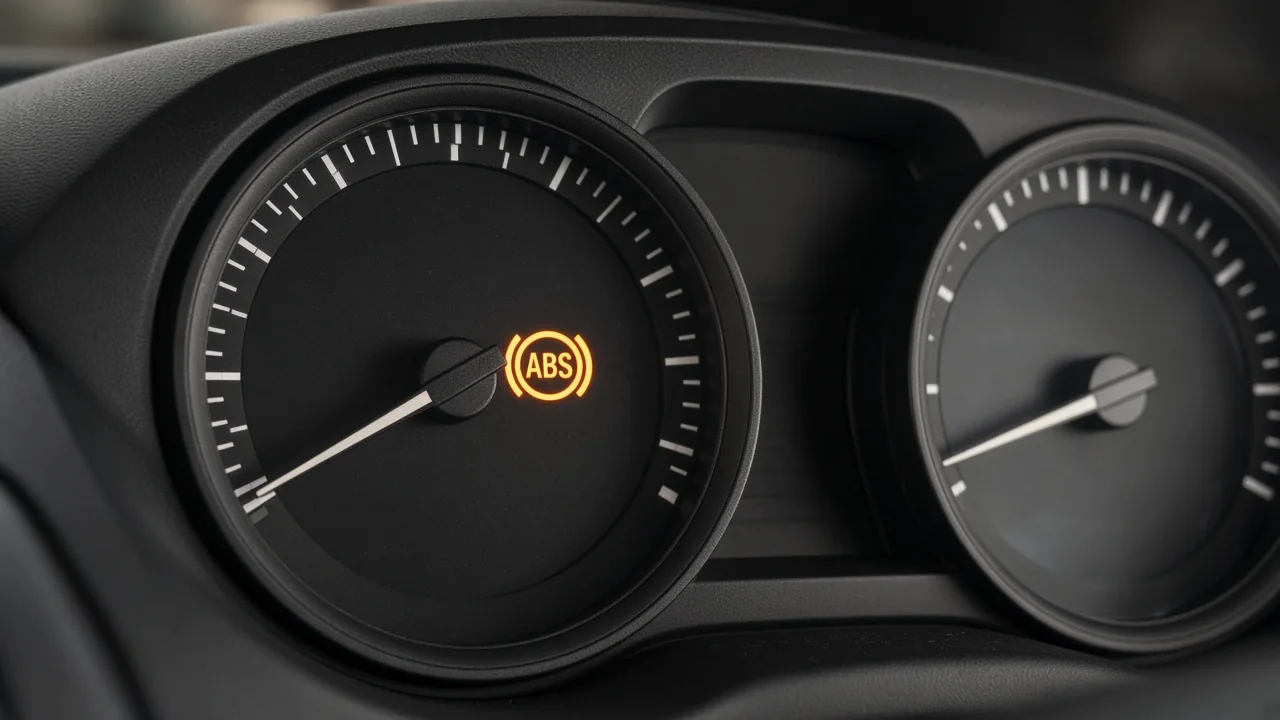
A flashing ABS light, or an ABS warning that comes on and off, differs from a lamp that stays steadily on. The pattern can suggest an interrupted signal rather than a constant module fault, but the lamp does not name the cause. How the light behaves, what the pedals feel like, and which conditions coincide with the warning help a technician interpret ABS fault codes and wheel speed data without treating a blink as proof a part has failed.
Identify When and How the ABS Light Appears
Many vehicles illuminate the ABS warning light briefly during the key-on or startup lamp check so the driver can confirm the bulb works. After that self-check, the lamp should follow the pattern the owner's manual describes for that vehicle. A flashing ABS light, a brief flicker, a lamp that stays on, or an ABS light that goes on and off between trips are not interchangeable events. Record which of those patterns you saw, how long it lasted, and whether it cleared before the next start, because those details shape the diagnostic path.
Flashing alone does not establish a fault type or how severe the condition is. Some systems use a blink, a steady amber lamp, or a combination of messages, and the meaning depends on the vehicle rather than on a universal rule. The ABS warning lamp is also not a universal indicator of normal antilock activation during a hard stop. If the light is turning on and off while you are simply driving, treat that as warning behavior to document, not as confirmation that ABS is cycling as designed.
Recognize Brake Symptoms That Require Stopping
An ABS fault can leave ordinary hydraulic braking available while antilock assistance is unavailable, so the vehicle may still stop in a straight, moderate stop. The lamp alone cannot confirm that braking is safe. If you feel reduced stopping power, a soft or sinking pedal, see fluid leakage, or the ABS warning appears with a red brake warning light, stop as soon as it is safe and arrange assistance. Those combinations can involve the foundation brake system, not only the antilock electronics, and they deserve immediate attention rather than continued driving.
When an amber ABS light is on intermittently and the pedal feel, stopping distance, and fluid appearance seem unchanged, consult the owner's manual for that vehicle's warning strategy and schedule prompt diagnosis. Do not perform deliberate hard braking or try to trigger ABS as a homemade check. That practice can be unsafe, and it does not substitute for stored ABS fault codes or live wheel speed data. An intermittent ABS light that turns on and off without a pedal change still needs investigation, because antilock function may drop out when everyday braking still feels familiar.
Record the Conditions Behind an Intermittent Warning
Note whether the ABS light starts going on and off at key-on, after the vehicle begins moving, during turns, over bumps, or in wet weather. Those timings help distinguish a self-check from an interrupted wheel speed sensor signal or an intermittent electrical connection that only appears once the harness flexes. Also record any traction or stability messages, unusual noises, and recent tire, wheel, bearing, or brake work. An ABS light that goes on and off while driving over uneven pavement can share a timeline with a connector, encoder ring, or sensor wiring issue, though the timeline is only a clue.
A light that clears after a restart does not prove the fault has been repaired. Intermittent ABS light behavior often returns once the same speed, moisture, or vibration returns, and stored codes can remain even after the lamp goes dark. Document what you observed only when the vehicle is safely parked. Do not try to recreate a suspected bump, splash, or steering input to see the ABS light flashing on and off again. The goal is a written sequence a technician can use, not a roadside experiment that could interrupt braking assistance at the wrong moment.
Understand Possible Sources of an Interrupted ABS Signal
A wheel speed sensor, damaged sensor wiring, or an intermittent electrical connection at a connector can interrupt the signal the ABS module uses to compare wheel speed data. When that signal drops out, the ABS light may go on and off rather than stay lit. On designs that use an encoder ring or tone ring, missing teeth, corrosion, or bearing movement that shifts the air gap can distort the same readings. Those mechanical issues can appear as an intermittent ABS light because the gap or contamination changes with rotation, load, or temperature.
Power supply, ground, or charging voltage problems can also disturb the module when other symptoms or diagnostic evidence support that path, such as dimming lamps or codes that point to supply rather than a single wheel. Rain, bumps, or recent service near a hub give useful timing, not proof that a particular sensor has failed. That pattern helps explain why the ABS light goes on and off after moisture, vibration, or wheel work, yet each possibility still needs confirmation rather than replacement based on timing alone.
Make Safe Observations Before the Diagnostic Appointment
Before the appointment, record the warning sequence and any other dashboard messages while the vehicle is parked and the ignition is in the position the manual describes for viewing lamps. Note a visibly damaged tire, a recently fitted spare, or an obvious change in tire size if you can see it from a normal stance, without assuming those items caused the ABS light to go on and off. Different rolling diameters can affect wheel speed data on some systems, but they remain observations for the technician rather than a completed diagnosis.
Limit visual checks to readily visible areas around the tires, wheels, and the lower portion of the vehicle. Do not lift the vehicle, reach behind the wheels, unplug sensors, or probe brake electronics. Those steps can damage connectors, erase useful data, or leave the system in an unknown state. Preserve fault information rather than disconnecting the battery or clearing codes to make the lamp disappear. An ABS light on intermittently may leave a snapshot that a later scan can use; wiping that snapshot to darken the dash only delays finding the interrupted circuit.
Use ABS Fault Data to Trace and Confirm the Repair
Diagnosis of a flashing or intermittent ABS light requires a scanner that can communicate with the vehicle's ABS module. A basic engine-code reader may not retrieve those ABS fault codes, leaving the warning unexplained when the lamp has been turning on and off for days. Before interpreting any code, verify the definition and the diagnostic procedure for the exact vehicle, because manufacturer-dependent codes are not interchangeable. A stored fault is evidence to interpret. It does not, by itself, prove a part has failed, and the same numeric label can mean different circuit conditions on different platforms.
Stored fault status, available event data, and live wheel speed readings help a technician investigate an ABS light that comes on and off. Dropouts on one channel during a turn or over a bump can implicate wiring or an encoder ring while the other wheels stay steady. A code naming a wheel or sensor circuit does not establish that the sensor itself needs replacement, because open wiring, a poor ground, or a connector pin can set the same description. Professional confirmation uses circuit and signal testing, repair verification, and a follow-up scan; a cleared lamp alone is insufficient.