8L90 Transmission Valve Body Identification
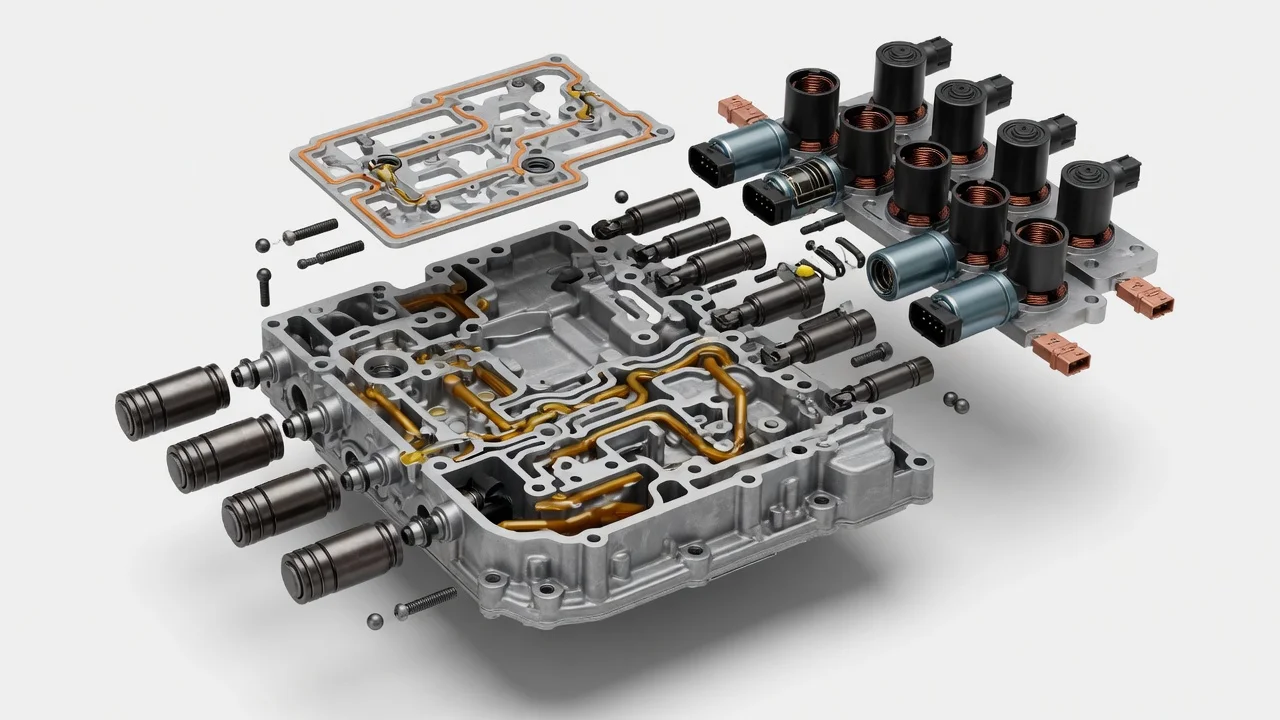
The 8L90 is GM's eight-speed rear-wheel-drive automatic, used in full-size trucks, SUVs and several performance models. Identifying the right valve body matters because the hydraulic body, its solenoids and the transmission control module work as a matched assembly tied to the vehicle's calibration. This guide covers how to confirm what you have, what changes fitment, and how to approach repair options without treating a symptom as proof of a failed part.
Short answer: how to identify an 8L90 valve body
There is no single universal 8L90 valve body. Start with the vehicle rather than the part. First confirm the transmission type through the VIN and the RPO codes on the service parts identification label, because GM's eight-speed 8L45 and ten-speed 10L90 have similar names but are different units. Then match the part number of the valve body or control solenoid assembly through a dealer or GM parts catalog lookup by VIN. Casting numbers and photos are useful clues, but on their own they do not confirm fitment.
On the 8L90, the transmission control module is internal and mounted with the control solenoid assembly on the valve body. Identification therefore has two layers: the hydraulic hardware and the electronic module that holds the calibration. An assembly that bolts in correctly can still need programming to your VIN, and a used unit from another vehicle may carry software meant for a different engine, model year or drivetrain setup.
How the valve body and control module work together
The valve body is a maze of passages and spool valves that directs pressurized fluid from the pump to the clutch packs. Each shift on the 8L90 is a clutch-to-clutch handoff: one clutch releases while another applies. Solenoids commanded by the control module regulate line pressure and the timing and pressure of each clutch apply. The module reads input and output speed sensors, fluid temperature and other inputs, then adjusts its commands to keep shifts smooth.
Because the module continuously adapts to clutch wear and fluid condition, shift behavior depends on hydraulics, electronics and learned values together. Worn valve bores, debris in the fluid, a sticking solenoid or corrupted adaptive values can each produce rough or delayed shifts. That shared responsibility is why a valve body swap usually ends with programming and a relearn procedure rather than just bolting parts in place.
What changes the answer
Model year and application matter most. GM has revised 8L90 components and software over the production run, and some part numbers have been superseded. Calibration also varies with engine, axle ratio, vehicle weight and drivetrain configuration, so two trucks with the same transmission name may not accept the same programmed assembly without reprogramming.
The source of the replacement changes the process. A new dealer assembly is typically programmed after installation with a factory-capable tool. Some remanufactured units are sold preprogrammed to a supplied VIN, while used salvage assemblies carry whatever software the donor vehicle had. Ask any seller for the exact part number, programming status and the vehicle it came from or was set up for.
Fluid specification is another variable. GM later revised the fluid recommendation for many 8L90 applications to address torque converter shudder, so the correct fluid for your vehicle depends on its year and any applicable service bulletins. Installing a valve body into a transmission filled with the wrong or degraded fluid can leave the original complaint unresolved.
What the owner can do
Gather the basics before shopping: VIN, RPO codes from the service parts label, mileage and service history, including when the fluid was last changed and which fluid was used. Note shift behavior in detail, such as which gear change misbehaves, whether it happens cold or hot, and whether it occurs under light or heavy throttle. This information shortens diagnosis and helps confirm the correct part later.
Read diagnostic codes with a scan tool that can access the transmission module, not only a basic engine code reader. Save the codes and freeze-frame data before anyone clears them. Many 8L90 applications have no conventional dipstick, and the fluid level is checked at a fill or check plug within a specified temperature range, so a level check is usually a shop job unless you have the right procedure and a way to read fluid temperature.
Before buying, confirm the part number against your VIN with a dealer parts department, and ask whether a core return applies. Plan for programming and the transmission adaptive learn procedure after installation. Without them, even a correct and healthy valve body may shift poorly or set codes.
Symptoms that do and do not point to the valve body
Harsh or delayed engagement, flare between gears, erratic upshifts or downshifts and repeated pressure or ratio-related codes can involve the valve body or solenoid assembly. The same complaints can also come from low or contaminated fluid, a wiring or connector fault, outdated software, worn clutches or an internal module fault. A code identifies a condition the module detected, not necessarily the part that failed.
A shudder felt at steady cruising speed, often like driving over rumble strips, has commonly been associated with the torque converter clutch and fluid condition on these transmissions rather than the valve body. Confirming the cause usually requires data from live sensor readings, a check of fluid level and condition, and a review of applicable bulletins before replacing hardware.
Limitations and next step
This guide cannot supply part numbers for a specific vehicle, because those depend on VIN-level data and current superseded parts information. It also cannot confirm a diagnosis from symptoms alone. Programming, fluid level verification and adaptive learning generally require equipment and service information that most owners do not have.
The practical next step is to bring your VIN, saved codes and shift notes to a transmission shop or dealer that can program GM modules. Ask them to check for service bulletins, software updates and any remaining warranty or extended coverage before committing to a valve body. That approach keeps repair options open and avoids paying for a part that does not address the actual fault.