700R4 Transmission Valve Body Identification
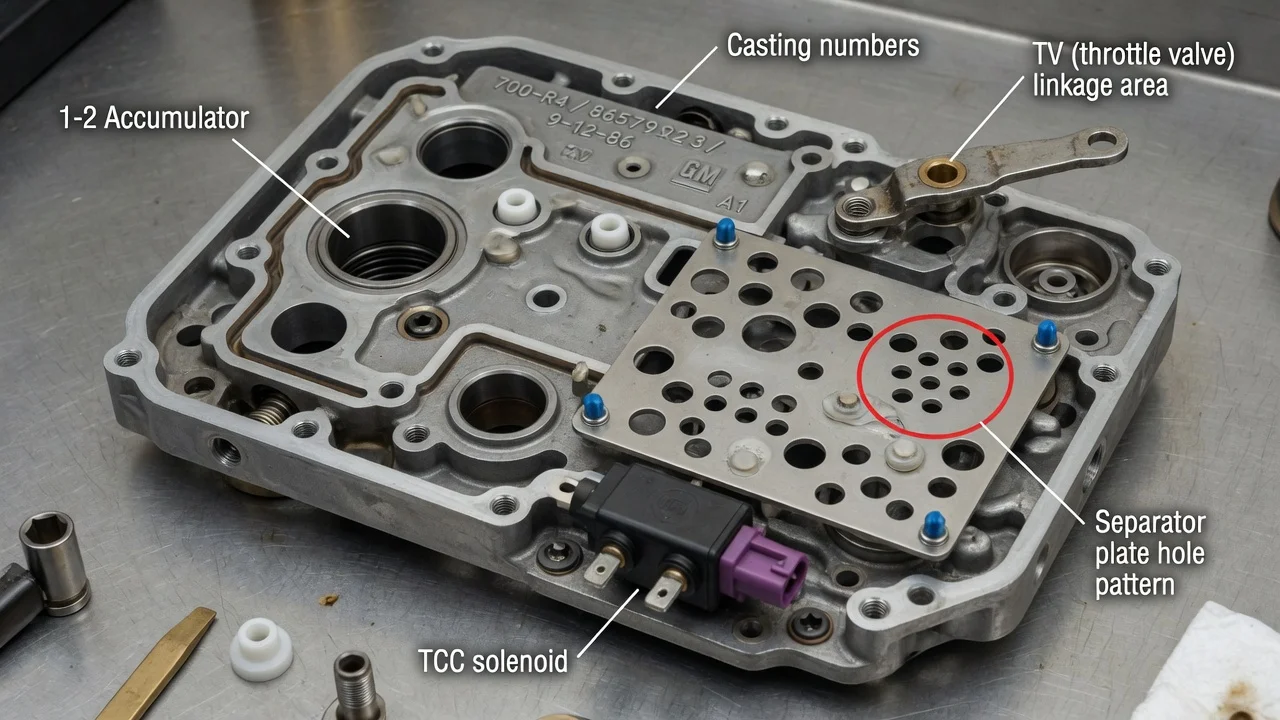
The valve body is the hydraulic control center of a 700R4, and getting the right one matters more than many owners expect. Units that look identical from the outside can differ in internal calibration, separator plate passages and how they mate to the case. This guide explains how to confirm which valve body you have, what details affect fitment, and when identification alone is not enough to decide on a repair.
How to identify a 700R4 valve body
The most reliable way to identify a 700R4 valve body is to read the casting number cast into its aluminum body and compare it with the separator plate and the transmission case it came from. The valve body is mounted inside the transmission, under the oil pan, so you have to drain the fluid and remove the pan and filter to see it. Casting numbers identify the basic casting, not necessarily every internal valve, spring or calibration inside it, so treat them as a starting point rather than a complete answer.
Start by confirming the transmission type itself. The 700R4 is a hydraulically controlled four-speed automatic with a throttle valve cable; its later versions were renamed 4L60 while remaining hydraulically controlled. The electronically controlled 4L60E that followed uses a different valve body operated by shift solenoids, and it is not interchangeable with a 700R4 unit. The identification tag or stamped code on the transmission case, together with the vehicle's service history, helps establish the production period before you compare internal parts.
What the valve body does
Inside the valve body, spool valves slide in machined bores and direct pressurized fluid from the pump to the clutches and bands. Their position depends on line pressure, governor pressure that rises with vehicle speed, and throttle valve pressure set by the TV cable connected to the throttle linkage. The balance between these pressures decides when the transmission upshifts, downshifts and how firmly each shift happens.
The separator plate sits between the valve body and the case. Its holes and orifice sizes meter fluid flow and help shape shift behavior, and check balls located in passages control the direction of flow. Because the plate, gaskets and check ball positions work together with the case passages, a valve body cannot be judged in isolation. Torque converter clutch lockup is commanded electrically, but the gear shifts themselves are hydraulic, which is why TV cable adjustment has such a large effect on how a 700R4 drives.
Differences that affect fitment
GM revised the 700R4 several times during its production run, and some changes involved the case, pump, accumulators and hydraulic passages rather than the valve body alone. As a result, a valve body that bolts up physically may not match the passages or separator plate of a different-year case. Mixing components from different revisions can produce harsh or soft shifts, slipping, delayed engagement or shift points that do not respond correctly to throttle input.
Previous work also changes the answer. Many 700R4 transmissions have been rebuilt, and valve bodies are often fitted with aftermarket shift kits, modified springs, drilled separator plates or replacement valves. A rebuilt or modified valve body may carry its original casting number while behaving very differently from stock. Vehicle application matters too: calibrations differed between engine and vehicle combinations, so a unit from a different application may shift at unsuitable points even if it fits.
If the vehicle has been converted, for example with a different engine or carburetor or throttle body, the TV cable geometry may no longer match what the valve body expects. In that case the valve body may be correct while the symptoms come from linkage setup.
Practical steps for owners
Before removing anything, record what the transmission actually does: when shifts occur, whether they are harsh or soft, whether there is slipping, and whether lockup engages. Check the fluid level and condition according to the procedure and fluid specification for your vehicle; burnt smell, dark color or debris point toward internal wear that a valve body swap will not fix. Confirm that the TV cable is connected, moves freely and is adjusted correctly, because a misadjusted cable is a common source of poor shift behavior in this transmission.
When you remove the pan, note any debris and photograph the valve body before touching it. Write down the casting number, inspect the separator plate for markings or modifications, and look for signs of a shift kit. If you remove the valve body, keep the check balls and their locations documented, since dropping or misplacing one can cause serious shift problems. When buying a replacement, ask the seller for the casting number, the transmission it came from and whether it was modified, and compare that information with your case and plate.
Repair options range from cleaning and resealing the existing unit, to installing a calibrated rebuilt valve body, to a full transmission rebuild if internal friction parts are worn. Choose based on confirmed findings, not on the symptom alone.
Limitations and when to get help
A symptom such as late shifts, harsh engagement or slipping does not confirm a failed valve body. The same signs can come from low or degraded fluid, a misadjusted TV cable, a governor fault, worn clutches or bands, accumulator problems or pump wear. On vehicles with an engine computer, diagnostic codes related to lockup or sensors may help, but the 700R4 itself has no electronic shift control to report gear-shift faults, so diagnosis depends heavily on road testing and pressure checks.
Casting numbers and visual inspection cannot reveal worn bores, sticking valves or an incorrect internal calibration. If you are unsure whether a valve body matches your case, or if the transmission shows signs of internal damage, have a transmission specialist perform a line pressure test and inspect the unit. Vehicle-specific service information for your exact model and production period is the best reference for procedures, torque values and fitment before you commit to a repair.