700R4 Transmission Cooler Line Routing Diagram
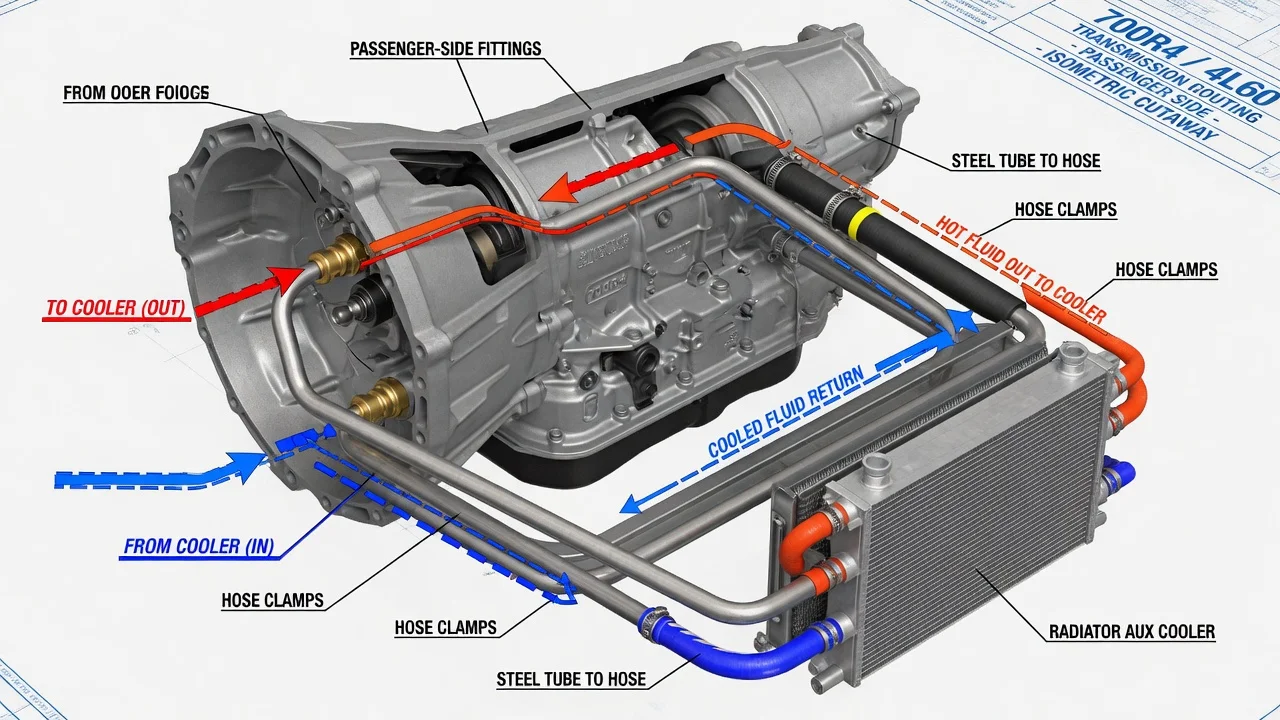
A 700R4 cooler line setup looks simple: two steel lines carry fluid from the transmission case to a cooler and back. Getting the routing right still matters, because the returning fluid does more than shed heat. This article describes the routing in words, explains how to confirm which port is which on your unit, and covers the configurations that change the layout.
The Short Answer on 700R4 Cooler Line Routing
The 700R4 is a GM four-speed overdrive automatic built from the early 1980s into the early 1990s and renamed 4L60 late in its run. It has two cooler line fittings on the passenger side of the case. From those fittings, steel lines typically run forward along the side of the transmission and engine to the transmission cooler built into one of the radiator tanks. One line carries hot fluid out to the cooler, and the other brings cooled fluid back. If an auxiliary cooler is added, it is normally placed in the return line after the radiator cooler, so fluid passes through the radiator first and the add-on cooler second before reentering the transmission.
The key qualification is port assignment. Do not decide which fitting is supply and which is return from a generic drawing, a photo of a different vehicle, or the layout of an older three-speed. Confirm it with factory service information for your vehicle or with the simple flow check described below. Line diameter, fitting style and the path around the crossmember and exhaust also vary, so any diagram is a starting point rather than a guarantee of fitment.
How Fluid Moves Through the Cooler Circuit
Fluid for the cooler circuit comes from the torque converter feed. Pressurized fluid fills the converter, picks up heat generated by the fluid coupling, and exits toward the cooler outlet port. It then travels through the line to the radiator, where a small heat exchanger inside the tank transfers heat to the engine coolant. Because coolant runs at a regulated temperature, the radiator cooler can also help the transmission fluid reach operating temperature sooner in cold weather.
In this family of GM transmissions, fluid returning from the cooler is commonly routed into the lubrication circuit that feeds bushings, gears and other rotating parts. That is why a restricted cooler, kinked line or reversed connection matters beyond temperature alone: reduced return flow can mean reduced lubrication. The lockup torque converter clutch also affects heat load, since unlocked operation under heavy load generates more heat than locked highway cruising.
Configurations That Change the Routing
Vehicle application is the biggest variable. Factory 700R4 units went into rear-wheel-drive cars, full-size and compact trucks, and vans, and each used lines bent to its own chassis, radiator position and exhaust layout. Four-wheel-drive versions add a transfer case and different crossmember arrangements that change where lines can run. Radiator design matters too: some place the cooler fittings in a side tank, others in a bottom tank, and some heavy-duty or towing packages included an external cooler from the factory.
Swaps are the most common source of confusion. When a 700R4 replaces a two- or three-speed automatic in an older vehicle, the original lines rarely fit, the case port positions differ, and the radiator may lack a cooler or use a different fitting size. The case ports are threaded, and adapters are commonly needed to match the line diameter, which is often 5/16 or 3/8 inch depending on application. A rebuilt or replacement transmission can also arrive with fittings that differ from the removed unit, so check the actual parts rather than relying only on the vehicle's original specifications or service history.
What the Owner Can Do
Start by confirming the transmission type. A 700R4 or early 4L60 uses a throttle valve cable and has no multi-pin connector for electronic shift solenoids, which distinguishes it from the later 4L60E. The identification tag or case markings can be matched to the vehicle to rule out an earlier swap.
To confirm which line is the supply, set the parking brake, disconnect one line at the radiator, and point both the steel line and the radiator fitting into a clean container using a short length of suitable hose if needed. Start the engine in park for only a few seconds. If fluid flows from the steel line, that line comes from the transmission outlet; if it flows from the radiator fitting instead, the line you disconnected is the return. Shut the engine off promptly, reconnect, and top up with the correct fluid. Original units were filled with Dexron II; check the fluid specification listed for your vehicle, since many owners now use the current GM-licensed replacement.
While the lines are accessible, inspect their full length. Steel lines should be held by clips at their mounting points, clear the exhaust and steering or suspension parts with a comfortable margin, and show no kinks, flattened bends or rust-through. Any rubber section should be hose rated for transmission fluid, secured with suitable clamps; generic compression fittings are a frequent leak source on these lines. After any change, recheck the fluid level at operating temperature as specified for your vehicle and pay attention to shift behavior on a test drive.
Limitations and When to Get Help
Fluid on the exhaust, a burnt smell, darkened fluid, late or harsh shifts, or slipping can point toward a cooling problem, but none of these proves a failed line or cooler. The same signs can come from internal wear, a misadjusted throttle valve cable, low fluid or a converter issue. The 700R4 predates the transmission diagnostic codes of later electronically controlled units, so a scan tool usually offers little help; inspection, fluid condition, pressure testing and a flow check carry most of the diagnosis.
Milky or pink-foamy fluid, or coolant that looks contaminated, can indicate an internal radiator cooler leak and needs prompt professional attention, because mixed fluids can damage friction materials. If the vehicle has been modified, has an unknown history, or needs lines bent from new tubing, a transmission shop can confirm port assignment, fitting threads and cooler capacity for how the vehicle is used. Repair options range from replacing a single line to adding an auxiliary cooler or replacing the radiator, and the right choice depends on what inspection actually finds.