Choosing a Turbo Blanket for a 7.3 Powerstroke
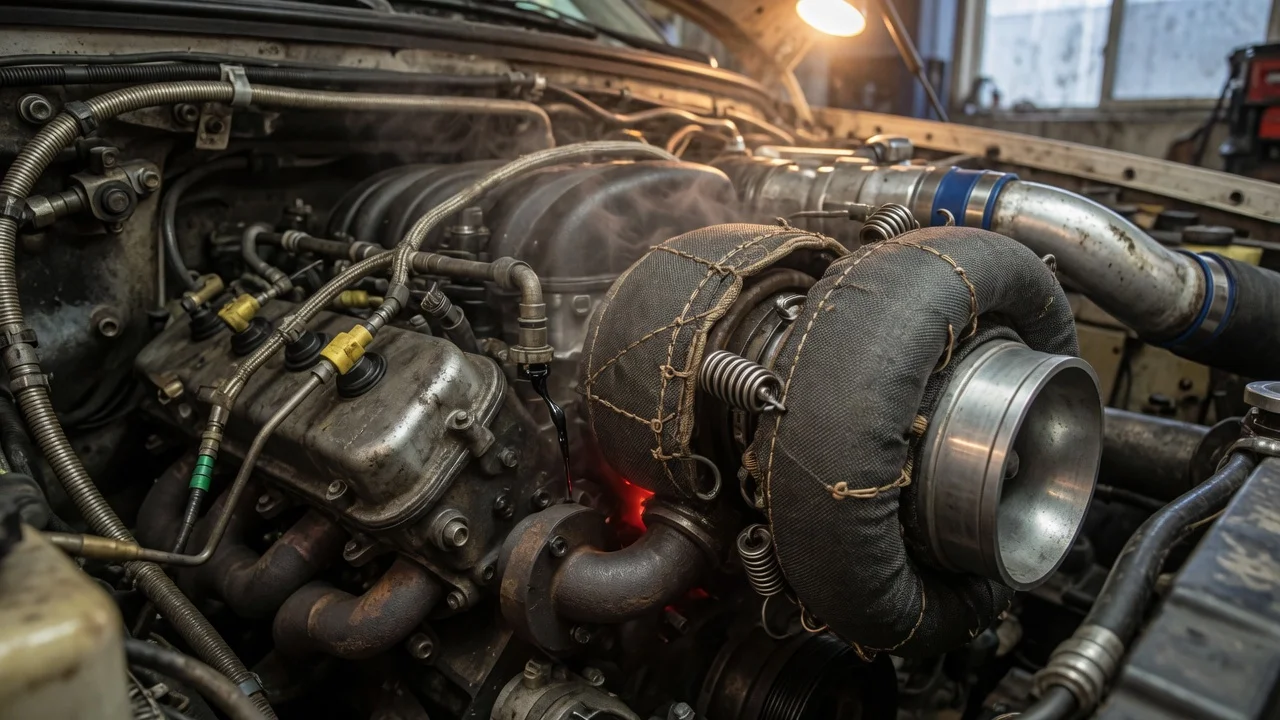
A turbo blanket for a 7.3 Powerstroke has a narrow job: hold heat inside the turbine housing so less of it radiates into the engine valley, intake plumbing and firewall area. Choosing one well depends on which truck you own, which turbo is actually on the engine and what you expect the blanket to do. This guide covers fitment, materials, limits and a practical shortlist, without promising gains the product cannot deliver.
Define the job the product must do
The 7.3L Power Stroke mounts its turbocharger on a pedestal in the engine valley, high and close to the cowl. That location keeps the exhaust path short, but it puts a hot turbine housing near the intake elbow, wiring, hoses and the firewall. A blanket is meant to reduce radiant heat in that area. Owners usually buy one for three reasons: protecting nearby components, lowering underhood temperatures during towing or long climbs, or retaining exhaust heat in the hope of slightly quicker spool. The first two are reasonable goals. The third is a claim to treat with caution, because results vary and are rarely measured under controlled conditions.
Before shopping, note how the truck is used. A daily driver on stock power has different needs than a tow rig that sees sustained high exhaust gas temperatures or a modified truck with a larger turbo. Consider practical constraints too. Are you comfortable removing the intake and working around the turbo? Does the engine already have oil or exhaust leaks? Do you plan turbo or pedestal service soon? Installing a blanket just before that work means doing the job twice.
Check compatibility
Fitment starts with the model year and the exact turbocharger, not just the engine name. The 1994.5–1997 trucks generally use a Garrett TP38. Most 1999–2003 Super Duty and Excursion applications use the wastegated GTP38, and early 1999 trucks may differ, so confirm before ordering. These housings and their surrounding hardware are not interchangeable. E-Series vans with the 7.3 have their own packaging, so a blanket sold for pickups may not suit a van. If the original turbo has been replaced, the factory fitment listing may no longer apply. Check the part on the engine, the service history and any identification tag on the housing before trusting a listing.
Aftermarket turbos change the picture. A drop-in upgrade that keeps the factory-style housing may accept a stock-pattern blanket. A kit that uses a different frame size or a T4-style turbine housing needs a blanket matched to that housing's size and flange. Look for cutouts and clearance at the inlet, the outlet, the wastegate actuator or rod, and any exhaust backpressure valve hardware still on your setup. A blanket that bunches against an actuator or interferes with linkage creates a new problem. Also check clearance to the intake hose, nearby oil and coolant lines, and the cowl once the blanket's thickness is added.
Features that affect the choice
Materials matter more than labels. Most blankets use an insulating core such as fiberglass, basalt or silica fabric, wrapped in an outer layer that may be coated fabric, foil-faced material or woven mineral fiber. An advertised temperature rating describes what the material tolerates, not how much heat the blanket blocks on your truck. Manufacturers do not always state how those ratings were determined. Treat a peak temperature number as a minimum requirement, not a way to compare performance.
Construction details are easier to judge. Check the stitching thread, since it must survive the same heat as the fabric. Look at the fastening method, such as springs, straps or safety wire, and at how closely the cutouts match the housing. A snug, even fit insulates better and is less likely to shift. Some blankets come in two or more pieces so they can be installed without removing the turbo, which helps on a 7.3, where access is tight. Claims of large horsepower gains or dramatic temperature drops without disclosed test conditions are marketing, not evidence. Owner reports of lower intake temperatures or a cooler cowl are useful context. They mix different trucks, seasons and symptom conditions, though, so they do not prove a measured result for yours.
Limitations and ownership costs
A blanket does not repair anything. It will not stop an exhaust leak at the up-pipes or manifolds, seal a seeping turbo pedestal, clear diagnostic codes or correct a boost complaint. Some signs call for inspection before you buy any accessory: a heat or exhaust smell in the cab, soot around joints, or low boost. Reported high underhood heat is a symptom, not a verified failure. Covering the turbo can also hide the evidence a technician needs to find the cause.
Ownership costs are mostly time and inspection. Installation usually means removing intake plumbing and working around the turbo, so the engine must be fully cool. Oil that leaks onto insulating material can soak in and become a fire risk. If that happens, remove the blanket, repair the leak and replace the blanket if it is contaminated. Because the cover hides the metal, some owners remove it periodically to inspect the housing and fasteners. Blankets also degrade with heat cycling, and frayed or brittle material should be replaced rather than patched. During any related work, follow the manufacturer specifications for torque and hardware; the blanket's instructions do not replace them.
Build a practical shortlist
Narrow your options with a checklist rather than a ranking. Confirm that the listing names your model year, body style and engine configuration, and that it matches the turbo actually installed. Verify the cutouts for the wastegate and any backpressure valve hardware on your truck. Compare the core and outer materials, the thread type, the included fastening hardware, and whether the design is one-piece or multi-piece.
Next, compare the practical terms: clear installation instructions, a return policy if the fit is wrong, and warranty language covering the material. Set aside products whose claims rest on unspecified tests. If the truck has an open exhaust or oil leak, repair it before installing anything. For most 7.3 owners, the right choice is a blanket that fits the exact turbo, clears the surrounding parts and comes off easily for inspection, however it is advertised.