7.3 Powerstroke and 7.3 IDI Fuel Filter Guide
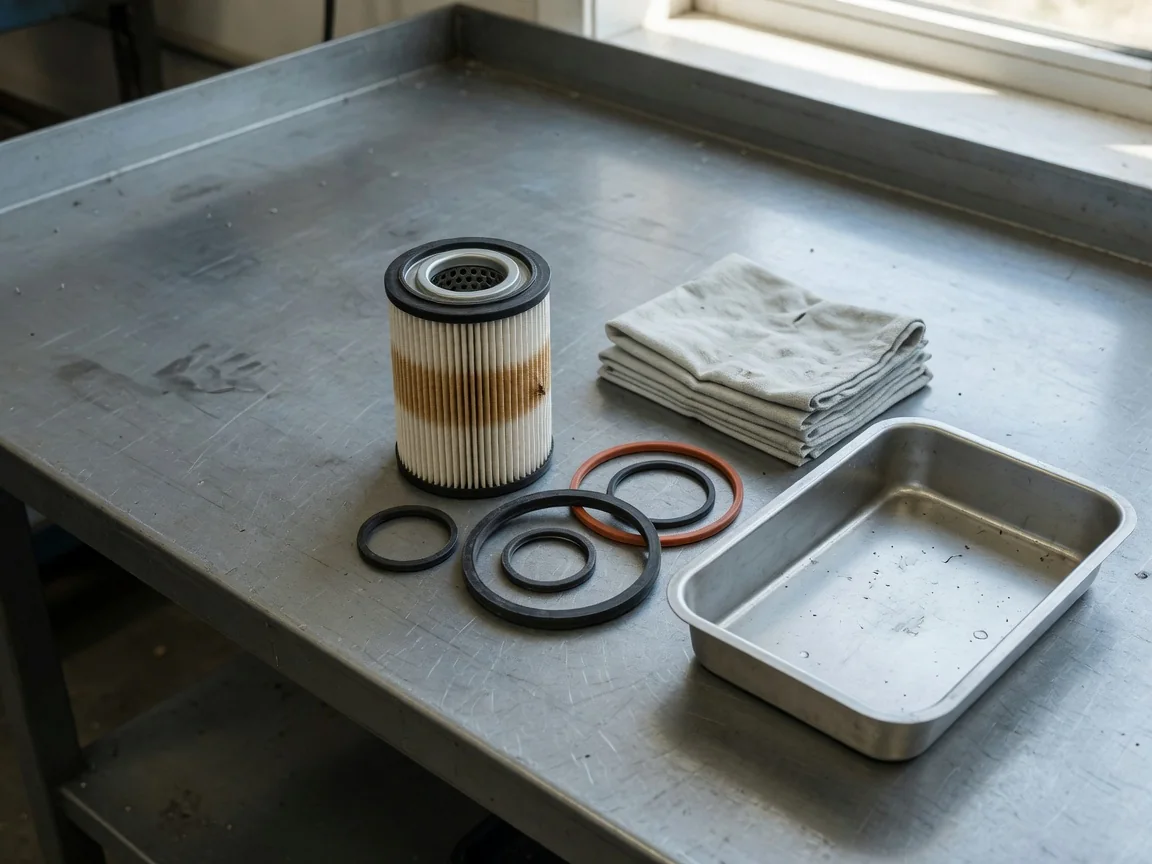
Owners looking for a 7.3 Powerstroke fuel filter or a 7.3 IDI fuel filter need more than a shared displacement number. The two engines use different housings, filter elements, and service steps, so the right fuel filter for 7.3 Powerstroke work is not interchangeable with the fuel filter for 7.3 IDI. Confirm the engine, housing, and vehicle details first, then match the filter, seals, and priming method to that assembly.
Identify Your 7.3 Engine and Fuel Filter Assembly
A search for a 7.3 fuel filter or fuel filter 7.3 listing will not by itself tell you which engine you have. Use the door-jamb certification label, owner's literature, and the engine identification tag or casting marks to confirm whether the truck or van is a 7.3 Powerstroke or a 7.3 IDI and to record the model year and chassis. Powerstroke and IDI share a 7.3-liter displacement, but they are different diesel families with different fuel filter housings, filter heads, and replacement parts. Write those details down before shopping.
Even a correct engine designation can be misleading if the vehicle no longer has its original fuel system hardware. An engine swap, a relocated filter head, or an aftermarket filter assembly can change both the applicable 7.3 Powerstroke fuel filter and the service procedure. Inspect the installed housing, note any non-factory hoses, brackets, or water-separator add-ons, and treat those as part of the identification job. Until the installed assembly is confirmed, a catalog match based only on original equipment will not establish the correct filter element or replacement seals.
Locate the 7.3 Powerstroke Fuel Filter
On a factory 7.3 Powerstroke, the fuel filter on 7.3 Powerstroke trucks and vans is typically mounted in a bowl-style housing on the engine, most often on the driver's side. The assembly is a vertical canister with a removable lid, a lower drain for water, and a filter element inside the housing. Nearby you may see fuel lines, an electrical connector for a water-in-fuel or heater circuit, and the filter head that retains the bowl. That layout is the usual factory fuel filter 7.3 Powerstroke arrangement, not a frame-rail canister from another diesel family.
Identify those parts with the engine off and cool. Do not open the lid, crack fittings, or operate the drain while you are only locating the housing. Trace the fuel lines to the filter head so you can distinguish the service lid from nearby sensors and heater connections. If the housing is missing, relocated, or clearly aftermarket, stop and identify the installed assembly before buying a fuel filter for 7.3 Powerstroke applications. An unfamiliar bowl, extra water separator, or non-factory bracket means the catalog location no longer applies.
Locate and Select the 7.3 IDI Fuel Filter
A 7.3 IDI fuel filter belongs to the older indirect-injection 7.3, not the later Powerstroke. After you confirm the IDI designation and the specific truck or van configuration, look for the factory filter on the engine or along the supply path that the original filter head occupies. IDI assemblies vary by chassis, so the fuel filter 7.3 IDI layout on one body style may not match another. Confirm whether a water separator is built into the housing or mounted as a related component, and note the fittings and seals on the installed filter head before you shop.
Select a fuel filter for 7.3 IDI work from the vehicle application and the identification on the installed filter head, not from displacement alone. Match any water-separator bowl, drain, and replacement seals to what is actually on the engine. An existing filter number is a useful cross-check against catalogs, but it does not prove the installed part is correct. A previous owner may have fitted the wrong element, a mixed housing, or seals that do not belong to that head. If the stamped number and the application listing disagree, resolve the housing identity before purchase.
Confirm Powerstroke and Motorcraft Filter Fitment
A Motorcraft fuel filter for 7.3 Powerstroke use must still be verified against the model year, engine, and the housing already on the vehicle. Application listings for a 7.3 Motorcraft fuel filter or a Motorcraft 7.3 fuel filter can differ across Super Duty, van, and earlier Powerstroke chassis, so there is no single 7.3 fuel filter Motorcraft number that covers every truck. Compare the catalog line to your recorded year and engine, then confirm that the listed housing style matches the bowl and filter head you identified.
Check whether the replacement includes the lid gasket, O-rings, and any other replacement seals specified for that assembly. Some kits supply only the filter element; others include seals that the housing requires at reassembly. Filter diameter, height, box art, or the Motorcraft brand name alone cannot establish compatibility. A look-alike cartridge can seat poorly, bypass unfiltered fuel, or leave the water separator drain and lid without a proper seal. If the listing and the installed housing do not agree, do not force a 7.3 motorcraft fuel filter into a different head.
Prepare for and Carry Out a Fuel Filter Change
Treat Powerstroke and IDI as two service jobs, not one. With the engine stopped and cool, work in a ventilated area, wear eye protection, keep ignition sources away, and set out a container rated for diesel. Clean the housing exterior so dirt does not fall into the filter head. On a 7.3 Powerstroke, follow that housing's sequence: drain by the specified method, remove the lid and filter element, fit the designated seals, and reassemble only to the verified specification. Do not improvise a drain path or open injection lines.
On a 7.3 IDI, use the procedure for that vehicle's filter head and water-separator arrangement rather than copying Powerstroke lid steps. Prefill, fuel system priming, and tightening must come from the applicable service information; do not bleed the system by loosening injector lines. Collect drained diesel and the used filter, and dispose of both as required locally. If fittings are damaged, threads are rounded, or the assembly cannot be identified, stop for professional service. Diesel fuel contamination in the drained sample is a reason to inspect further, not to skip seals or guess at a housing.
Check for Leaks and Starting Problems After Service
After reassembly, prime the fuel system only as the applicable procedure directs for that Powerstroke or IDI housing. Observe any stated starter-use limits; repeated prolonged cranking can overheat the starter without filling the filter head. Once the engine runs, shut it down and complete a fuel leak inspection around the lid, drain, filter head, and nearby lines. If leakage appears, stop the engine and correct the joint rather than driving with a wet housing. Do not keep cranking through an unidentified no-start in hopes that air will work itself out.
Hard starting, stalling, or reduced power after a filter change can come from incomplete priming, a mis-seated element, a pinched seal, residual air, or a problem elsewhere in the supply path. Those symptoms do not establish that the new filter is defective. Persistent no-start, a leak that returns after reseating, a cracked housing, or visible contamination in the bowl are reasons for professional testing. Schedule the next replacement from the maintenance interval and operating conditions that apply to your vehicle, including dusty work, poor fuel quality, or water in the separator, rather than from a single universal mileage figure.