7.3 IDI Glow Plug Relay Selection: Fitment, Features and Limits
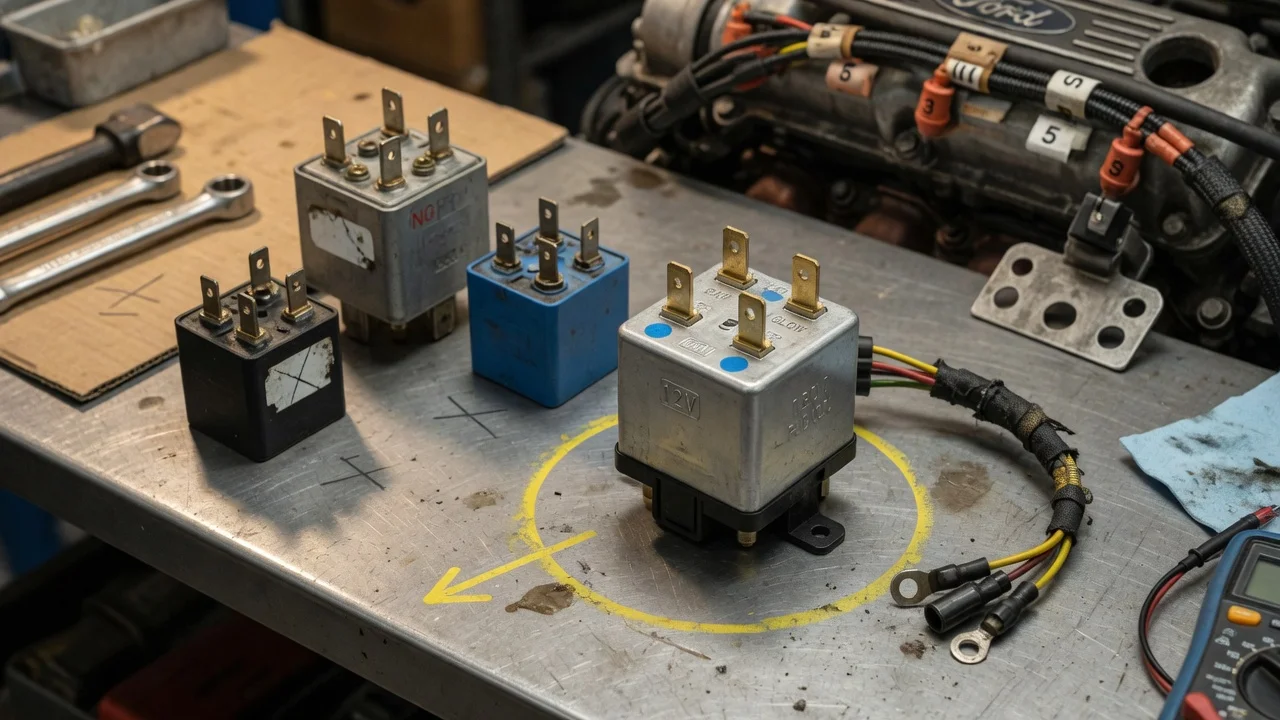
On most 7.3 IDI trucks, the part people call the glow plug relay is a glow plug controller. It decides how long the eight glow plugs heat the prechambers before and after a cold start. A good replacement matches how you use the truck, the plugs installed and the wiring that feeds them. This guide covers what to check before buying an OEM-style controller or a manual relay setup, and what a relay cannot fix.
Define the job the product must do
The 7.3 IDI is an indirect-injection V8 diesel used in Ford pickups and vans from 1988 to 1994, with a factory turbocharged version late in that run. This engine configuration injects fuel into a prechamber rather than directly into the cylinder, so cold starts depend heavily on glow plug heat. The relay or controller must supply enough heat for a reliable start without overheating the plugs.
Start with how the truck is used. A truck started daily in a cold climate benefits from automatic timing and afterglow. Afterglow keeps the plugs cycling briefly after start-up to reduce white smoke and rough running. A seasonal or farm truck in a mild region may get by with a simpler manual setup. Also consider who drives it. A push-button system relies on the operator to time the glow, and an inattentive driver can overheat the plugs. Battery condition matters too. These trucks typically run two batteries, and a weak pair will undermine any relay.
Check compatibility
Confirm the engine first. Parts listings sometimes group the 7.3 IDI with the earlier 6.9 IDI, so verify that the listing names your engine, model year and body style. Then compare the connector and mounting. An OEM-style controller should plug directly into the factory harness and bolt into the original location without modification or spliced wiring.
Match the controller to the glow plugs. The factory controller cycles power based on time and temperature, and it was designed around a specific plug voltage rating. Pairing a controller or manual relay with plugs it was not meant to drive can overheat them. The result can be swollen plug tips that are hard to remove, or tips that break off inside the prechamber and damage the engine. Check the plug part number from your service records or from the plugs themselves before you order. For a manual relay, the solenoid must be rated for continuous duty at the combined current of eight plugs. An intermittent-duty starter solenoid is not a suitable substitute.
Features that affect the choice
OEM-style controllers reproduce factory timing, wait-to-start lamp operation and afterglow. Their value is direct fit and a known control strategy, so the real questions are build quality and warranty. Labels such as heavy duty or upgraded mean little unless the seller states what changed, for example a higher contact rating or better heat sinking.
Manual relay kits trade automation for simplicity. A button or switch energizes a continuous-duty solenoid, and some kits add a timer or indicator light. Without a timer, the operator must count the glow time, and there is no automatic afterglow. Look for fuse or fusible-link protection, adequately sized cable and sealed terminals. Weather resistance matters because the unit lives on or near the engine, exposed to heat, water and road salt.
Treat promises of faster starts with care. Start time depends on plug condition, battery voltage, cranking speed, compression and fuel delivery, so no relay can guarantee a particular result on its own.
Limitations and ownership costs
A relay only switches current. It will not fix a burned-out plug, a corroded harness connector, weak batteries, low compression or a fuel problem. Before replacing it, check each plug's resistance with an ohmmeter, inspect the harness on both banks and confirm the controller receives power and ground. Budget for a full set of plugs if several have failed. Mixing old and new plugs makes later diagnosis harder.
Fuel type affects cold starts regardless of glow heat. Winter-blend or number 1 diesel resists gelling better than summer number 2, and biodiesel blends can cloud at higher temperatures. Gelled fuel, a clogged fuel filter, air leaks on the supply side or a weak lift pump can cause hard starts that look like glow plug failure. Fuel additives may help prevent gelling when used as directed. They are not a proven repair for a failed controller, a worn injector or a damaged injection pump. This engine uses a mechanical rotary fuel pump, so there are no fuel trim values or scan-tool fuel pressure readings to guide you. Diagnosis relies on direct inspection and testing.
Respect system pressure. The injection lines between the pump and injectors carry high pressure when the engine runs, and fuel escaping from a loose fitting can penetrate skin. Do not loosen injection lines on a running or cranking engine as a leak check. Instead, look for wetness with the engine off, and follow the service manual procedure for bleeding air. Avoid starting fluid on a glow plug engine, because ether combined with hot plugs can cause damaging pre-ignition.
Build a practical shortlist
Before buying, confirm the following. The listing names the 7.3 IDI and your model year and body. The connector and mounting match the factory unit, or, for a manual kit, the solenoid is continuous-duty rated and the kit includes circuit protection. The control strategy suits the glow plugs installed. Wait-to-start lamp function is retained or replaced by a clear indicator. Afterglow is included if you often start in cold weather. Any heavy-duty claim is backed by stated changes. Warranty terms are clear.
Then confirm the rest of the system is ready. The plugs have been tested, the harness connectors are clean and tight, the batteries pass a load test, the fuel filter is current, and the fuel suits the season. If all of that checks out and the controller still fails to energize the plugs, replacing it is a reasonable next step.