Identifying a 6R80 Transmission Shift Solenoid: Codes, Location and Service
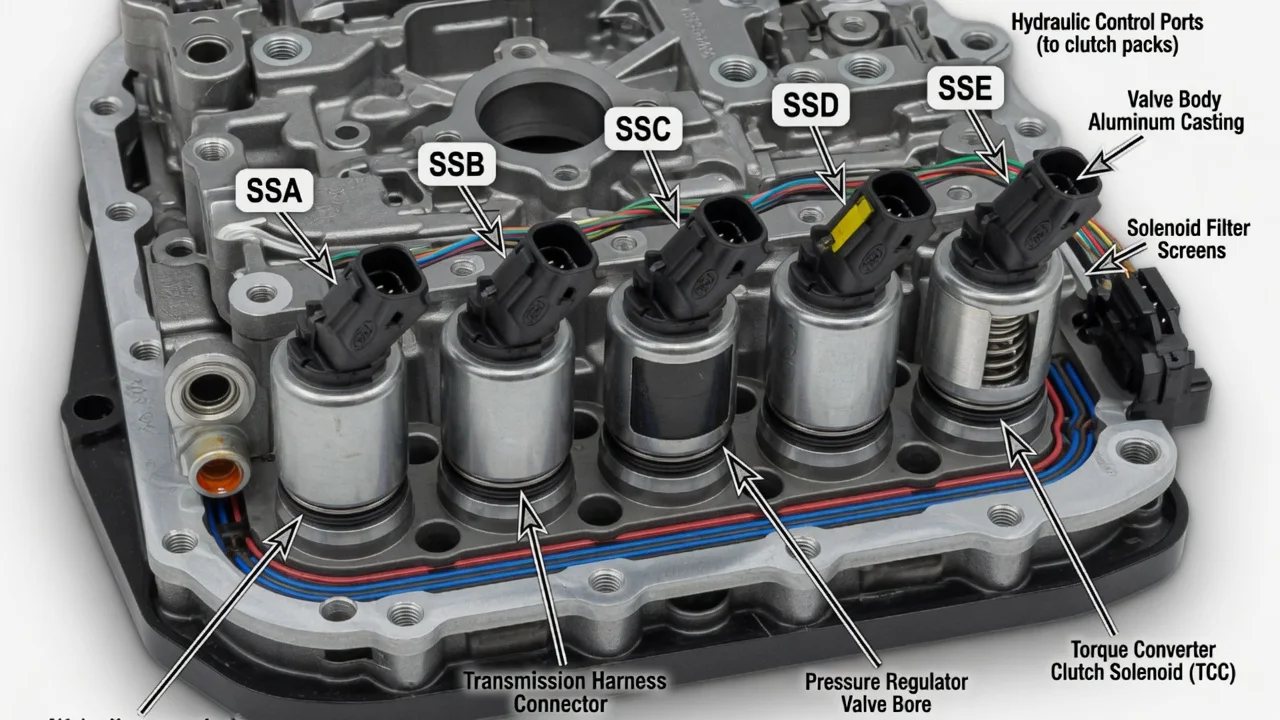
The 6R80 is Ford's six-speed automatic used in rear-wheel-drive and four-wheel-drive models such as many F-150, Expedition, Navigator and Mustang applications. When a scan tool reports a shift solenoid code or the vehicle starts shifting oddly, owners usually want to know which solenoid is involved and whether it can be replaced on its own. This guide explains how the solenoids are identified and serviced, and why a code or symptom is a starting point for diagnosis rather than a verdict.
Short answer: which solenoid it is and where it lives
On a 6R80, the shift solenoids are not individual parts bolted to the outside of the case. They sit inside the transmission on the main control valve body, grouped in a solenoid body assembly that on this design also carries the transmission control module. Service information identifies them by letter, commonly shift solenoids A through E, alongside a line pressure control solenoid and a torque converter clutch solenoid. When a diagnostic code names a lettered solenoid, it describes the circuit or performance problem as the module sees it on that channel.
Identifying the solenoid therefore involves two steps: confirming that the vehicle really has a 6R80, then matching the code or symptom to the lettered solenoid and the clutch it controls in Ford service information for that model year. Neither step proves the solenoid itself has failed. A code pointing at a solenoid can also come from wiring, the internal connector, the module, fluid condition or a hydraulic fault in the valve body.
How the solenoids control shifting
The 6R80 shifts by applying and releasing clutches with hydraulic pressure. Each shift solenoid regulates oil pressure to a valve that feeds a specific clutch, and most of these solenoids are pressure-regulating rather than simple on-off switches. The control module varies their current to set how firmly and how quickly a clutch applies, while the line pressure control solenoid sets overall system pressure and the torque converter clutch solenoid manages lockup.
The module watches input and output shaft speeds, fluid temperature, throttle position and other inputs, then adjusts solenoid commands over time through adaptive learning. That is why shift behavior can change gradually as parts wear or fluid degrades, and why a sticking or weak solenoid may show up as a flare, a harsh engagement or a delayed shift on one particular gear change. If the module detects an electrical fault or a gear ratio it cannot explain, it may set a code and fall back to a limited failsafe mode, often holding a single gear.
What changes the answer
Transmission type is the first variable. Ford used several similar-looking six-speed units, including the lighter-duty 6R60 and 6R75, and many later vehicles moved to the ten-speed 10R80. Confirm the unit from the VIN-based build data, the transmission code on the vehicle certification label or the identification tag on the transmission case before buying parts or following a procedure. Model year matters too, because calibrations, solenoid body part numbers and fitment differ across production years and applications.
The service procedure also changes the answer. Because the module lives on the solenoid body, replacing that assembly typically requires a scan tool capable of programming the module, loading the solenoid characterization data supplied with the part and resetting adaptive values so the transmission can relearn. Skipping those steps can leave shift quality poor even with new hardware. Operating conditions matter as well: low fluid level, overheated or contaminated fluid, or the wrong fluid specification can produce solenoid-related symptoms and codes. The 6R80 is generally specified for Mercon LV type fluid, but the owner's manual or service information for the exact vehicle is the authority on fluid type and the level-check procedure, which is temperature sensitive.
What the owner can do
Start by recording the diagnostic codes with a scan tool, including any freeze frame data, rather than clearing them immediately. Note the exact shift behavior: which gear change is affected, whether it happens cold or hot, under light or heavy throttle, and whether the vehicle drops into a failsafe gear. That pattern helps a technician separate an electrical fault from a hydraulic or mechanical one. Check for fluid leaks around the transmission pan and the electrical connector at the case, since fluid intrusion or a damaged connector can disrupt solenoid circuits.
Gather the service history as well: when the fluid was last changed and with what, any earlier transmission repairs, and whether module software updates or service bulletins have been applied. If you are comfortable doing so, verify the fluid level using the procedure for your vehicle, keeping in mind that an incorrect check can lead to overfilling or underfilling.
Repair options generally range from a software update, through wiring or connector repair, to replacement of the solenoid body assembly, valve body work or a transmission overhaul when internal wear is found. Some rebuilders replace individual solenoids, but those parts may not match the calibration data stored for the original assembly, so ask how the shop handles programming and adaptive relearn before agreeing to that approach. Avoid replacing parts based on a code name alone.
Limitations and next step
A code and a symptom description can narrow the search, but they cannot confirm which part has failed. Confirming a solenoid fault normally requires Ford-capable diagnostic software, pinpoint electrical tests and sometimes hydraulic pressure checks, all following service information for the specific vehicle. The internal layout and the programming requirements make guesswork expensive.
Seek professional help promptly if the transmission is stuck in a failsafe gear, slips, overheats, or if the fluid looks burnt or contains debris, because continued driving can add internal damage. Bring the VIN, the recorded codes, your notes on shift behavior and the service history to the shop. That information lets a transmission technician confirm the configuration, choose the correct diagnostic path and recommend a repair that addresses the cause rather than only the code.