6R80 Transmission Output Speed Sensor Identification
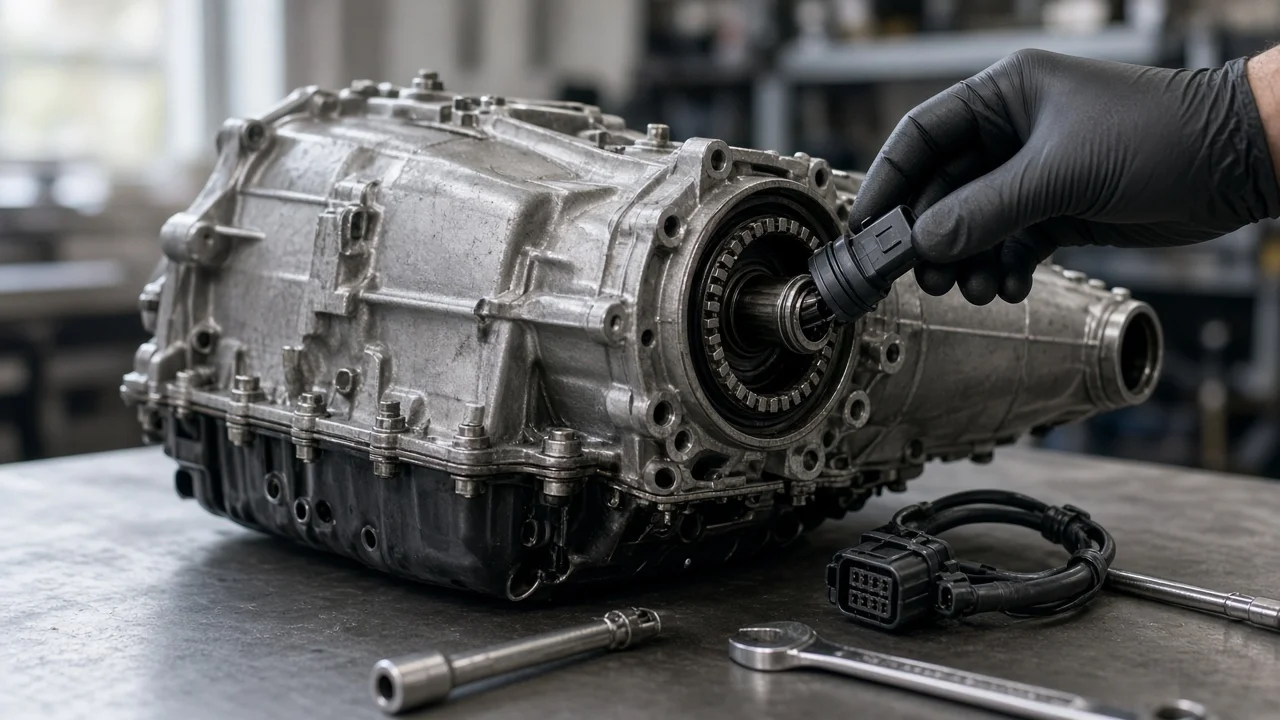
The output speed sensor on Ford's 6R80 six-speed automatic tells the transmission control module how fast the output shaft is turning. Identifying it correctly matters because many older Ford automatics have a sensor that is easy to reach from outside, but on many applications the 6R80 places its speed sensors inside the transmission. This guide explains where the sensor sits, how it works, what varies between vehicles, and how to approach diagnosis without replacing parts based on guesswork.
Where the 6R80 Output Speed Sensor Is Located
The 6R80 is Ford's rear-wheel-drive six-speed automatic. It is found in vehicles such as the F-150, Expedition, Navigator and some Mustang models, as well as certain Ford products sold in other markets. It uses two shaft speed sensors. The turbine shaft speed (TSS) sensor reads input speed from the torque converter side. The output shaft speed (OSS) sensor reads the speed of the shaft that drives the driveshaft or transfer case. On many 6R80 applications, neither sensor is an external bolt-on part. Both belong to an internal electrical assembly, commonly called the lead frame, which sits on the valve body inside the transmission pan. On many versions, that assembly is closely tied to the transmission control electronics.
Identifying the output speed sensor therefore starts with identifying the transmission itself, not with looking for a plug on the case. Confirm the transmission type from the vehicle's build information, the transmission identification tag, or a dealer lookup by VIN. Then use service information for that exact model year to see how the OSS is serviced. Some other Ford automatics do have a replaceable external sensor. That difference often causes confusion when owners order parts based on a symptom or a generic Ford speed sensor description.
How the Output Speed Sensor Works
The OSS faces a toothed or slotted ring that turns with the output side of the gearset. As the teeth pass, the sensor produces a pulsed signal, and the pulse frequency rises with output shaft speed. The transmission control module compares that signal with turbine speed and engine speed. From that comparison it works out the actual gear ratio, judges whether a shift has completed, and controls clutch apply pressure during shifts. Output speed is also a key input for deciding when to shift and when to apply the torque converter clutch.
When the output signal is missing, intermittent or implausible, the module can no longer confirm what the transmission is doing. Typical results include harsh or mistimed shifts, flare between gears, a fixed gear or failsafe operation, a stored diagnostic code and an illuminated warning lamp. Depending on the vehicle, the speedometer may be driven by transmission data, by wheel speed sensors or by a combination of both. As a result, a speedometer fault may or may not accompany an OSS problem. None of these symptoms alone proves the sensor has failed. The same behavior can come from wiring, connections, low fluid, internal mechanical faults or a control module issue.
What Changes the Answer Between Vehicles
Model, model year and drivetrain all matter. The 6R80 was fitted across several Ford platforms with different engines, calibrations and production updates. The internal electrical assembly, its connector and its part number are not guaranteed to interchange between them, so confirm fitment by VIN rather than by transmission name alone. Four-wheel-drive trucks add a transfer case, which may have its own speed sensing. A code or symptom involving output speed therefore does not automatically point to the transmission sensor.
Repair procedures also differ. Where the speed sensors are integrated into the lead frame, the usual repair is replacing that whole assembly rather than a single sensor. If the replacement includes or affects the transmission control electronics, the vehicle may need programming or a relearn with suitable software before it shifts correctly. The fluid specification matters whenever the pan is removed. The 6R80 is typically filled with Mercon LV, but confirm the correct fluid for the specific vehicle, along with its fill and level-check procedure, which depends on fluid temperature. Service history matters too. Prior valve body work, a recent fluid service or aftermarket tuning can all change what a technician should suspect first.
What Owners Can Do Before Buying Parts
Start by reading stored codes with a scan tool that can access the transmission module, not only generic engine codes. Generic OBD-II codes P0720 through P0722 relate to the output speed sensor circuit or signal, while P0715 and nearby codes relate to turbine or input speed. Note any codes that appear alongside them, such as wheel speed, transfer case, communication or voltage codes, because they can change the diagnosis. Write down each exact code, whether it is current or historic, and the conditions when it set. If the scan tool shows live data, compare output shaft speed with vehicle speed during a steady drive on a safe road. A signal that drops to zero, jumps or lags while the vehicle is moving tells you more than a code alone.
Next, check the basics that can be done without opening the transmission. Verify the fluid level using the procedure for your vehicle, look for leaks, and inspect the external transmission connector and nearby harness for damage, corrosion or a loose lock. Note the pattern of the shift behavior: whether problems appear cold or hot, during particular shifts, or after bumps. On many 6R80 units the OSS is inside the pan, so replacing it means draining fluid and working around the valve body. Metallic debris collected on a sensor tip can itself disturb the signal, so anything found inside the pan is useful evidence for a technician.
Limitations and the Next Step
An output speed code points to a signal problem, not a confirmed failed part. A technician should confirm the cause through wiring checks, signal testing and live data before replacing an internal assembly, especially when programming is involved. Repair options range from fixing a connector or harness, to replacing the lead frame, to addressing an internal mechanical fault. Cost and difficulty differ widely between them.
Use the VIN to confirm parts fitment and the service procedure for your exact vehicle, and check whether any manufacturer updates or service bulletins apply to it. If the transmission is shifting erratically or has entered failsafe operation, limit driving. Arrange diagnosis at a shop that has factory-level scan capability and experience with Ford six-speed automatics.