6R80 TCC Solenoid Identification and Location
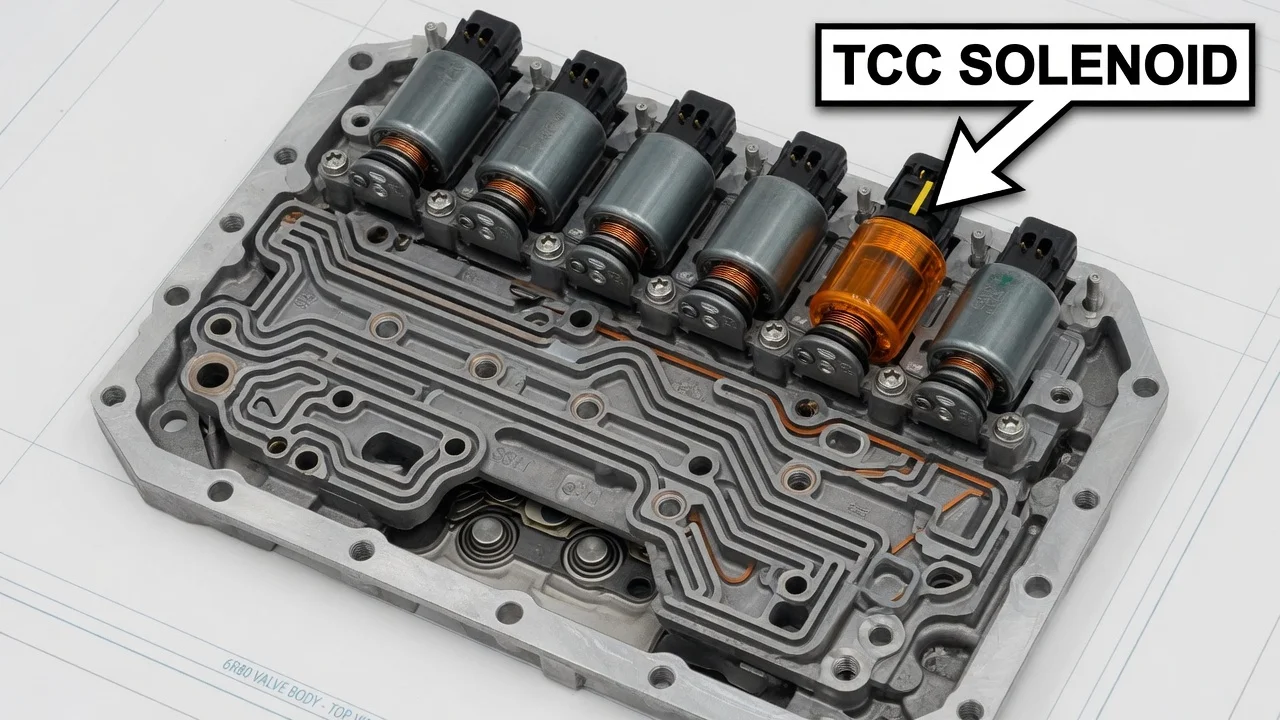
On the Ford 6R80 six-speed automatic, you can't see or reach the torque converter clutch (TCC) solenoid from under the vehicle. It is inside the transmission, mounted on the valve body as one of several solenoids in a single solenoid body assembly. This guide covers where it sits, how to tell it apart from the other solenoids, and what that means for diagnosis and repair options.
Where the 6R80 TCC Solenoid Is Located
The 6R80 TCC solenoid is inside the transmission, in the solenoid body that bolts to the main control valve body. To reach it, you drain the fluid and remove the oil pan, and on many applications the filter as well, before the valve body area is exposed. It can't be serviced from outside the case. The only external part of the circuit is the transmission's electrical connector on the side of the case, which feeds the solenoid body through a pass-through connector.
Identifying the right solenoid is the other half of the job. The solenoid body carries the shift solenoids, the line pressure control solenoid and the TCC solenoid side by side, and they can look very similar. Use the solenoid layout diagram in the service information for your exact model year and application, plus any position markings on the body. Don't guess by appearance or count from one end. Also confirm that the vehicle actually has a 6R80, because Ford used related six-speed units in some vehicles. You can confirm the transmission type from the vehicle certification label or the identification tag on the case.
What the TCC Solenoid Does
The torque converter couples the engine to the transmission through fluid. That lets the vehicle sit still in gear, but the slip wastes some energy. The torque converter clutch mechanically locks the converter at cruising conditions to reduce slip, lower fluid heat and improve fuel economy. The TCC solenoid is the electrically operated valve that controls hydraulic pressure to that clutch.
The solenoid doesn't just switch on and off. It modulates pressure so the transmission control module can apply the clutch smoothly, allow controlled slip when its strategy calls for it, and release the clutch during deceleration, braking or hard acceleration. The module compares engine speed with turbine speed to judge how well the clutch is holding. Because of that comparison, many TCC trouble codes describe slip or performance rather than a broken wire.
Why It Is Usually Serviced as an Assembly
On 6R80 applications, the transmission control module is built into the solenoid body, which changes the repair picture. Ford's service approach treats the solenoid body as one assembly. A replacement unit typically has to be programmed to the vehicle, and the adaptive shift learning has to be reset or relearned afterward. If that step is skipped, even a good part can cause harsh shifts or new codes.
Aftermarket suppliers sell individual solenoids, and some rebuilders use them. Swapping one solenoid in a calibrated assembly is not the same as the factory-defined repair, though. Whether it makes sense depends on the shop's experience, the specific fault and whether the assembly's stored calibration still suits the hardware. Ask any shop which approach it uses before work begins.
What Changes the Answer
Model year, vehicle line and calibration all matter. The 6R80 was used in trucks, SUVs and cars, and connector style, solenoid body part numbers, software updates and service bulletins differ between them. A revised solenoid body or a calibration update may apply to one model year and not another. Confirm fitment by vehicle identification number, not by transmission name alone.
Operating conditions also change what you see. Lockup normally happens only once the fluid is warm and the vehicle is in a higher gear at steady light throttle, so a converter that never seems to lock on a cold morning may be working normally. Towing, tire size or gearing changes, and engine performance problems can all alter shift behavior and lockup timing. Service history counts too. A recent fluid service with the wrong fluid, an incorrect fill level or an earlier valve body repair can produce symptoms that look like a solenoid fault.
What the Owner Can Do
Start with the diagnostic codes. A scan tool that reads transmission codes, not just generic engine codes, gives the most useful starting point. Codes in the P0740 to P0744 range relate to the TCC circuit or its performance. Other stored codes may point to related problems, such as speed sensor or line pressure faults. Record the codes, the freeze frame data and when the symptom occurs before clearing anything.
Write down the symptom pattern precisely. Converter lockup can be involved in several complaints: a shudder that feels like driving over rumble strips at light throttle, an engine speed flare at highway cruise, a drop in fuel economy, or an engine that stalls or nearly stalls when coming to a stop. None of these proves on its own that the solenoid has failed. Worn converter clutch material, fluid condition, valve body wear, wiring at the case connector and software can all cause the same complaints.
Check fluid level and condition using the procedure for your vehicle. Most 6R80 applications have no conventional dipstick. The level is checked through a check plug with the fluid at a specified temperature. These transmissions use Mercon LV, but confirm the fluid specification in your owner information before adding anything. A burnt smell, dark color or debris is worth reporting to a technician, because it suggests wear beyond a single electrical component.
Limitations and When to Get Help
This article covers the general layout and logic of the 6R80. It can't replace the wiring diagram, solenoid layout, pinpoint tests and programming steps for your exact vehicle. Electrical testing at the case connector requires correct pin identification, and probing the wrong terminals can damage the integrated module.
If codes point to the TCC circuit, or the symptom continues after you have verified fluid level and condition, take the vehicle to a transmission specialist or dealer with factory-level diagnostic and programming capability. Before agreeing to a solenoid body, valve body or converter replacement, ask them to confirm whether the fault is electrical, hydraulic or in the converter itself. Also ask them to explain the repair options and any service bulletins that apply to your specific vehicle.