6F35 Transmission Valve Body Identification
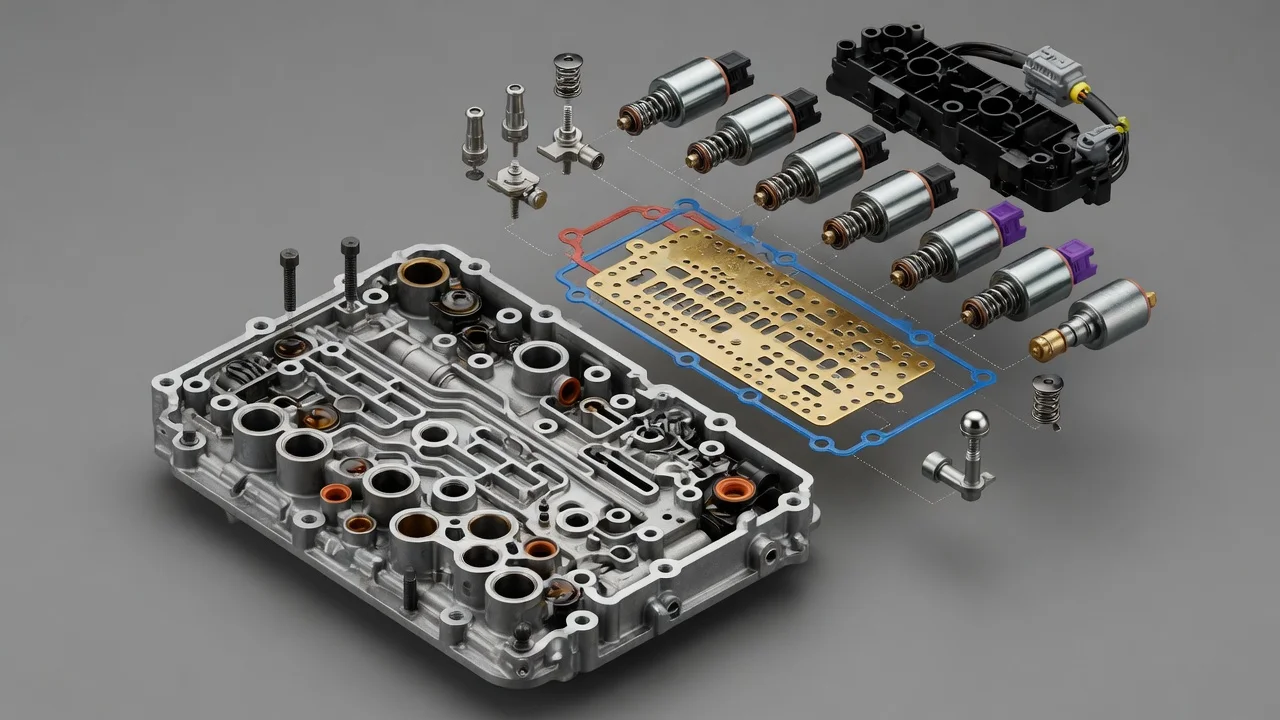
The valve body is the hydraulic control center of the 6F35 six-speed automatic, and ordering or diagnosing the wrong one is an expensive mistake. Identifying it correctly means confirming the exact transmission, its production version and the part data on the unit itself, not just the vehicle model. This guide explains what to check, why versions differ and how to separate a valve body problem from other causes of poor shift behavior.
Short answer: identify the transmission first
A 6F35 valve body is identified by matching the transmission it came from, not by the vehicle name alone. Start with the VIN and the identification tag on the transmission case, which records the transmission type and build information. Then compare the part number, casting marks and label data on the existing valve body and solenoid assembly with the replacement being offered. The 6F35 was installed in a range of Ford, Mercury and Lincoln front-wheel-drive and all-wheel-drive vehicles over many model years, and its hydraulic controls were revised during production. Two units that look alike may differ in internal passages, solenoids, connectors or the software they expect. If any identifying detail does not match, treat the part as non-interchangeable until a parts catalog or dealer confirms fitment for that specific transmission.
How the valve body controls shifts
The valve body is a machined assembly of channels, spool valves and springs that routes pressurized fluid to the clutches inside the transmission. Electronic solenoids mounted to it respond to commands from the transmission control module, which decides when to shift based on speed, throttle position, load and temperature. The 6F35 uses clutch-to-clutch shifting, meaning one clutch must release while another applies at precisely the right moment. That timing depends on accurate pressure control, so small hydraulic problems can show up as noticeable changes in shift behavior.
Over time, valves can wear their bores, debris can cause sticking, and solenoids can lose accuracy or fail electrically. The control module also stores adaptive values that compensate for normal wear. When parts are replaced, those learned values may no longer suit the new hardware, which is one reason a correct physical part can still shift poorly until the system is set up properly.
Variations that affect identification and fitment
Several factors change which valve body is correct. Model year matters because the 6F35 was updated during its production run, and later hydraulic and solenoid designs are not necessarily compatible with earlier cases or control software. Drivetrain layout, engine pairing and vehicle application can also affect the calibration and, in some cases, the hardware. A listing that says it fits a given model across a broad year range should be checked against the transmission tag and part number rather than accepted at face value.
Software is the other half of fitment. On many units the solenoid assembly carries identification or calibration data that must be loaded into the control module with a capable scan tool after installation, followed by an adaptive relearn. Replacement options also vary: some sources sell the solenoid assembly alone, others sell a complete valve body with solenoids, and remanufactured units may be built to a corrected specification. Confirm exactly what is included and whether programming is required before buying.
Practical steps for owners
Before anyone orders parts, gather the basics: the VIN, the transmission identification tag data, any part numbers visible on removed components, and the service history, including when the fluid was last changed and what was used. Many 6F35 applications specify Mercon LV fluid, but confirm the fluid specification in the owner's manual or service information for your vehicle, because the wrong fluid can affect shift quality. Write down the shift behavior you notice, such as harsh engagement, flare between gears, slipping or delayed engagement, and whether it happens cold, hot or under load.
Have the diagnostic codes read with a tool that can access the transmission module, not only generic engine codes. Codes such as P0700, gear ratio codes in the P0731 to P0736 range, or solenoid performance and circuit codes point toward an area, but none of them confirms that the valve body has failed. Low or degraded fluid, wiring and connector faults, worn clutches, control module issues and software calibration can produce similar symptoms. Checking the fluid level is a worthwhile early step, but many 6F35 applications have no conventional dipstick and require a check-plug procedure at a specified temperature, so follow the correct method or let a shop do it.
When a shop recommends repair options, ask what testing led to the conclusion, whether the solenoid assembly or the full valve body is being replaced, how the replacement's part number was matched to your transmission, and whether programming and relearn are included in the estimate. If internal clutch damage is suspected, ask whether a valve body repair alone is likely to resolve the complaint or whether a rebuilt or replacement transmission is the more realistic option.
Limits and when to get professional help
Identification from the outside of the car only goes so far. Part numbers, supersessions and programming requirements are tied to the specific transmission and calibration, and they are best confirmed through a dealer parts system or a transmission specialist with current service information. Accurate diagnosis typically requires live data, pressure or solenoid testing and sometimes road testing with a scan tool, which most owners cannot replicate at home. If the vehicle slips badly, refuses to move, enters a limp mode or shows a warning that persists, limit driving and have it inspected promptly, because continued operation with a hydraulic fault can damage clutches and turn a valve body repair into a full transmission replacement.