68RFE Transmission Relearn Procedure: What It Involves and When It Is Needed
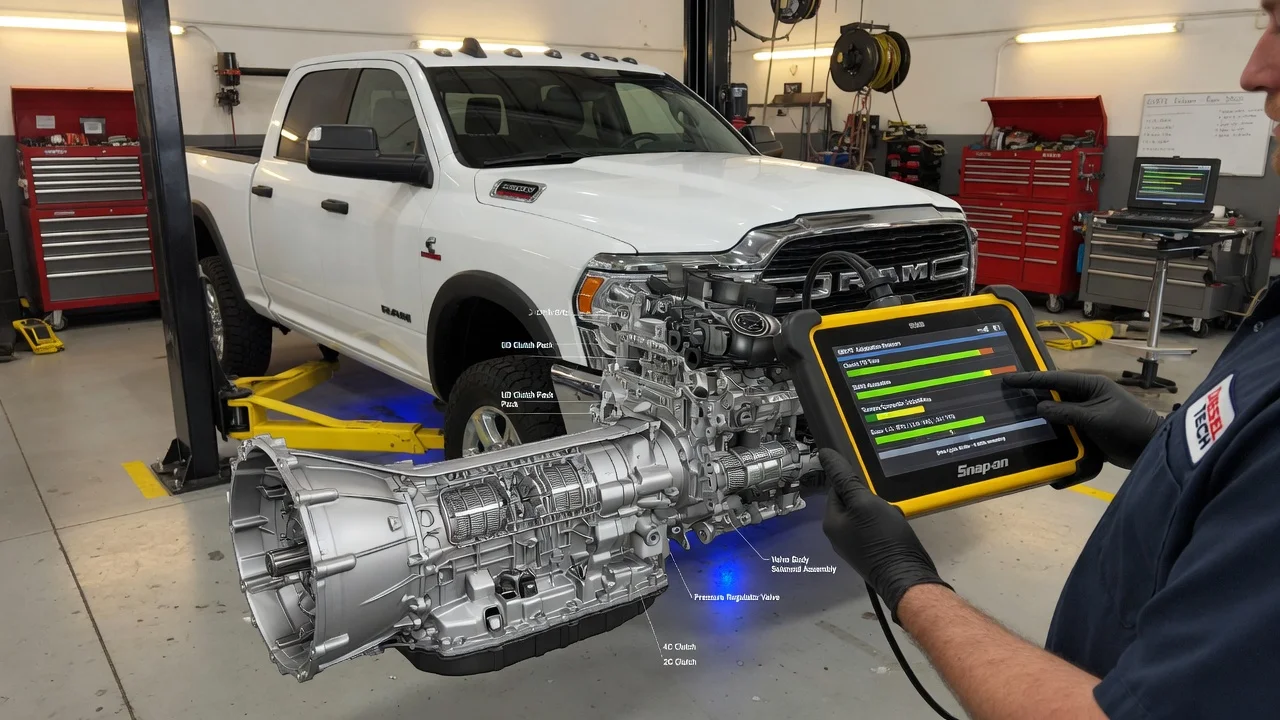
A 68RFE that shifts harshly, flares between gears or hesitates after repair work often needs its adaptive values reset and relearned. On this six-speed automatic, used mainly in Ram heavy-duty pickups and chassis cabs, the factory relearn is a scan-tool routine usually called Quick Learn. It is followed by normal driving so the controller can refine shift timing. This guide explains what the procedure does, when it applies, what can block it and what an owner can realistically handle.
The short answer
Relearning a 68RFE is not a pedal-and-ignition-key trick. The core step is a Quick Learn performed with a scan tool that can command transmission functions, such as the dealer diagnostic system or a capable bi-directional aftermarket tool. The engine runs, the truck stays stationary with the service brake applied, and the fluid must be at normal operating temperature. The tool then has the controller apply each clutch and measure how much fluid it takes to engage it, replacing old or missing adaptive data. The tool's on-screen prompts may also ask you to move the shift lever, so follow them exactly.
After Quick Learn, the truck typically needs a period of ordinary driving through all gears so shift quality settles. A relearn is normally called for after a transmission replacement or overhaul, valve body or solenoid work, control module replacement or reprogramming, and sometimes after a software update. It calibrates the controller to the hardware that is actually installed.
How adaptive learning works on the 68RFE
The 68RFE changes gears by applying and releasing clutch packs with hydraulic pressure that solenoids control. For a clean shift, the controller has to know how long each clutch takes to fill and engage. It stores a learned value for each clutch, commonly shown on a scan tool as a clutch volume index, or CVI. As friction material wears, or when parts are replaced, that volume changes and the controller adjusts fill timing and pressure to compensate.
When the stored values no longer match the hardware, such as a new valve body running on old values or a new module starting with blank ones, shift behavior suffers. Typical complaints are harsh engagements, slipping or engine flare during upshifts, bumps on downshifts and delayed engagement into drive or reverse. Quick Learn gives the controller a measured baseline at rest. Road learning then refines it under real load, and because diesel torque and towing weight vary widely, adaptation continues for the life of the transmission.
What changes the procedure or the outcome
Model year and software level matter. The 68RFE has been installed across many Ram heavy-duty model years and body styles, and the controller hardware, software and scan-tool menus differ between them. The name of the routine, its preconditions and whether another step such as reprogramming must come first can all vary. Confirm the transmission type from the vehicle's build data or the identification on the transmission itself rather than assuming it from the model name.
Operating conditions also change the result. Low fluid, overfilled fluid or the wrong fluid produces misleading values, so check the level at temperature and match the fluid specification in the owner's manual; the 68RFE is generally specified for ATF+4 or a fluid meeting that standard. Stored diagnostic codes can prevent the routine from running or make its results invalid, so faults need attention first. A weak battery or charging problem can interrupt the process. Changes to tire fitment or axle ratio affect shift scheduling and speed readings too, but correcting them is a separate configuration setting, not part of the relearn.
What an owner can do before and after a relearn
Before anything else, check the fluid level using the method specified for your truck, with the fluid at operating temperature, and confirm the fluid type. Gather the service history: when the fluid and filters were last changed, whether the valve body, solenoids or control module were replaced, and whether any reprogramming was done. Read and write down any diagnostic codes before clearing them, because that record helps whoever diagnoses the truck later.
If you own a scan tool that supports Chrysler transmission functions, follow its prompts in order and do not interrupt the routine. If the tool displays clutch volume index readings, record them before and after; they are useful to a technician. Afterward, drive with a mix of gentle and moderate acceleration, let the transmission upshift through all six gears, include some coast-downs to a stop and avoid heavy towing until shifts feel consistent.
If something still feels wrong, note which shift it is, the vehicle speed, the fluid or engine temperature and how much throttle was applied. A precise description like that is far more useful to a shop than a general complaint about bad shifting.
Limits of a relearn and when to get help
A relearn cannot fix a mechanical or electrical fault. If Quick Learn fails, aborts or produces values outside the range given in the service information, that points to further diagnosis, not to a specific failed part. Possible causes include hydraulic leaks, worn clutches, solenoid or sensor problems, wiring faults and fluid condition, and some symptoms that feel like shifting trouble come from the torque converter clutch or the engine instead.
The exact preconditions and acceptable values are in the factory service information for your specific year and vehicle identification number. If you lack a capable tool, the relearn does not resolve the complaint or codes return, take the truck to a transmission specialist or dealer. Repair options range from a software update and relearn to valve body service or a rebuild, and only proper diagnosis can tell which one applies.