6-Volt Car Battery: When You Need One and How to Choose It
The short answer
A 6-volt battery is only the right choice if your vehicle's electrical system was designed for, and still runs on, 6 volts. That typically means older cars, classic trucks, vintage tractors and some older motorcycles built before manufacturers moved to 12-volt systems. A modern car with a 12-volt system cannot use a 6-volt battery, and the two are not interchangeable in either direction.
The answer changes if a vintage vehicle has been converted to 12 volts by a previous owner, which is common. In that case it needs a 12-volt battery regardless of what the factory specified. Confirm the current system voltage before buying anything.
How to confirm your vehicle uses 6 volts
The changeover from 6 to 12 volts happened at different times depending on the manufacturer, model, model year and market, so the year alone is not a reliable guide. Check the vehicle itself rather than relying on a general rule.
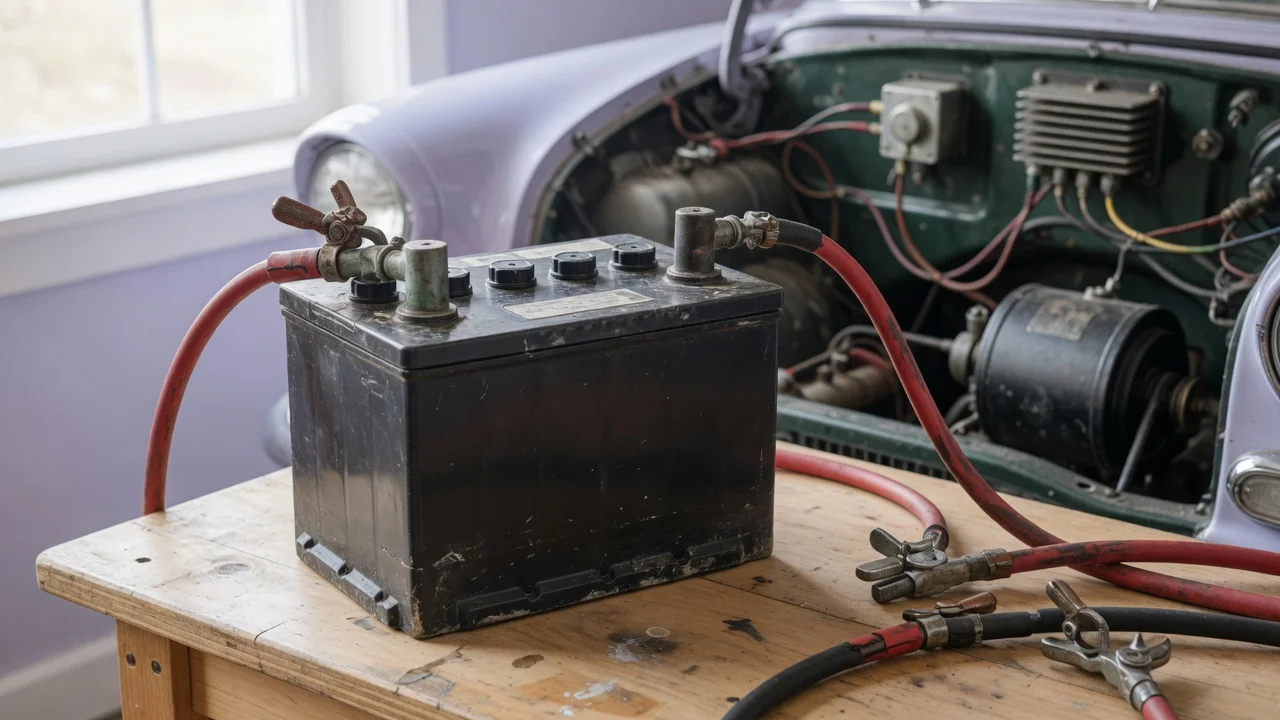
Look at the existing battery label, which normally states its voltage. Count the cell caps on a traditional flooded lead-acid battery: a 6-volt battery has three cells, while a 12-volt battery has six. Check the voltage rating printed on the generator or alternator, starter, coil and bulbs, keeping in mind that some parts may have been replaced. Measure resting battery voltage with a multimeter; a healthy, charged 6-volt battery reads a little above 6 volts, not near 12. Consult the factory service manual or owner's manual for that exact model year, market and powertrain, then compare it with what is actually installed.
Check the ground polarity before installation
Many 6-volt vehicles use a positive-ground system, meaning the positive battery terminal connects to the chassis rather than the negative terminal used on modern cars. Not every 6-volt vehicle is positive ground, and some have been changed during restoration or conversion. Note which terminal goes to the frame on your existing setup or confirm it in the service manual, because reversing polarity can damage components such as the generator, gauges, radio or any added electronics.
What to match when choosing a replacement
Voltage: 6 volts, matching the current system. Group size or physical dimensions: the battery must fit the tray and hold-down, which vary by vehicle. Terminal type and position: older vehicles may use different post styles or layouts than modern batteries, and the cable lengths must reach. Cold cranking amps (CCA): the battery's ability to start the engine in cold weather; meet or exceed the original specification for your vehicle. Battery type: traditional flooded batteries suit original-appearance restorations, while sealed types such as AGM (absorbed glass mat) reduce spill and maintenance concerns; confirm the charging system is compatible with the type you choose.
No model-specific sizes, ratings or prices were supplied for this guide, so verify these figures against your vehicle's documentation or a battery supplier's fitment data for your exact model year and market.
Your next step
If your vehicle is confirmed to run on 6 volts, buy a 6-volt battery that matches its size, terminals, polarity setup and starting requirement, and use a charger with a 6-volt setting. If the vehicle has been converted to 12 volts, or you are unsure, resolve that first; installing the wrong voltage is a costly and avoidable mistake.