6-Pole Square Trailer Wiring Connector Kit: What It Is and When to Use It
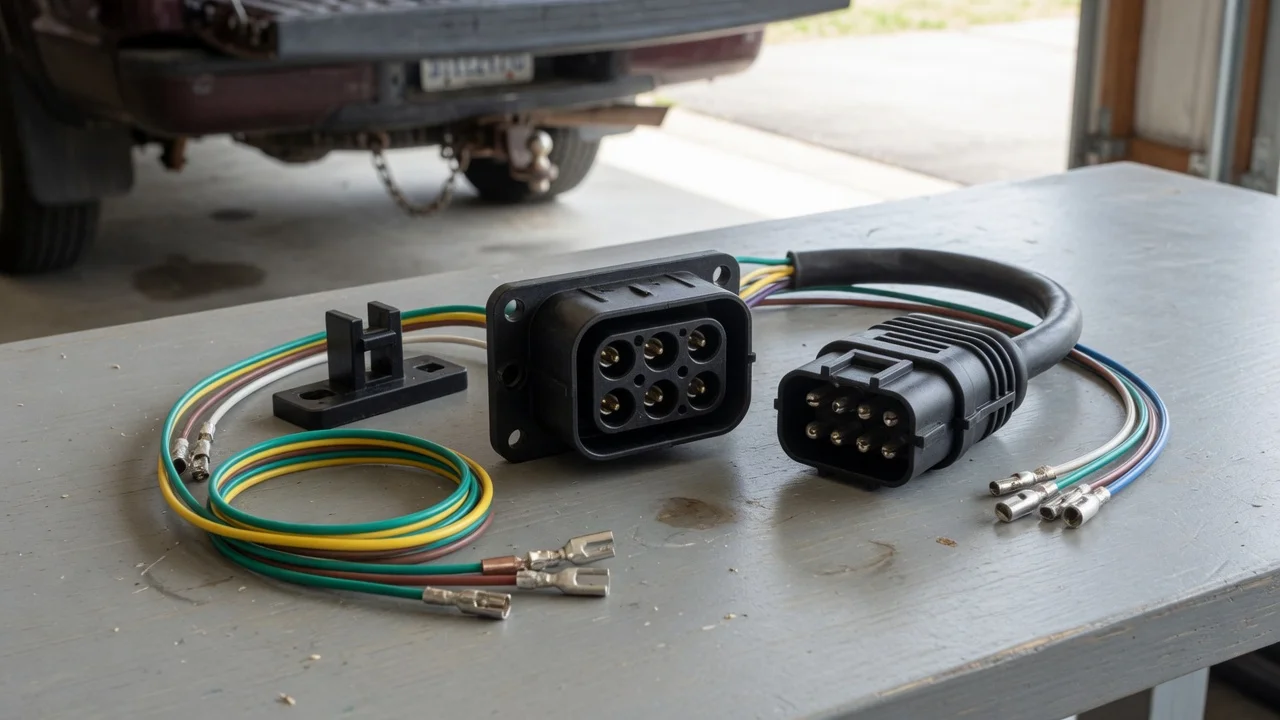
What a 6-Pole Square Trailer Wiring Connector Kit Does
A 6-pole square trailer wiring connector kit is used to make a weather-resistant electrical junction between a tow vehicle and a trailer. The kit typically includes the molded square plug and socket housings, metal terminals, and sometimes a mounting bracket or dust cap. The square shape and six terminal positions distinguish it from the more common 4-pin flat and 7-pin round connectors, so it is important to match the connector to the existing trailer or vehicle wiring rather than assuming interchangeability.
Typical Circuit Assignments on a 6-Pole Square Connector
A six-pole connector generally supports the basic lighting circuits plus one or two auxiliary functions. Common assignments include left turn and brake, right turn and brake, tail or running lights, ground, electric brake control, and a 12-volt auxiliary or reverse light circuit. However, pin order and wire color coding are not universal. Some kits use one terminal for electric brakes and another for battery charging; others may use a terminal for reverse lamps. Before wiring, check the pinout diagram printed on the kit or supplied by the trailer manufacturer.
When a 6-Pole Square Connector Is the Correct Choice
Choose a 6-pole square connector when the trailer or tow vehicle is already fitted with a matching square socket or plug, or when you need more circuits than a 4-pin flat connector provides but do not need the full set found on a 7-pin RV-style connector. Utility trailers, horse trailers, and some boat trailers use 6-pole square connectors, particularly when electric brakes or an auxiliary power line are required. Replacing an existing damaged connector with the same style is usually more straightforward than adapting to a different connector family.
Important Fitment and Installation Checks
Confirm that the kit is designed for 6-pole square terminals rather than a visually similar 6-pin round or rectangular connector. Inspect the terminal size and wire gauge rating; many 6-pole square kits accept 14-gauge to 10-gauge wire, which matters if you are running a brake or auxiliary power circuit. Use heat-shrink or sealed terminals if the kit does not already provide them, because trailer connectors are exposed to road spray and corrosion is a common failure point. If the vehicle side has a factory tow package, check whether an OEM adapter harness is available before cutting into the vehicle wiring.
What to Look for in a Kit
Molded housings with a secure latch or cover to keep the connection seated; Color-coded or labeled terminals that match the trailer wiring diagram; A mounting bracket or strain relief for the vehicle-side socket; Weather seals or self-sealing terminal ports; Enough terminals and seals to complete one connector pair
Gaps to Watch For
This guide does not provide a universal pinout, because wire assignment varies by trailer brand and kit manufacturer. No specific make, model, year, or trim fitment can be confirmed without seeing the trailer wiring diagram or the existing connector. Prices, availability, and test results are not stated here. If the trailer has a documented factory wiring schematic, follow that document over generic color-code charts.