6.7 Powerstroke Transmission Relearn: Choosing the Correct Procedure
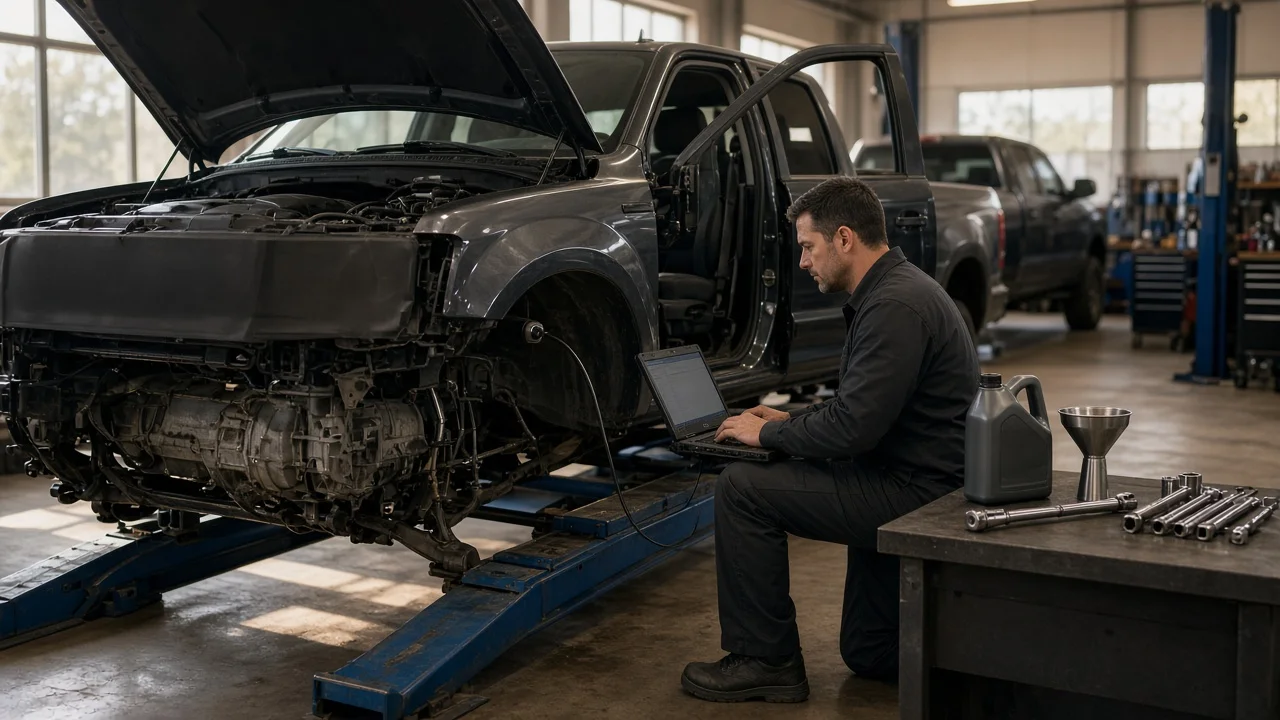
A transmission relearn on a 6.7 Power Stroke Super Duty is not one universal procedure. The right approach depends on which automatic sits behind the engine, why the adaptive data needs resetting, and which tools you can actually use. This guide helps owners choose the correct method: identify the transmission type, match the procedure to the work that was done, judge scan tool capability, and understand what a relearn can and cannot correct before spending time or money.
Define why you need a relearn
The transmission control strategy continuously adjusts clutch apply pressure and timing to compensate for normal wear, fluid condition and small hardware variations. Over time it stores those corrections as adaptive values. Resetting and relearning them makes sense in specific situations: after a fluid service, after replacing a solenoid body or valve body, after replacing or reprogramming a control module, after a rebuild or replacement transmission, or after a calibration change. Each situation calls for a slightly different sequence, so start by writing down exactly what was done to the truck and when.
Be careful when the reason is a symptom rather than a repair. A harsh shift, flare between gears or delayed engagement can come from low or incorrect fluid, a sensor or wiring fault, a stored fault, a torque converter issue or internal wear. A symptom does not confirm a failed part, and a relearn does not confirm a healthy one. Before resetting anything, read and record diagnostic codes, note when the shift behavior occurs (cold or hot, light or heavy throttle, loaded or empty), and check fluid level and condition. Clearing adaptive values first erases information that could help the diagnosis.
Check compatibility: transmission and configuration
Super Duty trucks with the 6.7 Power Stroke have used two TorqShift automatics: the six-speed 6R140, introduced with the engine for the 2011 model year, and the ten-speed 10R140, which arrived in pickups for 2020. Configuration can differ between pickups and chassis cab or commercial models, so confirm the unit by build data tied to the VIN, the transmission identification tag or documented service history rather than by model year alone. Procedures, scan tool menus and expected shift behavior differ between the two.
The fluid specification also differs. The 6R140 is generally specified for Mercon LV, while the 10R140 calls for Mercon ULV; confirm the requirement in the owner's manual or service information for your truck. Fluid type changes friction characteristics, so relearning on the wrong fluid teaches the control module to compensate for the wrong condition. Verify the level using the check method and fluid temperature specified for your transmission before any relearn.
Repair type matters as much as fitment. Replacing a solenoid body or control module may require loading calibration or solenoid characterization data with a capable scan tool before any relearn will work properly. Skipping that step can leave poor shift quality that no amount of driving will correct. Check factory service information for your VIN to see which programming steps apply.
Procedure options and features that matter
Owners usually encounter three approaches. The most controlled is a scan tool reset of the transmission adaptive values followed by a structured relearn drive. The second is a drive-cycle-only relearn, where the module adapts gradually during normal driving without a reset. The third, disconnecting the batteries, is often suggested online, but the Super Duty uses two batteries and disconnecting them is not a dependable way to clear transmission adaptive data; it can also reset other systems. Treat it as unreliable rather than as a substitute for a proper reset.
If you plan to do the work yourself, scan tool capability is the deciding feature. Generic OBD-II code readers handle emissions-related codes but typically cannot access transmission-specific service functions. Look for enhanced Ford coverage with bidirectional or service functions that explicitly list an adaptive reset and, if relevant, solenoid or module programming for your model year and transmission. Rely on the tool maker's published function list by vehicle, not on labels like full system or all makes, which do not tell you whether a specific function is supported.
The relearn drive itself generally involves bringing the fluid to operating temperature, then driving with light, steady throttle through every upshift, allowing coasting downshifts, and repeating the pattern. Exact steps, speeds and repetitions differ by transmission and calibration, so follow the factory procedure for your unit. Some improvement may be noticeable immediately, while full adaptation continues over normal driving.
Limitations and ownership costs
A relearn adjusts software corrections; it cannot repair worn clutches, a failing solenoid, internal leaks, torque converter problems, wiring faults or a low fluid level. If codes return or shift behavior worsens after a correct relearn, that points toward further diagnosis rather than another reset. Aftermarket calibrations may change shift tables and pressures, so note whether the truck is stock or tuned and which calibration was active during the relearn.
Budget for the correct fluid in the required quantity, any filter or parts called for by the service, and either a capable scan tool, a software subscription or shop labor. Allow time for the relearn drive on a safe road where you can shift through all gears smoothly, and check service information on whether towing or heavy loads should wait until the initial relearn is complete. Repair options range from doing it yourself with suitable equipment to an independent transmission shop or a dealer with factory software.
Keep a written service history: date, mileage, fluid used, procedure performed, codes read before and after, and how the truck shifted afterward. That record makes future diagnosis faster and helps any technician judge whether a problem is new or recurring.
Build a practical shortlist
Before choosing a procedure, confirm these points in order. First, the transmission: 6R140 or 10R140, verified by VIN build data, ID tag or records. Second, the fluid: correct specification and correct level at the specified temperature. Third, the trigger: fluid service, hardware replacement, module work, calibration change or an unexplained symptom. Fourth, the codes: read, record and address any stored faults before resetting.
Then match the method to the trigger. Hardware or module replacement may need programming plus a reset and relearn drive; a fluid service or calibration change usually points to a reset and relearn drive; a minor shift quality complaint with no codes may warrant diagnosis first. Finally, confirm that your scan tool or chosen shop can perform every required function for your exact year and transmission. If any item is uncertain, resolve it before resetting adaptive values, because the reset cannot be undone and a relearn performed under the wrong conditions only adds another variable.