6.7 Powerstroke Glow Plug Control Module Location
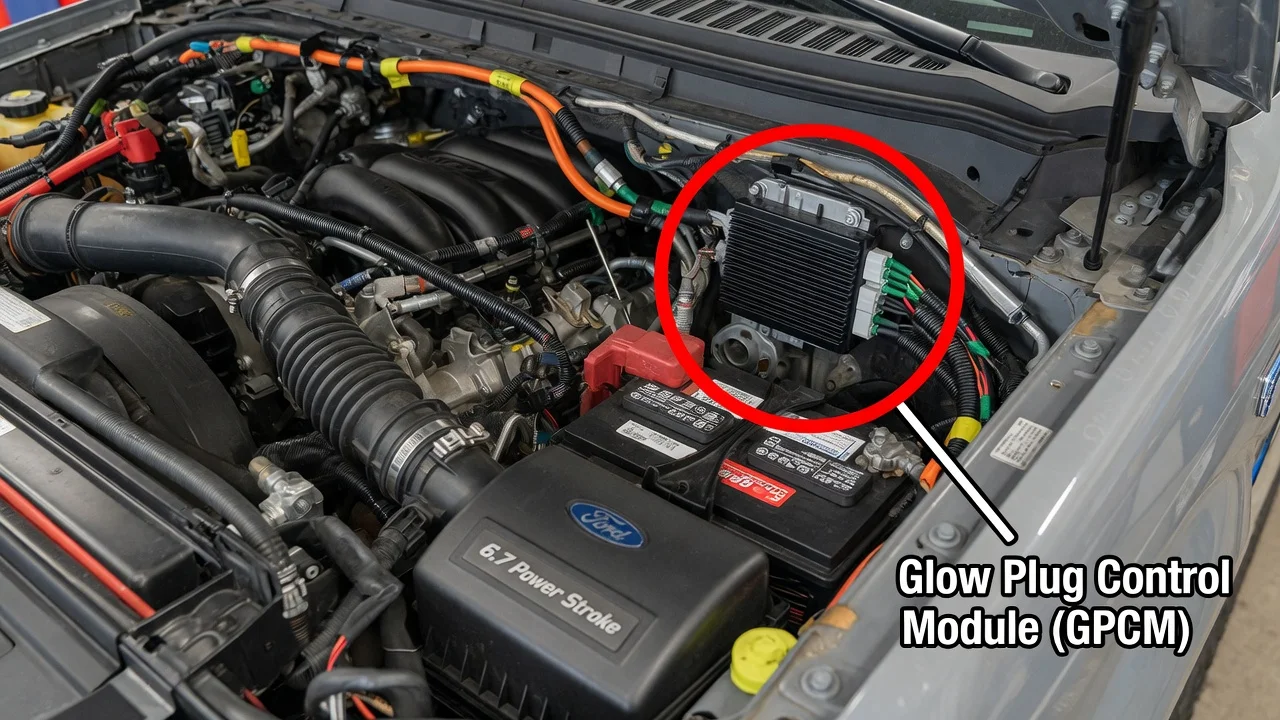
If your 6.7 Power Stroke is slow to start in cold weather, keeps the wait-to-start light on longer than usual, or has stored glow plug codes, the glow plug control module is one of the first parts worth checking. This guide explains where Ford mounts the module on the 6.7-liter diesel, how to confirm its location on your own truck, and what to keep in mind before unplugging anything.
Where the glow plug control module is located on the 6.7
The 6.7-liter Power Stroke has been used in Ford Super Duty pickups and chassis cabs since the 2011 model year. On this engine, the glow plug control module is a separate sealed electronic unit mounted away from the top of the engine. It is commonly found on the driver's side, low in the front corner of the engine compartment or in the frame rail area near the battery. There it is shielded from direct engine heat but exposed to road spray. Access is usually easier from underneath the truck or from the wheel well side than from above, and nearby components can block a clear view from the top.
Ford revised the Super Duty across several generations, so treat that description as a starting point rather than an exact map. The dependable way to find the Ford 6.7 glow plug control module on your own truck is to follow the glow plug wiring. Each cylinder bank has a glow plug harness that leaves the engine and runs to the module. The module also has a heavy-gauge power feed from the battery circuit and a smaller connector that carries command and diagnostic signals to and from the powertrain control module. The sealed box where those harnesses meet, bolted to the body or frame, is the module.
How the glow plug system works
A diesel engine ignites fuel with the heat of compression, not with a spark. When the engine and the outside air are cold, the cylinder walls and heads absorb so much heat that the compressed air may not get hot enough to ignite the fuel reliably. The 6.7 is a V8, and its engine configuration uses one glow plug per cylinder. The glow plugs heat the combustion chambers so the fuel sprayed by each injector lights off promptly.
The module itself makes few decisions. The powertrain control module reads coolant temperature, air temperature and other inputs. It then tells the glow plug control module when to energize the plugs and for how long. The module switches battery current to the eight glow plugs and monitors each circuit. It reports open, shorted or abnormal circuits back to the PCM. Heating can happen before cranking, which is what the wait-to-start lamp shows. It can also continue for a period after the engine starts, which smooths the cold idle and reduces white smoke. Glow plugs do not change fuel pressure or how much fuel the injectors deliver. They only make it easier for that fuel to ignite.
What changes the answer for your truck
Model year matters most. The 6.7 has been built across several Super Duty generations, and the mounting brackets, harness routing and nearby components changed along the way. Pickups and heavier chassis cab models can differ from each other. Upfitter equipment can crowd or relocate components near the frame, including plow wiring, auxiliary batteries, toolboxes and service bodies. On a truck that has had earlier electrical repairs, the module may have been remounted or the harness rerouted.
Operating conditions change how a weak module or glow plug shows up. In mild climates, a failing glow plug circuit can go unnoticed for months because the engine still starts on compression heat alone. In freezing weather, the same fault can cause long cranking, rough running after a cold start and heavy white smoke. Fuel matters too. Summer-grade diesel can gel in the cold. A restricted fuel filter, or weak supply from the frame-mounted fuel pump, can also cause cold-start complaints that look like a glow plug problem even when the module is fine.
What the owner can do
Start with a scan tool that reads powertrain codes. Code P0670 points to the glow plug module control circuit. Codes P0671 through P0678 identify the glow plug circuits for individual cylinders. P0683 points to communication between the glow plug module and the PCM. Note which codes are stored and whether they return after clearing. A code for a single cylinder usually points to that plug or its wire. Module or communication codes point to the module, its connectors or its power feed.
Before unplugging the module, turn the ignition off and disconnect both batteries, because the 6.7 uses a dual-battery system and the module carries high current. Inspect the connectors for corrosion, green deposits, bent terminals or water intrusion. Check the harness for chafing where it passes the frame or exhaust. Road salt and pressure washing are common causes of connector trouble at this location. You can measure glow plug resistance at the harness and compare it with the specification for your engine. An open circuit, or a reading far outside that range, identifies a faulty plug.
Keep the fuel system closed during this work. The 6.7 uses a high-pressure common-rail system, and rail pressure can reach tens of thousands of psi while the engine runs. A leaking fitting at that pressure can inject fuel through skin. Do not loosen injector lines or rail fittings to bleed off pressure. For an owner, a visual leak check with the engine off is the safe limit. If the glow plug system tests good but cold starts are still poor, look at fuel-side data instead. Compare desired and actual fuel pressure on the scan tool, review injector balance or fuel trim values, and confirm that both fuel filters are within their service interval. Anti-gel additives can help prevent winter gelling, but they do not repair a failed module, a worn injector or a weak fuel pump.
Limitations and next steps
This guide covers the general location of the module and how the system works. It cannot show the exact bracket, fasteners and connectors on every 6.7 truck. For that detail, use Ford service information matched to your VIN, or have a dealer or diesel shop confirm it. Replacement procedures and any required setup steps can also differ by model year, so check them before ordering parts.
Get professional help in any of these situations: module or communication codes return after the connectors are cleaned, several cylinders set codes at once, you find wet fuel around the injectors, high-pressure pump or lines, or hard starting continues after the glow plug system checks out. These cases often need live data interpretation, fuel pressure testing under load or injector diagnosis, which go beyond basic owner tools.