6.7 Power Stroke Oil Filter Fitment and Oil Change Guide
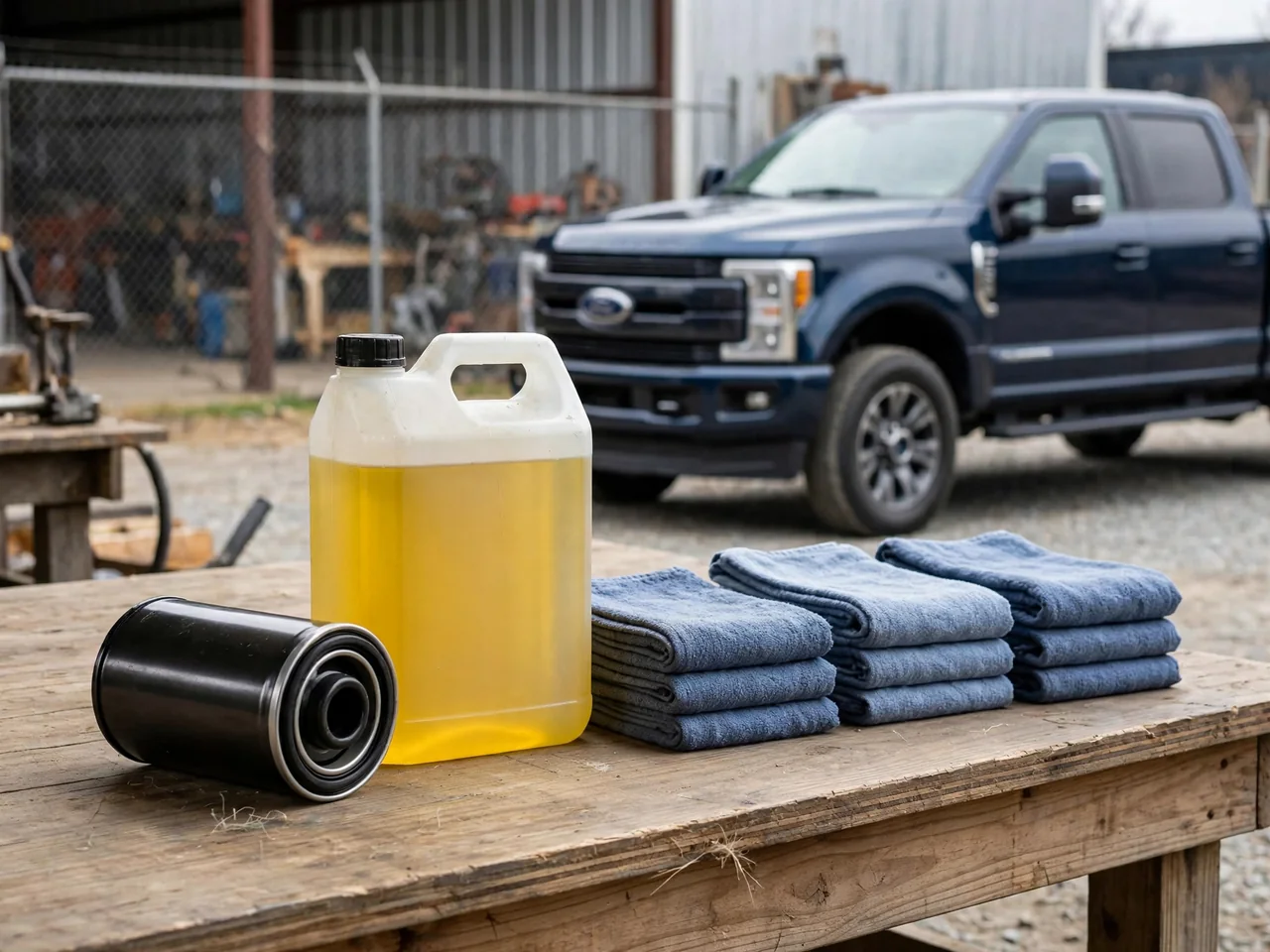
Selecting a 6.7 Powerstroke oil filter starts with the truck, not the parts aisle. Ford Super Duty models with the 6.7L Power Stroke diesel use year-specific filter applications, so the right oil filter for a 6.7 Powerstroke depends on model year and documented parts data. An oil filter 6.7 Powerstroke listing that looks familiar still needs confirmation. Work from documented fitment, engine oil capacity, and oil specification rather than guessed numbers from a similar Super Duty.
Identify the Oil Filter for Your Truck’s Model Year
Before you buy a Powerstroke 6.7 oil filter, identify the Super Duty by model year and confirm the engine is the 6.7L Power Stroke diesel. Ford has used this engine across multiple years, and filter applications can change even when the truck still looks like a typical Super Duty. The owner's manual and a vehicle-specific parts catalog are the practical starting points because they tie the filter to that chassis, engine, and production range rather than to a generic diesel label.
Any stated filter part number still needs verification against the exact truck, including documented supersessions that replace an older number with a newer one. A catalog may list both, and using the superseded number without checking can send you the wrong cartridge or canister. Appearance, package size, or a broad Super Duty label cannot establish oil filter fitment. Two filters can look similar, share a similar diameter, or sit on the same shelf and still differ in thread, bypass, or media design intended for another engine.
Check Fitment Details Before Opening the Filter
Once a candidate is in hand, confirm that the filter manufacturer lists the exact vehicle application, not a nearby Super Duty year or a different Power Stroke displacement. Sealing dimensions, mounting requirements, and internal filter specifications matter because they determine how the unit seats, how oil is directed through the media, and whether the housing or adapter is meant for that installation. Those details belong in the maker's application data. Do not treat a similar-looking filter as interchangeable, and do not assume a diesel-rated label equals compatibility.
Inspect the package and the filter itself before you open it for use. Identification on the box should match the filter body, and the sealing gasket should be present, undamaged, and seated as the maker intended. Dents, crushed threads, torn packaging that exposed the gasket, or mixed part numbers on the carton and the filter are reasons to stop. When listings are unclear, two numbers conflict, or a retailer description omits the model year, ask a parts professional to confirm the application against the truck's identifying information.
Verify Oil Capacity and the Required Oil Specification
Engine oil capacity for a 6.7L Power Stroke diesel must be tied to a verified model year and to the service-fill quantity that includes filter replacement. Ford Super Duty fill figures can differ by year and by whether the filter is being changed, so a number copied from a similar truck is not enough. The amount that drains is also a poor statement of specified capacity. Residual oil remains in galleries, coolers, and passages, and a short drain or a recent top-off can make the pan look empty when the engine still held more than the refill needs.
Viscosity and Ford oil specification belong in the applicable owner's or service manual for that truck, including any notes for temperature, towing, or other operating conditions. Use the oil the manual calls for rather than a general diesel oil that merely looks heavy enough. After the refill, dipstick oil level is the check that matters. The listed quantity is a starting volume, not a guarantee that the crankcase is at the correct mark. Follow the vehicle's prescribed procedure for parking, waiting, and reading the dipstick so you add or wait rather than overfilling from the bottle count.
Prepare for a Safe Oil and Filter Change
Gather the verified filter, the specified oil in a quantity that can cover the service fill, a drain container large enough for the used oil, absorbent pads or rags, and protective gloves and eye protection. Keep extra oil as a reserve for the dipstick check, not as a reason to empty every bottle at once. Place the drain container where the pan plug will discharge, and have a way to cap the used oil so it cannot spill while you work on the filter. Containment at this stage also makes later recycling simpler.
Hot engine oil can burn skin, so let the engine cool until the oil is warm rather than scalding, and work on a stable, level surface so the truck cannot roll. Never work beneath a vehicle supported only by a jack. Use rated stands on solid ground if you must raise it, and choose professional service when safe access is unavailable. Fastener torque and filter installation requirements come from the applicable service procedure for that Super Duty. Do not guess a tightness value or apply a universal spin-on rule.
Confirm Sealing, Oil Level, and Warning-Light Behavior
A leak after an oil change often starts at the filter gasket rather than at a failed housing. Confirm that the old gasket came off with the used filter, that the mating surface is clean and free of leftover rubber, and that the new filter gasket is intact and lightly prepared as the filter maker directs. Follow that filter's installation directions instead of guessing tightening force or using a universal hand-tight-plus-turns rule. Over-tightening can distort the gasket; under-tightening can let oil weep at idle once pressure builds.
After the specified settling period, check dipstick oil level with the truck on level ground and look over accessible areas for fresh leakage. Do not reach near belts, fans, or hot exhaust while the engine is running. If an oil-pressure warning stays on after start-up, shut the engine off safely and arrange diagnosis. A correct dipstick reading does not prove that oil pressure is adequate, because a restriction, a sensor issue, or a lubrication-system fault can still trigger a warning. Treat that light as a reason to stop, not as a cue to keep adding oil.
Handle Used Oil and Document the Service
Contain the drained oil and the removed filter so neither can leak in the shop or in a vehicle on the way to disposal. Deliver both to an accepting recycling facility and follow local requirements for packaging, labeling, and what that site will take. Do not mix the oil with solvents, coolant, or fuel, and do not put a dripping filter in household trash. Keep the drain container upright, cap it, and bag or box the filter so residual oil stays inside until the facility accepts both.
Record the mileage, the date, the filter identification, and the oil specification and quantity actually used. That log makes the next change easier to plan and helps a technician see what was installed if a leak or warning appears later. Future service timing should follow the truck's applicable maintenance guidance and the way the Super Duty is used, including towing, idle time, and dusty conditions, rather than a single invented interval. Recurring leaks, unexplained oil-level changes, or pressure warnings still need professional assessment. Those symptoms cannot, by themselves, prove that the filter was defective.