Choosing a Turbo Blanket for a 6.0 Powerstroke
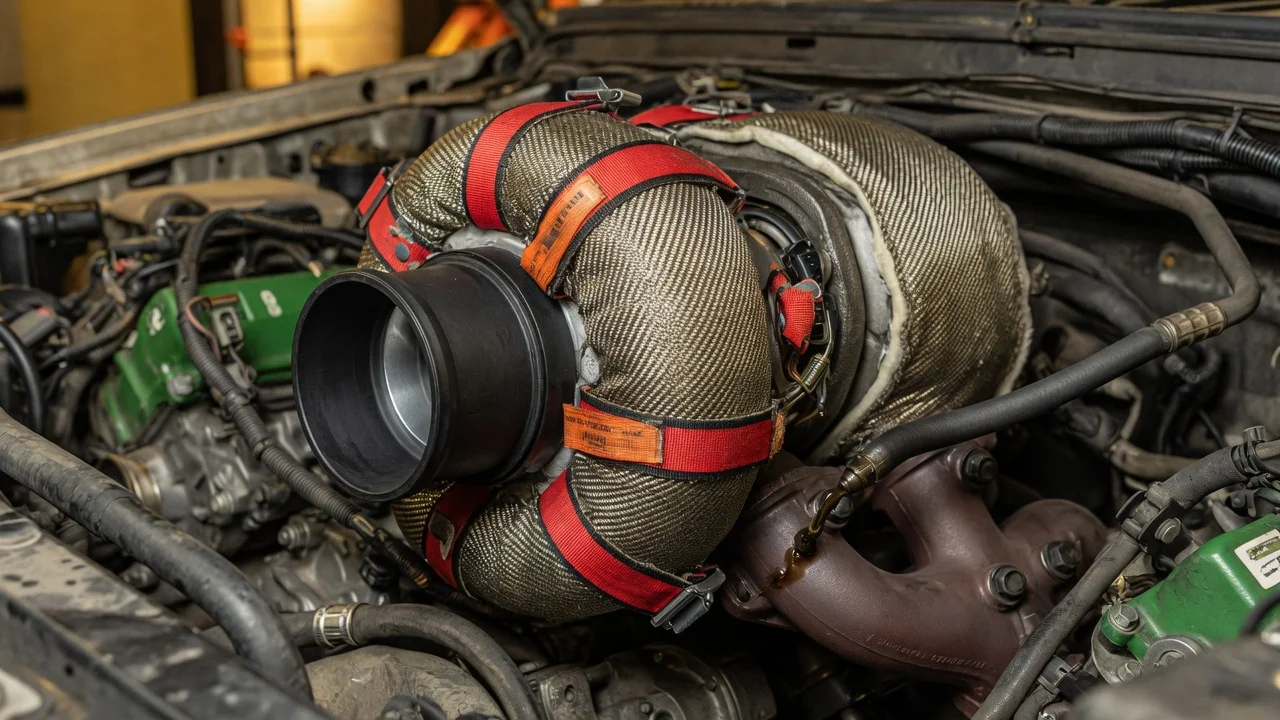
On a 6.0L Power Stroke, the turbocharger sits in the engine valley near the cowl, surrounded by oil lines, wiring and intake plumbing. That location is why owners often look at turbo blankets. A blanket can reduce radiant heat from the turbine housing, but it does not repair the engine's well-known oil cooler, EGR or head gasket issues. This guide covers how to match a blanket to your truck, which features matter, and how to avoid paying for claims nobody has measured.
Define the job the blanket must do
Start with why you want one. Most owners want to cut radiant heat in the valley, protect nearby wiring and hoses, or reduce the heat that reaches the cowl and cab area. Others are rebuilding or replacing the turbo and want to add insulation while the engine is already opened up. Those goals call for a blanket that covers the turbine housing completely and stays in place through repeated heat cycles. If your goal is more power or lower exhaust gas temperatures, be cautious. Owners often report those results, but they depend on tuning, turbo condition and how the truck is used, and controlled measurements rarely back them up.
Write down your practical constraints as well. Towing heavy loads, long idling on a work truck, plowing and short-trip daily driving all heat the turbo in different ways. Note your model year, cab and chassis, and whether the turbo is stock or upgraded. Check what your service history shows about the oil cooler, EGR cooler and turbo. If the truck has an active coolant or oil leak, or unresolved boost-related diagnostic codes, diagnose that problem first. A blanket installed over an unresolved fault only hides it.
Check compatibility with your truck and turbo
Ford used the 6.0 Power Stroke in 2003 to 2007 Super Duty pickups and chassis cabs, 2003 to 2005 Excursions, and E-Series vans through the 2010 model year. Factory engines use a Garrett variable geometry turbo, but Ford revised the turbo hardware during production. Many trucks have since received remanufactured, upgraded or entirely different aftermarket turbos. Each blanket is shaped around a specific turbine housing, so the housing matters more than the truck's badge. Confirm the turbo part number or turbine housing design before ordering. A listing that says it fits all 6.0 models is a starting point, not proof of fit.
Next, check the interfaces around the turbo. The blanket has to clear the up-pipe connection at the turbine inlet, the outlet connection to the downpipe, the mounting pedestal, the oil supply and drain lines, and the VGT control solenoid and its wiring. It should not trap the variable geometry actuator or press on connectors, and it must leave room to service the clamps. The engine is packaged differently in E-Series vans than in pickups, so check clearances specifically for van applications. If the turbo has an aftermarket housing with a different A/R or inlet shape, choose a blanket made for that housing. A stock-pattern blanket can leave gaps or bunch up against the cowl.
Features that affect the choice
Materials and construction account for most of the real differences between blankets. Most are made from layered fiberglass, silica or basalt-based fabrics around an inner insulating core, and some are marketed as lava, volcanic or titanium. Those trade names tell you less than four other details: the stated temperature rating, the layer count, the stitching method and whether the outer shell resists oil and abrasion. Look for a continuous temperature rating published by the manufacturer, high-temperature stitching, and an outer surface that does not readily absorb oil. A blanket that frays or loses its shape after a few heat cycles no longer insulates evenly.
Retention and access matter just as much on this engine because the turbo is hard to reach. Stainless steel springs, hooks or safety wire hold the blanket in place. Check that this hardware is included and that the attachment points line up with your housing. Some designs are split into sections or have cutouts so that sensors and the actuator stay uncovered. Be skeptical of claims about faster spool, lower exhaust gas temperatures or specific horsepower gains. Unless the seller explains how a figure was measured, on which engine configuration and under which conditions, treat it as marketing rather than evidence.
Limitations and ownership costs
Installation is the hidden cost. Fitting a blanket to a turbo that is still in the valley is awkward, so many owners install one only when the turbo, up-pipes or oil cooler are already being serviced. Budget for new gaskets, clamps and any hardware you disturb, and follow the manufacturer specifications for turbo fasteners and oil line fittings. Because the blanket covers the turbine housing, cracks, exhaust leaks and oil seepage are harder to spot during routine inspection. Plan to remove or lift it periodically to check underneath.
Oil contamination is the main ongoing risk. A blanket can become soaked with oil from a leaking line, seepage in the valley or a failed seal. A soaked blanket can smoke and become a fire hazard, so replace it rather than drying it out, and fix the leak. The fabric also degrades with time and heat, so check it at oil changes for fraying, loose springs and contact with wiring. Be clear about what a blanket cannot do. It will not cure sticking VGT vanes, boost leaks at the intercooler boots, oil cooler or EGR cooler failures, injector problems or head gasket issues, and it will not clear a trouble code.
Build a practical shortlist
Narrow the field with a checklist rather than a ranking. For each candidate, confirm that it is listed for your model year and body style and that it matches your turbo part number or turbine housing design. Check the published temperature rating and materials, the included retention hardware, and whether the cutouts leave the VGT actuator, solenoid wiring, oil lines and clamps accessible. Then look at how the outer shell handles oil and abrasion, what the warranty covers, and whether replacement springs or hardware are sold separately.
Then compare the remaining options against your situation. If the turbo is coming out for other work, a full-coverage design installed on the bench is often the cleanest choice. If you can only reach the turbo from above, favor designs with simple attachment and clear installation instructions. Keep the receipt and fitment details with your service history so the next technician knows the blanket is there. If new symptoms appear after installation, such as a burning smell, smoke from the valley or new diagnostic codes, remove the blanket and inspect the turbo and surrounding components. Do not assume the blanket is unrelated.