Choosing a Transmission Cooler for a 6.0 Powerstroke
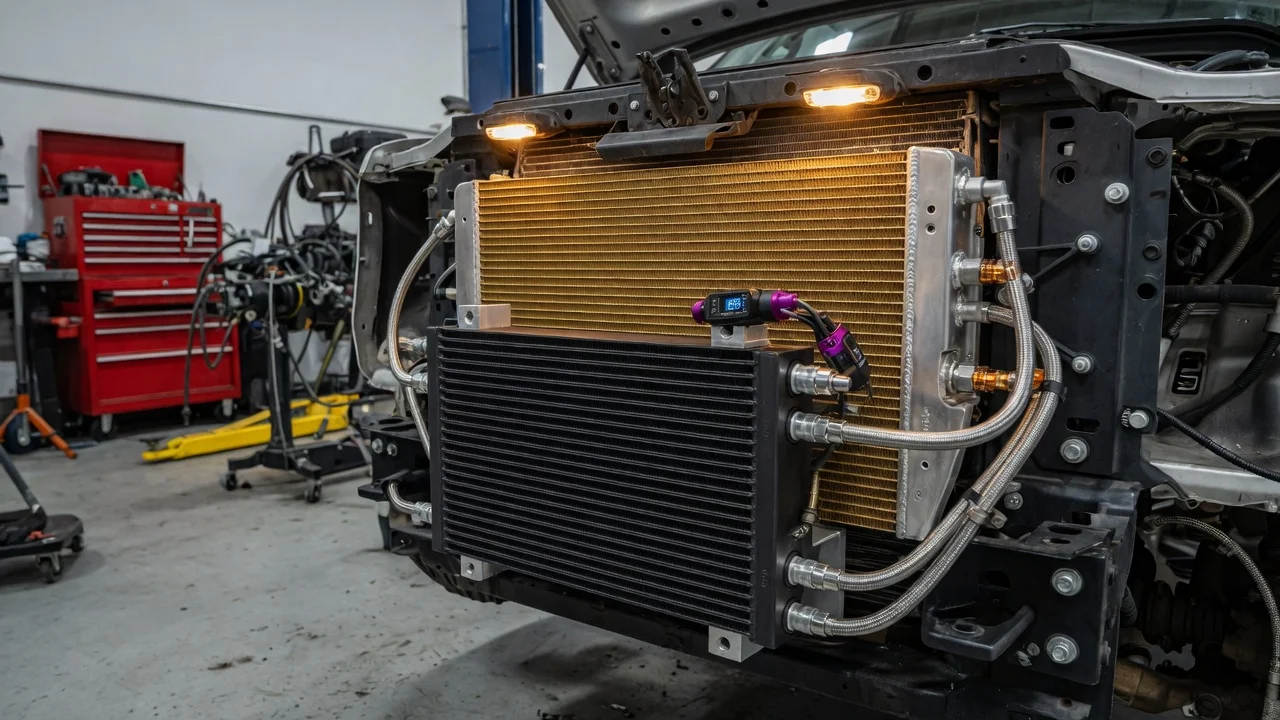
A larger or additional transmission cooler is a common upgrade for a 6.0 Powerstroke that tows, hauls or works hard in hot weather. The right choice depends on which transmission the truck actually has, how it is used and how much room is left in front of an already crowded cooling stack. This guide covers how to define the job, confirm fitment, weigh the features that matter and build a shortlist without relying on marketing claims.
Define the job the product must do
Start with how the truck works. A 6.0 that pulls a heavy fifth-wheel up long grades in summer has very different cooling demands than one that commutes empty and tows a small boat twice a year. Plowing, slow off-road work, frequent stop-and-go driving with a load, and power-adding tunes all raise the heat the transmission has to shed. Write down your heaviest realistic load, the climate you drive in and how long the truck spends at low speed under load, because those conditions decide whether a modest upgrade or a high-capacity cooler makes sense.
Fluid temperature is the real measure, not a feeling that the transmission runs hot. Before buying anything, watch transmission fluid temperature with a scan tool or a monitor that reads it, both during normal driving and during your hardest typical tow. If temperatures stay in a reasonable range, a bigger cooler may add little. If they climb, treat that as a reason to investigate, not proof that the cooler is the problem. Low fluid level, debris-restricted fins, a restricted or damaged cooler, torque converter clutch slip and other internal issues can all produce high readings, and a new cooler will not correct most of them.
Check compatibility
Confirm the transmission type first. Most automatic 6.0 Powerstroke trucks use the 5R110W TorqShift five-speed automatic, which is what nearly all aftermarket transmission coolers for this engine are designed around. Super Duty pickups were also offered with a six-speed manual, which does not use an automatic transmission cooler circuit at all. Then identify the exact vehicle: pickup, chassis cab, Excursion or E-Series van, along with model year and options such as a towing package. Mounting points, line routing and the factory cooler arrangement can differ between these configurations, so a cooler listed simply as fitting a 6.0 still needs to be checked against your specific truck.
Next, look at the interfaces. Ford commonly uses quick-connect fittings on its transmission cooler lines, so check whether a kit matches them directly or relies on adapters, and confirm line and hose diameter so the new cooler does not become a restriction. Measure the space where the cooler will mount and note what sits behind it, usually the air conditioning condenser and radiator. Do not confuse this part with the engine oil cooler, a separate component inside the engine that is often discussed with 6.0 cooling problems. Finally, confirm the fluid specification for your transmission in the owner's manual or current Ford service information; installing a cooler is a natural time to correct fluid level and condition, but it does not change which fluid the transmission requires.
Features that affect the choice
Core construction is the biggest functional difference. Stacked-plate coolers generally move more heat for their size and handle pressure well, but cost more. Tube-and-fin designs are simpler and cheaper, with less capacity for a given footprint. Plate-and-fin designs sit between the two. A denser, thicker core is not automatically better: anything mounted ahead of the radiator reduces airflow to it, and the 6.0 is an engine where owners already watch coolant temperature closely. A well-sized cooler that leaves the radiator enough air is usually a better choice than the largest unit that physically fits.
Treat capacity labels carefully. Ratings expressed as towing weight, vehicle weight or heat rejection are not measured the same way by every manufacturer, so they are useful only for rough comparison within one brand's lineup. More meaningful details include core dimensions and thickness, the type of fittings supplied, whether the unit is a direct-fit replacement or a universal auxiliary cooler, and whether it includes or accommodates a thermostatic bypass. A bypass helps the transmission reach operating temperature in cold climates instead of being overcooled. An electric fan option can help trucks that spend long periods towing at low speed, at the cost of extra wiring and another part that can fail. Hardware quality, including brackets, hose rated for transmission fluid and secure fittings, matters as much as the core itself.
Limitations and ownership costs
Budget for more than the cooler. Installation usually means losing some fluid, so plan for replacement fluid of the correct specification, plus any hoses, clamps or adapters the kit does not include. Depending on the truck, access may require removing the grille or other front-end parts. After installation, the fluid level must be checked using the procedure in the service information, which specifies conditions such as fluid temperature and engine running. If the transmission has had an internal failure, debris can be trapped in the old cooler and lines, so flushing or replacement and a fluid service are part of the repair rather than an option. Shop labor can be a significant part of the total if you are not doing the work yourself.
Ownership is mostly about inspection. Keep the fins clear of bugs, mud and road debris, check fittings and hose ends for seepage, and make sure lines are not rubbing on brackets or the frame. A cooler also has clear limits. It cannot repair worn clutches, a slipping torque converter, solenoid or valve body faults, wiring problems or low fluid from a leak elsewhere. If the transmission is setting diagnostic codes, or shift behavior has changed with harsh, delayed or flared shifts, diagnose that first and review the service history, including fluid changes and fluid condition. A cooler is the right repair option only when diagnosis points to insufficient heat rejection.
Build a practical shortlist
Narrow the options by confirming each point rather than ranking brands. Verify that the truck has the 5R110W automatic and note its exact body style, model year and options. Record fluid temperatures under your typical heaviest load so you know whether you need a replacement-grade cooler or a larger auxiliary unit. Confirm that the fitting type and line size match your lines with or without supplied adapters, and measure the mounting space while thinking about airflow to the condenser and radiator.
For each remaining candidate, compare core construction and dimensions, whether a thermostatic bypass is included or supported, what mounting hardware and hose come in the box, and how clear the installation instructions are for your configuration. Add the cost of fluid, any extra fittings and labor to the purchase price, then check warranty terms and how the seller handles fitment problems. A cooler that meets every item on this list for your specific truck is a sound choice, even if it is not the largest or most heavily advertised option available.