6.0 Power Stroke EGR Valve: Location, Symptoms, Cleaning and Replacement
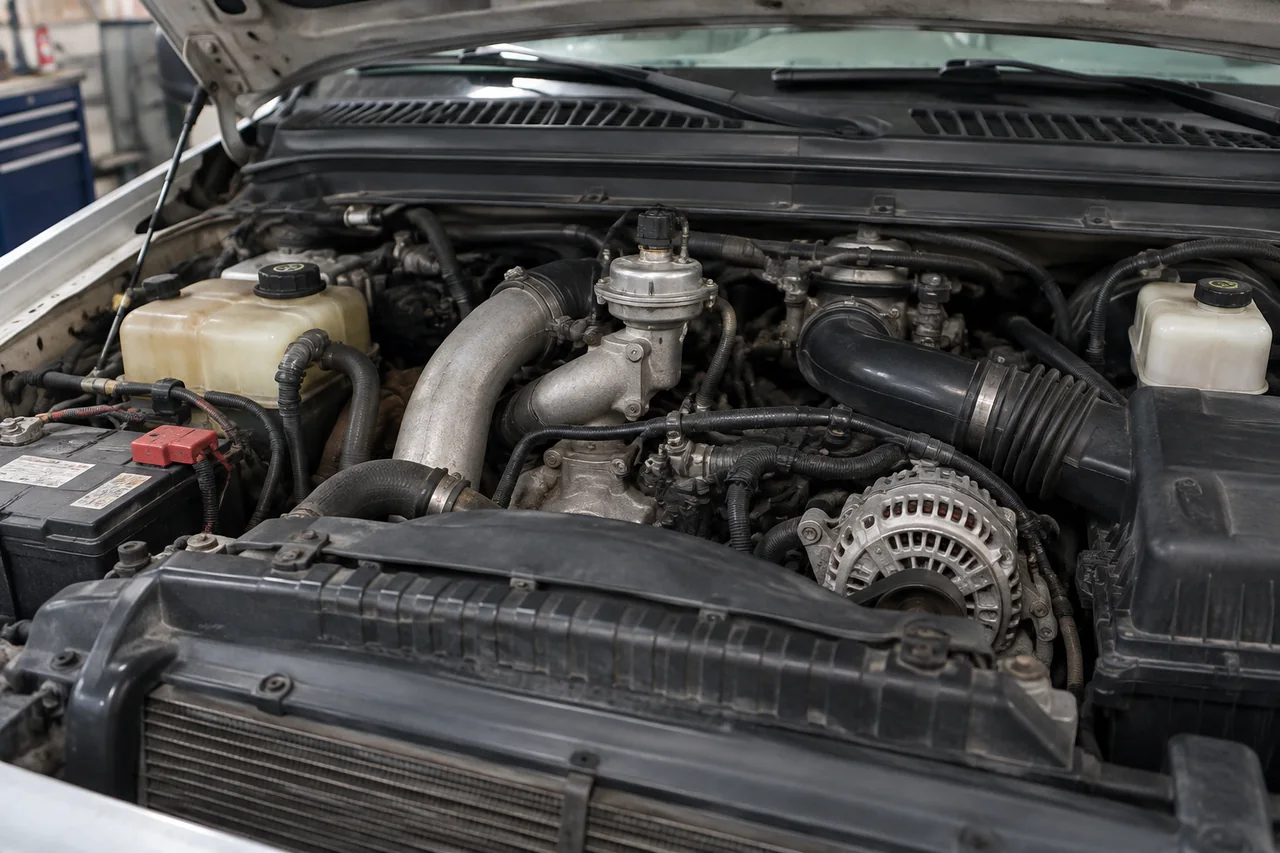
The Ford 6.0 Power Stroke EGR valve meters cooled exhaust into the intake as part of exhaust gas recirculation. Owners looking for a 6.0 EGR valve, Ford 6.0 EGR valve symptoms, location, cleaning, or replacement need a clear picture of how the system works, what a trouble code actually means, and why the valve is not the only possible cause. Identification, testing, and repair planning all start from that distinction rather than from a single complaint.
What the EGR Valve Does on the Ford 6.0 Diesel
On a 6.0 Powerstroke EGR valve circuit, the valve does not dump exhaust at random. It opens and closes to meter a controlled amount of recirculated exhaust into the intake manifold so combustion temperatures stay lower and nitrogen oxide formation is reduced. The EGR valve on a 6.0 Powerstroke is the flow-control device in that path. Exhaust still has to be cooled and routed correctly; the valve only regulates how much of that gas is allowed into the intake at a given command.
The EGR cooler is a separate heat exchanger. It lowers exhaust temperature before that gas reaches the valve and the intake, so the cooler and the 6.0 EGR valve share a system but not a job. A Ford 6.0 EGR valve can look dirty, a diagnostic trouble code can mention exhaust gas recirculation, and drivability can still suffer for another reason: cooler restriction, wiring, sensor data, or an unrelated engine fault. An EGR-related symptom or stored code is evidence to interpret, not proof the valve has failed.
Finding and Identifying the EGR Valve
The location of the EGR valve on a 6.0 Powerstroke is at the front of the intake manifold on top of the engine, not buried in the valley or on the exhaust manifold itself. From the front of a parked truck, the EGR valve on 6.0 engines sits where cooled exhaust is delivered into the intake path. That 6.0 Powerstroke EGR valve location is easiest to read with the hood open, the engine off, and the engine cool, using the intake manifold as the landmark rather than guessing from photos of other engines.
Housing shape, the electrical connector, and the mounting position at the front of the intake help identify the EGR valve 6.0 Powerstroke location more reliably than soot color. Nearby plumbing and the EGR cooler can sit close enough to confuse a first look, so vehicle-specific service information for that Ford 6.0 should confirm which casting and connector belong to the valve. Limit that check to a parked vehicle with the engine off and cool. Do not disconnect the connector, remove fasteners, or reach toward belts, fans, or other moving parts.
Symptoms That Call for EGR Valve Testing
Ford 6.0 EGR valve symptoms can include rough idle, hesitation, reduced power, stalling, or an illuminated malfunction indicator, but none of those complaints is unique to the EGR valve for 6.0 Powerstroke engines. Carbon deposits can restrict valve movement, an electrical connector fault can interrupt command or valve position feedback, and problems elsewhere in the EGR cooler path or in fuel, boost, or sensor circuits can feel the same from the driver's seat. Overlapping drivability is why a 6.0 Powerstroke EGR valve is tested rather than condemned from idle quality alone.
Useful notes include engine temperature, whether the problem appears cold, hot, under load, or at idle, which warning lights are on, and whether the issue is intermittent. Those details help a technician compare operating conditions with freeze-frame data later. Severe power loss, repeated stalling, overheating, or coolant loss is not a cleaning experiment. Stop the vehicle safely and obtain professional assistance, because those signs can involve the EGR cooler, cooling system, or other failures that a stuck 6.0 EGR valve does not fully explain.
Confirming the Fault Before Choosing a Repair
Before any 6.0 Powerstroke EGR valve cleaning or replacement is planned, record stored diagnostic trouble codes and freeze-frame information. Clearing faults first erases the snapshot of engine speed, load, and temperature that showed when the control module set the code. Manufacturer-dependent codes need vehicle-specific confirmation: the same description can point to flow, position, circuit, or cooler issues depending on the truck. Verify the code's meaning and the published diagnostic procedure for that VIN and model year before treating the EGR valve on a 6.0 Powerstroke as the failed part.
A shop should compare commanded valve operation with actual movement, check valve position feedback where the design provides it, inspect the electrical connector and wiring for open or shorted circuits, and evaluate EGR flow rather than assuming the pintle is stuck. Visual inspection has a hard limit. Surface soot on the housing can appear on diesel exhaust gas recirculation parts and does not prove the valve is inoperative, nor does a clean exterior prove the intake path is unrestricted. Another system can still need attention after the valve looks acceptable.
When EGR Valve Cleaning May Help
Cleaning an EGR valve on a 6.0 Powerstroke may help when carbon deposits interfere with movement and diagnosis shows the valve is otherwise serviceable. EGR valve cleaning 6.0 Powerstroke work is not a substitute for confirming the fault: if the electronics, internal mechanism, EGR cooler, or intake path is the real problem, solvent on the valve will not restore control. The Ford 6.0 EGR valve still has to follow command and report position. Failed electronics, a damaged pintle, a broken connector, or cooler restriction remain after the housing looks cleaner.
6.0 Powerstroke EGR valve cleaning should follow an approved service procedure and use materials that protect the electrical connector, position sensor, and intake manifold from contamination. Do not improvise solvents or scrape blindly; those steps belong in published instructions, not a general owner note. Recurring rough idle or codes after cleaning mean the original conclusion was incomplete, so diagnosis starts again rather than repeating the same wash. No universal interval applies. Mileage, duty cycle, and oil or coolant contamination all change deposit rates, and none of those variables is a schedule by itself.
Planning EGR Valve Replacement and Verifying the Repair
6.0 Powerstroke EGR valve replacement is justified when testing confirms mechanical damage, electrical failure, or a persistent malfunction after related paths have been ruled out. An EGR valve for 6.0 Powerstroke engines is not interchangeable by nickname. Select the part by VIN, model year, engine application, and the applicable service catalog; a listing that merely says 6.0 Powerstroke does not establish fit. An estimate should include diagnosis, the correct valve, specified seals or related materials, labor, and verification time, not a part-only price that ignores the rest of the EGR system.
After installation, a technician should confirm commanded operation, valve position feedback, and the absence of exhaust or intake leaks at the new joint, then check whether diagnostic trouble codes return and whether the original drivability complaint is gone. Any relearn, software setup, or monitor completion is determined by vehicle-specific procedures, not by a generic 6.0 EGR valve checklist. If rough idle or power loss remains, the replacement did not close the case. The EGR cooler, wiring, and intake path still belong in the follow-up, because a new valve only fixes a confirmed valve fault.