5x5 (5 on 5) Wheel Bolt Pattern: What It Means and How to Confirm Fitment
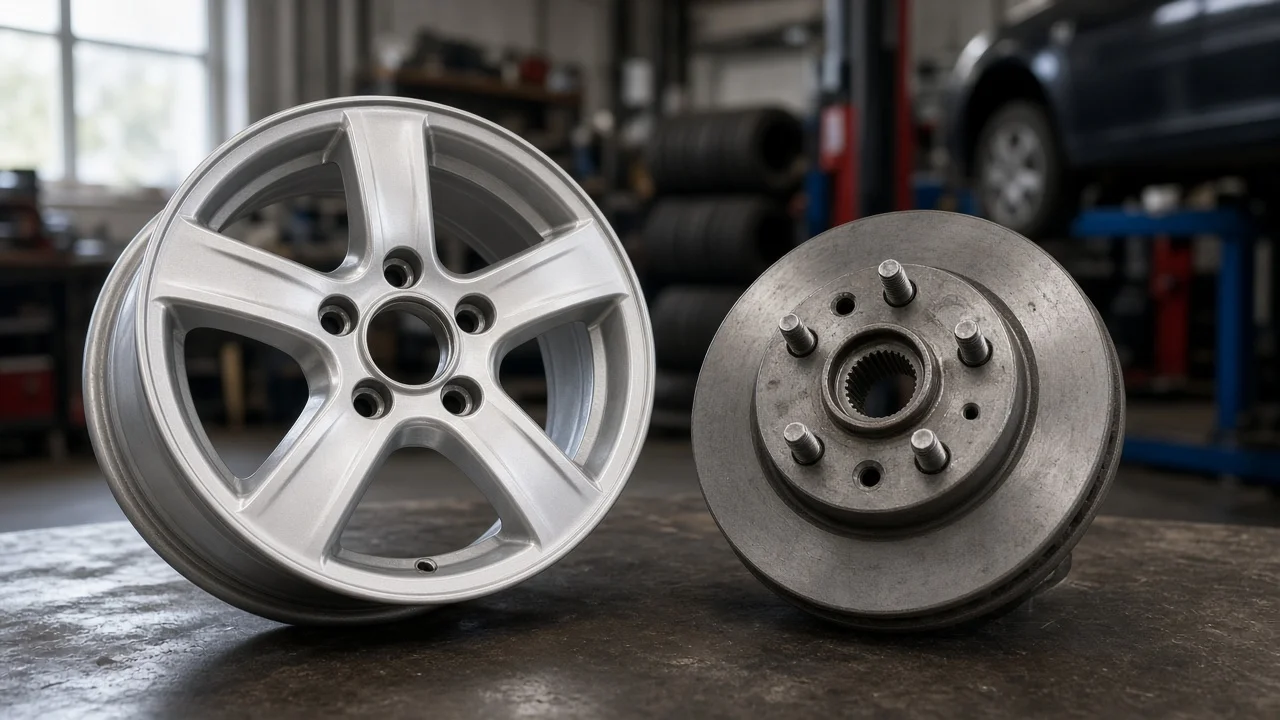
A 5x5 wheel bolt pattern, often called 5 on 5, describes a hub with five lug studs spaced evenly around a 5-inch circle. Matching the pattern is only the first fitment check. This guide explains what the numbers mean, how to confirm them on your vehicle, which nearby patterns cause mix-ups, and what else a wheel must match before it is safe to mount.
What 5x5 means on a wheel and hub
The first number is the lug count. The second is the bolt circle diameter, the size of an imaginary circle drawn through the center of every stud. So 5x5 means five studs on a 5-inch circle, which is the same as 5x127 in metric. Wheel listings may use either form, and both describe the same pattern. It appears on several Jeep models, including the Wrangler JK and JL, the Gladiator and later Grand Cherokee generations, on recent Dodge Durango models, and on many older two-wheel-drive GM half-ton pickups. Treat any list like that as a starting point rather than proof. Confirm the pattern for your exact model year, trim and axle before buying wheels.
A matching bolt pattern means the wheel's holes line up with your studs. It does not mean the wheel fits. Offset, center bore, brake clearance, lug seat style and load rating still have to suit the vehicle, and so does the tire you mount on it.
How the bolt circle is measured
On a five-lug hub, no stud sits directly across from another. That means you cannot measure center to center across the hub as you would on a four- or six-lug pattern. The usual shortcut is to measure from the outer edge of one stud to the center of the stud farthest from it, skipping the one in between. On a 5x5 hub that reading lands close to 5 inches. Because this is an approximation, an error of an eighth of an inch is enough to confuse 5x5 with a neighboring size.
An inexpensive bolt pattern gauge removes most of the guesswork. Many aftermarket wheels are stamped or labeled on the back of the spokes or inside the barrel with the pattern, offset and load rating. That marking is especially worth finding on used wheels. The pattern matters because the lug nuts clamp the wheel against the hub face. If the holes are even slightly off, the nuts cannot seat squarely. Clamping force then drops, and studs can bend or work loose over time.
5x5 versus 5x5.5 and other close patterns
Searches for a 5.5 wheel bolt pattern usually mean 5x5.5: five lugs on a 5.5-inch circle, or 5x139.7 mm. It is a different pattern from 5x5, not a variant of it. Vehicles that use 5x5.5 include the 2002 to 2018 Ram 1500 and many older Ford and Jeep trucks. The current-generation Ram 1500 moved to a six-lug 6x5.5 layout. A 5x5.5 wheel will not bolt onto a 5x5 hub.
The closer trap is 5x4.75, also written 5x120.65 or 5x120.7. It is only a quarter inch smaller and appears on many older GM passenger cars. Some metric patterns, such as 5x130, are within a few millimeters of 5x127. These near misses can look like they line up when the wheel is held against the hub, but the holes are off enough to load the studs sideways. Do not force a near-match wheel on or enlarge its holes. The safe choice is a wheel drilled for 5x5.
Specs that matter besides the bolt pattern
Offset or backspacing sets where the wheel sits relative to the hub. Too far in and the tire can rub suspension parts. Too far out and it can hit the fender and add load on the wheel bearings. The center bore must fit the hub pilot, or use proper hub-centric rings where the design allows. Spoke shape and inner barrel clearance must clear the brake calipers. Lug seat style also has to match the nuts: conical, ball and flat seats are not interchangeable. Thread size can differ even between vehicles that share 5x5. For example, the Wrangler JK uses 1/2-20 lug nuts, while the JL uses M14x1.5.
The wheel's load rating has to cover the weight each corner of the vehicle carries, which matters on trucks and SUVs that tow or haul. For tires, start with the vehicle placard on the driver's door jamb. It lists the original tire size and the recommended cold inflation pressure. Replacement tires should have at least the load index and speed rating the vehicle calls for. Inflate to the placard pressure, not the maximum printed on the sidewall.
Drivetrain compatibility also matters. On four-wheel-drive and all-wheel-drive vehicles, the tires should match in size and stay close in tread depth across all wheels. Mismatched rolling diameters can strain the transfer case or center differential. If a Jeep's full-size spare is part of the rotation, it should match the other four.
How to check and fit 5 on 5 wheels
Confirm the factory pattern in the owner's manual or the vehicle's specifications, then verify it on the hub with a gauge or careful measurement. Check the wheel's stamped pattern, offset and load rating, and confirm the center bore and lug seat type. Before mounting tires, test-fit a bare wheel. Snug it with a few nuts, spin it by hand to check caliper clearance, and look at the gap to suspension parts.
When mounting, start every lug nut by hand so threads cannot cross. Tighten in a star sequence and finish with a torque wrench set to the vehicle's specified torque, not an impact gun. Many wheel makers advise rechecking torque after the first short drive, especially with new alloy wheels. Move or replace tire pressure monitoring sensors as needed, then set pressures to the placard values.
Limitations and when to get help
Catalog data can be wrong for mid-year changes, special trims and vehicles a previous owner has modified. An axle swap or installed wheel adapters can make the hub pattern differ from what the model normally uses. Measure rather than assume. Wheel adapters that convert one pattern to another, and spacers that change offset, add another bolted joint. Use them only if they are rated for the vehicle's weight and installed exactly to the maker's instructions.
For lifted vehicles, regeared axles, heavy towing, or wheels whose markings you cannot read, have a tire and wheel shop confirm fitment before you drive. Stop and get the vehicle inspected if you notice new vibration, a clicking sound from a wheel, lug nuts that keep losing torque, or damaged studs.