5R110W Transmission Relearn Procedure: Reset and Adaptive Drive
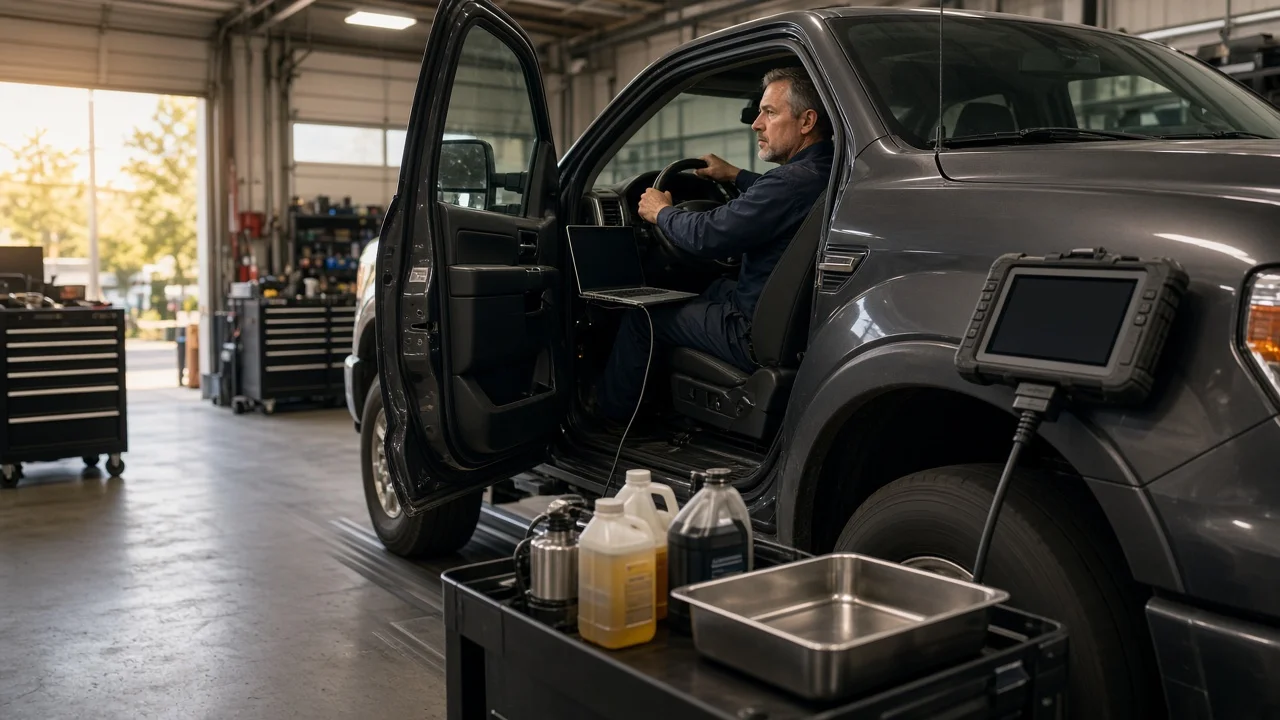
The Ford 5R110W TorqShift five-speed automatic has no single button that teaches it how to shift. The control module stores adaptive values and keeps adjusting them while you drive. A relearn means clearing those stored values and then driving in a way that lets the computer rebuild them. This article covers how that works, what changes the steps for your truck or van, and when a relearn will not solve the problem.
The short answer
On most 5R110W applications, a relearn has two parts. First, you reset the adaptive shift memory. Then you complete a deliberate drive cycle with the transmission fluid at normal operating temperature. The most reliable way to reset is with a scan tool that can command a keep alive memory (KAM) reset or clear the transmission adaptive tables. On many Ford vehicles, disconnecting the battery also clears this memory. However, it erases other learned values too, such as idle and fuel trim, and it is less controlled than a scan tool reset. After the reset, the transmission shifts using base values. Shifts may feel firm, soft or slightly delayed until it adapts again.
A relearn is not a repair. It makes sense after a fluid service, valve body or solenoid body work, a transmission overhaul or replacement, or a module replacement. If the transmission is slipping, flaring or setting codes because of a mechanical or hydraulic fault, clearing adaptive memory may change how it feels for a while, but it will not correct anything.
How adaptive shift learning works
The 5R110W uses electronically controlled shift and pressure solenoids. On these trucks and vans, the powertrain control module generally controls the transmission, rather than a separate unit. It uses turbine, intermediate and output shaft speed sensors to watch each shift happen. It then compares how long the shift took against a target. If the shift took too long, it adds pressure the next time. If the shift was too abrupt, it reduces pressure. These corrections are stored as adaptive values and grouped by operating conditions such as throttle opening and fluid temperature.
Adaptation happens in small steps and only under the right conditions, so the transmission needs repeated shifts of each type to rebuild its tables. Everyday light-throttle shifts settle fastest. Less common shifts, such as a moderate-throttle 4-5 upshift or a particular coasting downshift, can take longer. The module also monitors how the torque converter clutch applies, which is why steady cruising is part of the drive.
A practical relearn drive after a reset
Before you start, make sure the fluid is the correct type and at the correct level, the engine runs properly, and any stored transmission codes have been dealt with. After the memory reset, let the engine idle for a few minutes. Then drive until the transmission reaches normal operating temperature. A scan tool that shows transmission fluid temperature removes the guesswork. Do not tow or carry a heavy load during the first drives.
Next, accelerate gently from a stop several times, letting the transmission shift through every gear up to fifth. After each run, coast down to a stop without hard braking so it performs its downshifts. Then repeat the pattern at moderate throttle, again through all gears. Include periods of steady highway cruising so the torque converter clutch applies and holds. Where it is safe, add a few part-throttle kickdowns. Shift quality should improve gradually over several drive cycles rather than all at once. If the service information for your vehicle specifies a particular drive cycle, follow that instead of this general pattern.
What changes the answer for your vehicle
Ford used the 5R110W in several vehicles: Super Duty pickups and chassis cabs from the 2003 to 2010 model years, the Excursion, E-Series vans and cutaways, and some medium-duty trucks. It was paired with gasoline V8 and V10 engines and with the 6.0L and 6.4L Power Stroke diesels. Calibrations differ by engine, model year and body style. As a result, the reset menu, the adaptive data you can view and any required drive cycle all vary. Confirm the model year and engine before following any procedure.
Replacement parts also change the procedure. On some model years, a new solenoid body or replacement PCM must be paired with the vehicle using a factory-level tool. That can mean entering solenoid identification data or loading the correct calibration. If this step is skipped, shift quality can stay poor no matter how much you drive. Aftermarket engine or transmission tunes are another variable, because a tuner may store its own shift and pressure tables. Diagnosis is clearer with the factory calibration restored. Fluid is the last factor. The original specification was Mercon SP, and Ford later approved Mercon LV for service on many 5R110W applications. Check the correct fluid specification for your vehicle in the owner's manual or current service information, because the wrong fluid changes friction behavior and shift feel.
What the owner can do
Before resetting anything, write down the facts. Note the exact shift complaint and when it happens: cold or hot, light or heavy throttle, loaded or empty. Record any diagnostic codes and freeze frame data. Gather the service history, including the last fluid and filter change and any recent repairs. Then check the fluid level using the method specified for your vehicle, with the engine running and the fluid at the stated temperature. Note the fluid's color and smell. A low level, a burnt odor or debris all point to a problem a relearn cannot fix.
Suppose the transmission was recently serviced or repaired and now shifts oddly, but it sets no codes. In that case, a KAM reset followed by the drive described above is a reasonable next step. If codes are present, diagnose them first. A gear ratio code or a torque converter clutch slip code can come from wiring, a sensor, a solenoid, fluid condition or internal wear, and the code alone does not identify the failed part. After the relearn, compare shift behavior over several drives before deciding whether further repair is needed.
Limitations and when to get help
This is a general description. The exact menus, adaptive parameters, calibration requirements and drive cycles depend on the model year, engine, calibration level and the tool used. Some steps require dealer-level software. Generic code readers often cannot perform a transmission adaptive reset or a pairing step at all.
See a transmission specialist or a Ford dealer in any of these situations: harsh or slipping shifts continue after several drive cycles, codes return, or the transmission enters a failsafe mode with limited gears. The same applies if a solenoid body, PCM or complete transmission has been replaced and you do not know whether it was programmed. Bring your notes on symptoms, codes and service history. They shorten diagnosis and help confirm that any replacement parts have the correct fitment and calibration.