5.7 Hemi Timing Chain: Wear, Symptoms, and Replacement
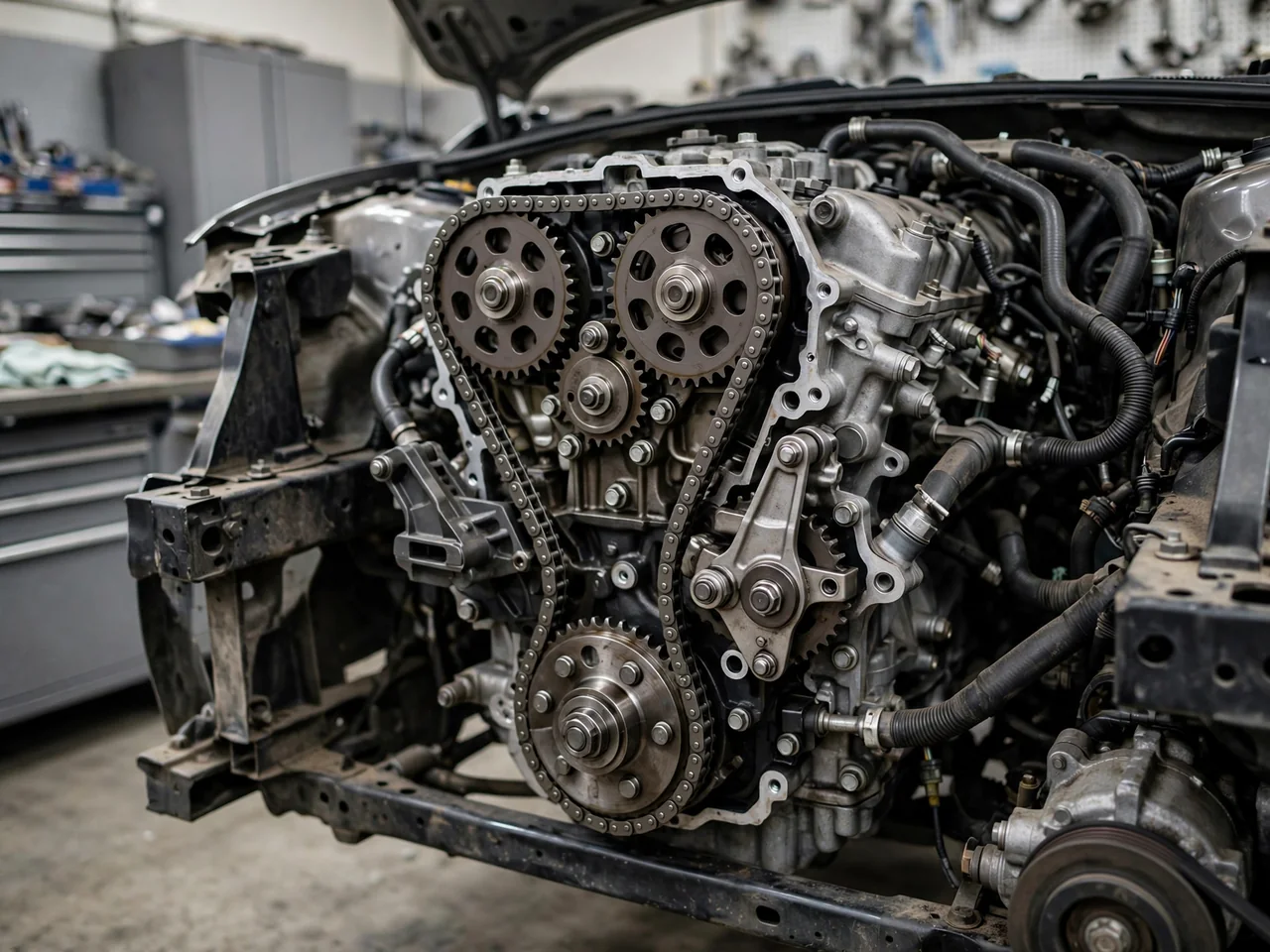
The 5.7 Hemi timing chain keeps the engine's rotating assemblies in step so valves open and close at the right moments relative to piston travel. Wear, noise, or timing-related warnings deserve careful investigation rather than a quick parts swap. Understanding how a hemi 5.7 timing chain system works, what wear can involve, which symptoms warrant testing, and when to stop driving helps owners and shops decide what to confirm before replacement.
How the Timing Chain Works in the 5.7 Hemi
The timing chain 5.7 Hemi layout uses a chain drive so crankshaft timing and camshaft timing stay locked together as the engine turns. Each crankshaft revolution must correspond to a precise camshaft position so intake and exhaust events occur when pistons are in the intended part of the cycle. If that relationship drifts, combustion quality, idle quality, and power delivery can suffer, and in a severe mismatch valves and pistons can occupy the same space. Correct camshaft and crankshaft correlation is therefore a functional requirement, not a fine-tuning option.
Sprockets transfer rotation from the crankshaft to the camshaft through the chain, while timing chain guides help control chain path and reduce slap. A timing chain tensioner is meant to keep slack within a controlled range as the chain and related surfaces wear. Hardware details are not identical on every 5.7 Hemi, and some applications include variable valve timing equipment that depends on oil control as well as mechanical timing. Before discussing those components, confirm model year, vehicle application, and engine identification so the correct service information is used.
What Timing Chain Wear Can Involve
Wear at the chain joints can stretch the effective length of a 5.7 Hemi timing chain even when individual links still look intact. Extra length changes how the chain sits on the sprockets and can allow camshaft timing to lag relative to crankshaft timing. Timing chain guides that are scored, cracked, or worn, a weak or leaking tensioner, or sprocket teeth that no longer mesh cleanly can all add slack or mechanical noise. None of those conditions should be treated as typical for this engine family; they are inspection findings, not assumed patterns.
Lubrication history matters because the chain, guides, and tensioner rely on oil film and, in many designs, oil pressure to control slack. Confirmed oil-pressure problems can starve those parts, but low pressure or a missed oil change does not by itself prove chain damage. Diagnosis should still rest on timing data, noise location, and mechanical inspection when needed. Avoid using a universal replacement mileage for a hemi 5.7 timing chain. Follow the applicable maintenance information and decide based on confirmed condition rather than a round-number interval.
Symptoms That Warrant Investigation
Possible signs include a startup rattle that fades after oil pressure builds, persistent mechanical noise, rough running, difficult starting, or reduced performance. A timing chain 5.7 Hemi concern can produce those complaints, yet so can accessory drives, valvetrain lash, exhaust leaks, ignition faults, and fuel delivery issues. Sound and driving feel cannot isolate the chain. Treat the symptoms as a reason to investigate camshaft and crankshaft correlation, lubrication, and related hardware rather than as a self-diagnosing chain failure.
A malfunction indicator lamp or stored diagnostic codes related to camshaft timing, crankshaft timing, or variable valve timing can point testing in a useful direction. Those codes are evidence to interpret, not proof that the chain, tensioner, or guides have failed. Manufacturer-dependent definitions vary, so the same code number can mean different things across years and applications. Confirm the vehicle-specific meaning, freeze-frame data, and related sensor integrity before anyone concludes that a 5.7 Hemi timing chain needs replacement.
Safe Observations and When to Stop Driving
Note when symptoms appear, including cold starts, fully warm operation, how long the noise or misfire lasts, and whether warning lights come on at the same time. That record helps a technician separate a brief startup rattle from a noise that continues after oil pressure should be established. If you check oil level, do so only as the owner's manual describes, with the vehicle safely parked and the engine in the specified condition. Do not probe near moving belts, fans, or hot engine parts while gathering those observations.
An oil-pressure warning, severe persistent mechanical noise, or a major running problem is a reason to shut the engine down safely and arrange towing rather than continue driving. Repeated starts to reproduce a loud rattle or knock can add damage if the chain has jumped, a guide has broken, or lubrication has failed. Leave further listening and inspection to a shop with the vehicle supported and covers removed as needed. Continuing to operate a 5.7 Hemi with uncontrolled slack risks valve-to-piston contact and secondary engine damage.
What a Shop Should Confirm Before Replacement
A shop should review service history, stored codes, and the conditions under which the noise or drivability complaint appears before recommending internal engine work on a hemi 5.7 timing chain. That review can reveal neglected oil service, prior timing work, or sensor replacements that change the testing path. Professional checks of lubrication, including oil pressure when the application calls for it, plus camshaft and crankshaft timing data from the control system, help decide whether the complaint is mechanical or electronic. Noise location with the right tools can further separate the chain drive from other sources.
Mechanical inspection may still be required to confirm chain, guide, tensioner, or sprocket condition because scan data cannot see plastic wear, elongated pins, or a tensioner that no longer holds. Ask the shop to distinguish confirmed findings from suspected causes and to explain any further testing, such as additional sensor checks or a limited teardown. Replacement should follow what inspection actually shows, not a default kit because a correlation code was stored. Clear documentation of what was measured versus what remains unproven protects both the diagnosis and the repair decision.
Planning Timing Chain Replacement and Follow-Up
Replacing a 5.7 Hemi timing chain is professional work that requires correct engine positioning, vehicle-specific timing procedures, the right tools, and current service information. Do not improvise lock positions or chain routing from memory. The repair scope should follow inspection findings and the applicable procedures, which may include related timing hardware, seals, and fasteners rather than the chain alone. Timing chain guides, the timing chain tensioner, and sprockets are often evaluated together because leaving a worn companion part can undo the repair. Variable valve timing components, when fitted, belong in that same application-specific discussion.
An estimate typically reflects access labor, verified component needs, fluids, and any additional damage found once covers are off, without a single standard price. Request documentation of post-repair leak checks, timing verification, code review, and whether the original symptoms are gone. Replacement alone may not resolve an underlying lubrication fault, a failed oil-pressure control path, or damage caused by a loss of correct timing. If bearings, valves, or pistons were stressed while the chain was out of position, those findings belong in the follow-up plan rather than being assumed fixed by a new chain.