5.7 Hemi Spark Plugs: The 16-Plug Layout and Replacement Guide
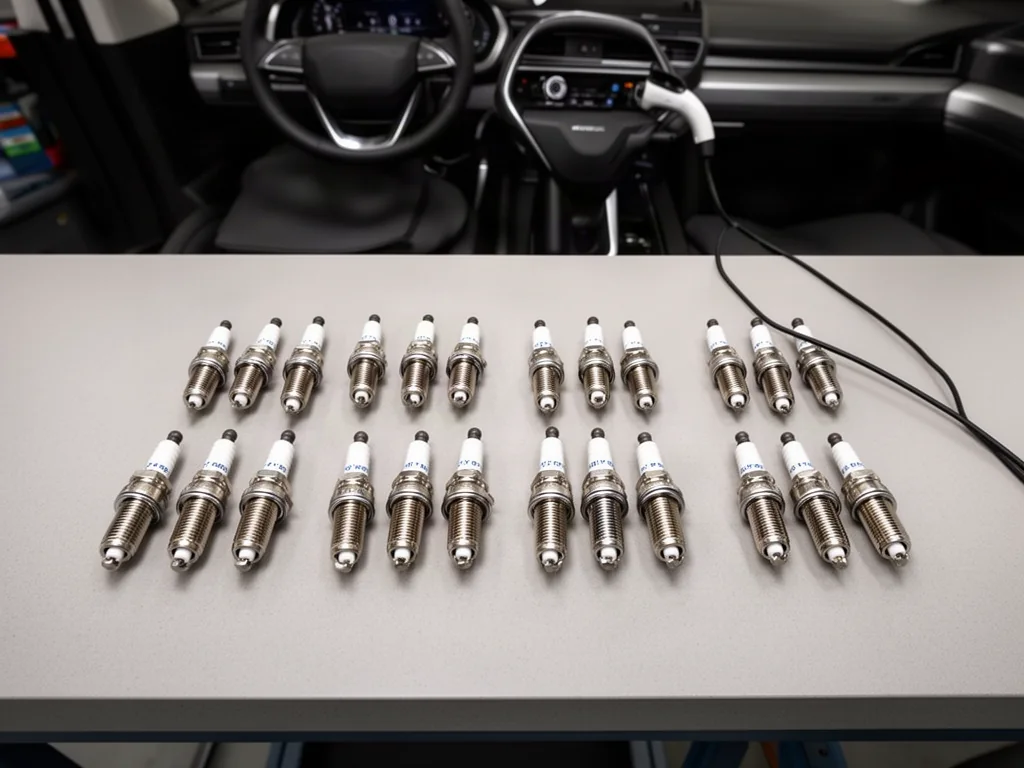
Owners looking for spark plugs for a 5.7 Hemi often start with a simple count question, then need application details for a Ram 1500 or related truck. The 5.7 Hemi engine uses dual spark plugs, so a complete set is larger than a typical V8 job. Fitment still depends on model year, VIN-based catalog lookup, and the maintenance schedule for that truck, not on displacement alone. Those details matter as much as knowing the plug count.
The 5.7 Hemi Has 16 Spark Plugs
The 5.7 Hemi V8 uses two spark plugs per cylinder, totaling 16. How many spark plugs a 5.7 Hemi has is therefore sixteen, not eight, because dual spark plugs fire each cylinder. Replacing every plug means ordering and installing 16 individual plugs, so check package quantities when shopping for Hemi 5.7 spark plugs rather than assuming an eight-pack will finish the engine.
Ignition coil count and connection routing are separate from the 16-plug total. Coil packs, plug boots, and ignition wiring follow the truck application, not the simple fact that there are two plugs per cylinder. Confirm coil and boot layout from vehicle-specific service information before assuming one coil serves one plug or that a coil job automatically accompanies a 16-plug replacement on a 5.7 Hemi.
Confirm Your Ram’s Engine and Model Year Before Ordering
Selecting spark plugs for a Ram 1500 starts by confirming the truck has the 5.7 Hemi, because those pickups have been offered with more than one engine. The model name on the fender does not identify the powerplant by itself. Dodge-branded Ram trucks and later Ram 1500 applications still need that engine check, plus model year, because catalogs list plugs by application rather than by the Hemi name alone.
Useful fitment checks include engine identification under the hood, the model year on the title or door sticker, and VIN-based fitment lookup in a parts catalog. Related 5.7 Hemi trucks, including Dodge-branded Ram models, need their own application details rather than a shared-displacement assumption. The same engine family can use different plug specifications across years and body styles, so verify each truck separately before ordering spark plugs for a 5.7 Hemi.
Match Spark Plugs to the Required Application Specifications
Once the truck is identified, match 5.7 Hemi spark plugs to the specified part number or an explicitly approved application-specific replacement. Electrode design, heat range, thread reach, seat design, and spark plug gap are all fitment details that must match that application. Plug material, part number, and gap can change across 5.7 Hemi model years, so each year needs its own confirmation even when displacement is unchanged.
A box labeled pre-gapped still requires confirmation against the application specification. If a check or adjustment is needed, follow the plug manufacturer's guidance rather than bending electrodes by guesswork. Catalog listings for 5.7 Hemi spark plugs can differ by year and calibration, so treat the listed specification as the target and treat aftermarket claims of universal Hemi coverage as something to verify, not as automatic approval.
Find the Correct Spark Plug Replacement Interval
Replacement mileage for spark plugs for 5.7 Hemi trucks belongs in the maintenance schedule for the exact model year and engine, not in a single interval applied to every Hemi-equipped Ram. Documented replacement mileage, the service date, and the installed plug specification help show when the next service is due. If those records exist, compare them with the current schedule rather than relying on a round-number guess.
Missing records call for a different approach: confirm the applicable schedule, then discuss inspection or replacement with a qualified shop that can assess plug condition without treating guesswork as a service interval. Scheduled maintenance is also separate from diagnosis prompted by new symptoms. Rough running, a new misfire warning, or other changes can justify attention before the calendar or odometer interval, because the schedule assumes normal operation rather than a developing ignition problem.
Recognize Symptoms Without Assuming the Plugs Are at Fault
Rough idle, difficult starting, hesitation, and engine misfire warnings can point toward the ignition system, but they do not prove the spark plugs have failed. Ignition coils, plug boots, wiring, fuel delivery, and mechanical problems can produce overlapping drivability complaints on a dual-spark 5.7 Hemi. Treat those symptoms as a reason to inspect the whole ignition and fuel path rather than as a verdict on the 16 plugs.
Record when symptoms appear and note any stored diagnostic codes without clearing them before a proper diagnosis. A fault code is evidence to interpret, not proof that a plug, coil, or other part has failed, and manufacturer-dependent codes still need vehicle-specific confirmation. A flashing check-engine light or severe shaking is a reason to stop safely and arrange professional help, because continued driving in that condition can cause further damage.
Plan a Complete 16-Plug Replacement Service
A complete service estimate should identify the correct plugs, the quantity of 16, labor to reach them, and any separately justified ignition-component work such as coils or boots. Access and ignition-connection layout depend on the truck application, so a Dodge or Ram 1500 still needs vehicle-specific planning rather than a generic Hemi labor quote. Labor time, coil count, and boot design still need the specific truck's service information, even when another Hemi shares the 5.7-liter displacement.
Correct spark plug torque, thread protection, and careful handling of coils and plug boots are reasons to follow verified service procedures or use qualified help rather than improvised tightening. After installation, document the installed part number, replacement mileage, and service date, then confirm the engine starts and runs properly. Persistent symptoms after a 16-plug replacement call for diagnosis, not automatic replacement of additional parts that have not been shown to be at fault.