5.7 and 6.4 Hemi Serpentine Belt Routing: Ram 1500 and Dodge Charger
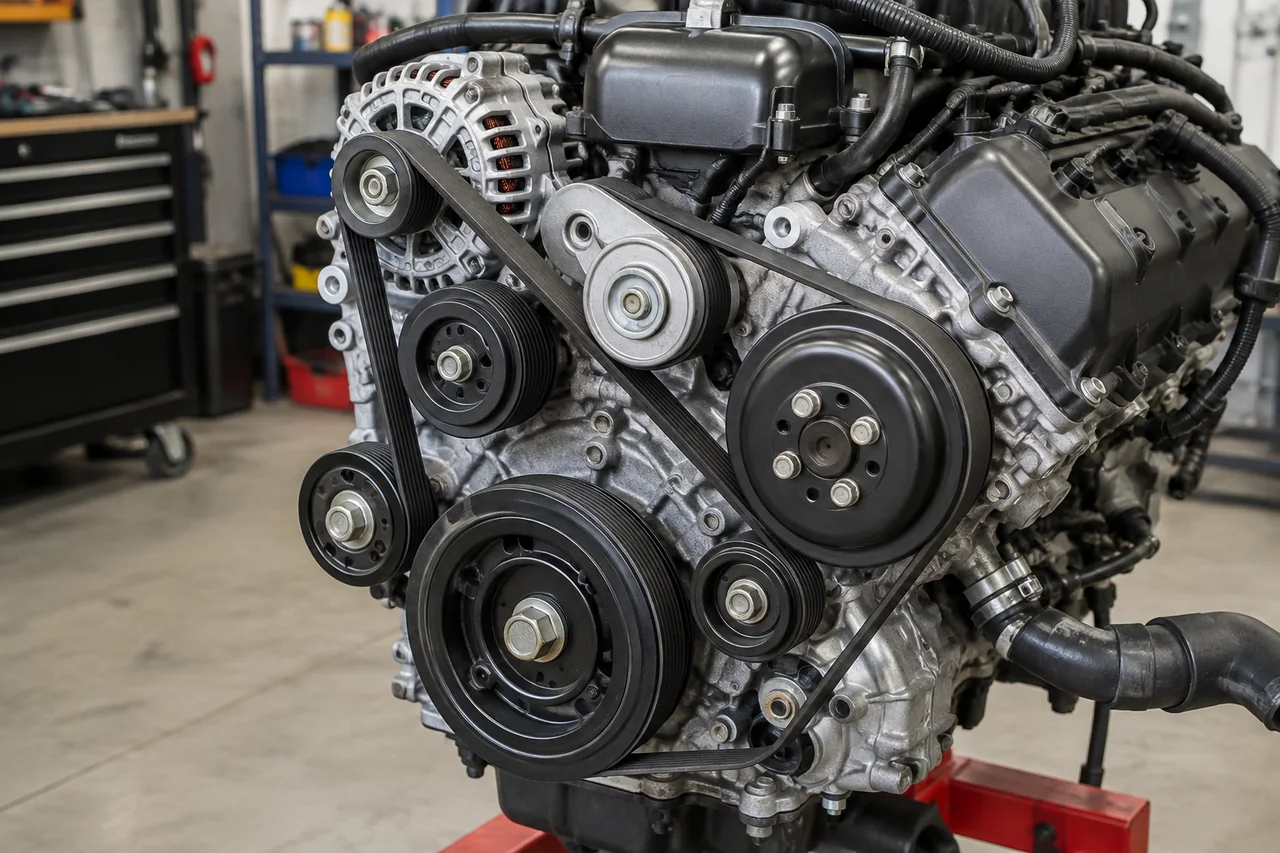
A 5.7 Hemi serpentine belt diagram is only useful when it matches the engine, model, and accessory drive actually installed. Ram 1500 and Dodge Charger applications share Chrysler Hemi V8 families, including the 5.7 and, in some Chargers, the 6.4, but they do not share one routing picture. Confirm the vehicle first, then use a verified belt routing label or application-specific illustration before selecting a replacement accessory drive belt.
Identify the Vehicle and Accessory Drive Before Choosing a Diagram
More than one 5.7 Hemi serpentine belt diagram exists because accessory drive configurations differ. Model year, vehicle family, engine displacement, and installed equipment all change pulley count, idler placement, and belt length. A Dodge Ram 1500 serpentine belt path is not interchangeable with a Dodge Charger 5.7 serpentine belt diagram simply because both engines are Hemis. Air conditioning, power steering, and other driven accessories alter the loop. Match the routing reference to the exact Ram 1500 or Charger sitting in front of you before treating any illustration as correct.
Start with the underhood belt routing label, then confirm it against vehicle-specific service information for that VIN, year, and engine. If the label is missing, faded, or unreadable, do not guess from a neighboring picture. Use the service illustration that names the Ram 1500 or Charger application and the installed accessory drive configuration. A 6.4 Hemi serpentine belt diagram does not establish Ram 1500 factory fitment. Engine swaps, relocated brackets, or aftermarket pulleys require identifying the hardware on the engine before choosing any diagram or belt.
Read a Verified 5.7 Hemi Serpentine Belt Diagram
On a verified 5.7 Hemi serpentine belt diagram, begin at the crankshaft pulley and identify every driven accessory, idler pulley, and automatic belt tensioner in the loop. The illustration should show which pulleys are grooved and which are smooth. Ribbed pulleys engage the ribbed face of the accessory drive belt, while smooth pulleys contact the belt back. Follow only the application-specific route. Mixing faces, skipping an idler, or wrapping the tensioner the wrong way will leave the belt misaligned even if it appears seated.
Trace the complete belt loop from the crankshaft around each accessory and back without leaving a pulley unaccounted for. An omitted idler, a reversed belt face on a ribbed pulley, or a path that never contacts the tensioner pulley is a routing error, not a minor variation. The belt currently on the engine is useful evidence of how the last installer ran it, but earlier work can leave an incorrect path in place. Compare the installed route with a verified diagram rather than copying a previous mistake.
Confirm Ram 1500 Routing, Including the 2012 5.7 Hemi
A 2012 Ram 1500 serpentine belt diagram must be verified for the 5.7 Hemi and the accessories actually on that truck. The same caution applies to a 2012 Dodge Ram 1500 serpentine belt diagram found by year alone. A Ram 1500 serpentine belt illustration that names only the truck does not prove fitment for every engine or model year in that family. Confirm whether air conditioning and other driven units are present, then use a Dodge Ram 1500 serpentine belt diagram that matches that accessory drive configuration.
Before relying on any Ram 1500 serpentine belt picture, compare diagram orientation and pulley identification with the stationary engine. Confirm which pulley is the crankshaft, which is the automatic belt tensioner, and where each idler sits. If the belt routing label is gone, brackets look altered, or the pulley arrangement does not match the illustration, stop and have the accessory drive identified professionally. Guessing a serpentine belt for Dodge Ram 1500 from a similar year or a different Hemi layout can produce a belt that will not track.
Locate the Correct Dodge Charger 5.7 or 6.4 Hemi Routing
A Dodge Charger 5.7 serpentine belt diagram is valid only when it names the Charger, the model year range it covers, and the equipment on that engine. Charger accessory brackets, pulley spacing, and belt wrap differ from truck layouts even when both use a 5.7 Hemi. Match the illustration to the installed Charger accessory drive, including whether air conditioning and other driven units are present. Do not substitute a Ram routing picture because the displacement looks familiar.
Use a 6.4 Hemi serpentine belt diagram only with the Charger configuration it was drawn for, not with every 6.4 or every Hemi V8. The illustration must identify that application clearly and label the actual pulley path, including ribbed pulleys, smooth pulleys, idlers, and the automatic belt tensioner. Displacement alone cannot confirm a diagram, a replacement belt, or the accessory drive layout. If two Chargers share a 6.4 or a 5.7 but different equipment, treat them as separate routing problems and verify each one independently.
Select a Serpentine Belt for the Ram 1500
VIN-based belt fitment is the reliable way to choose a serpentine belt for a Dodge Ram 1500. Use the VIN together with model year, confirmed 5.7 Hemi or other installed engine, and equipment such as air conditioning. A serpentine belt Ram 1500 listing that omits year, engine, and accessories is incomplete. Length and rib count are useful fitment checks once the application is known, but they are not substitutes for that identification. Do not assume a neighboring Ram 1500 uses the same accessory drive belt.
Markings on a removed Dodge Ram 1500 serpentine belt can support identification, yet they still need validation against the vehicle application. A previous incorrect belt, a misrouted path, or a tensioner that no longer holds the designed range can leave the wrong length on the engine. If a candidate belt looks too loose on the pulleys or too short to seat around the automatic belt tensioner, stop. Recheck VIN-based belt fitment and the verified routing before forcing the belt or assuming the tensioner is the only issue.
Inspect Belt Condition and Plan a Safe Replacement
Inspect the accessory drive belt with the engine off and cool, the key removed, and remote-start activation prevented. Look for fraying, missing rib material, edge damage, glazing, and oil or coolant contamination along the full loop, including the spans you can see around idlers and the automatic belt tensioner. Squealing or chirping during running does not, by itself, identify the belt, tensioner, belt alignment, or a driven accessory as the cause. Noise is a symptom to interpret after the inspection, not a diagnosis of a failed part.
Plan replacement only after the route and belt application are verified. Consult the exact service procedure for that Ram 1500 or Charger, and assess access plus the stored force in the automatic belt tensioner before starting work. Do not run the engine with a displaced, jumped, or damaged belt. Repeated belt damage, a pulley that will not turn freely by hand when the belt is off, or an uncertain tensioner condition calls for professional testing. Those findings can point to alignment, a seized accessory, or tensioner wear rather than the belt alone.