4R100 Transmission Valve Body Identification
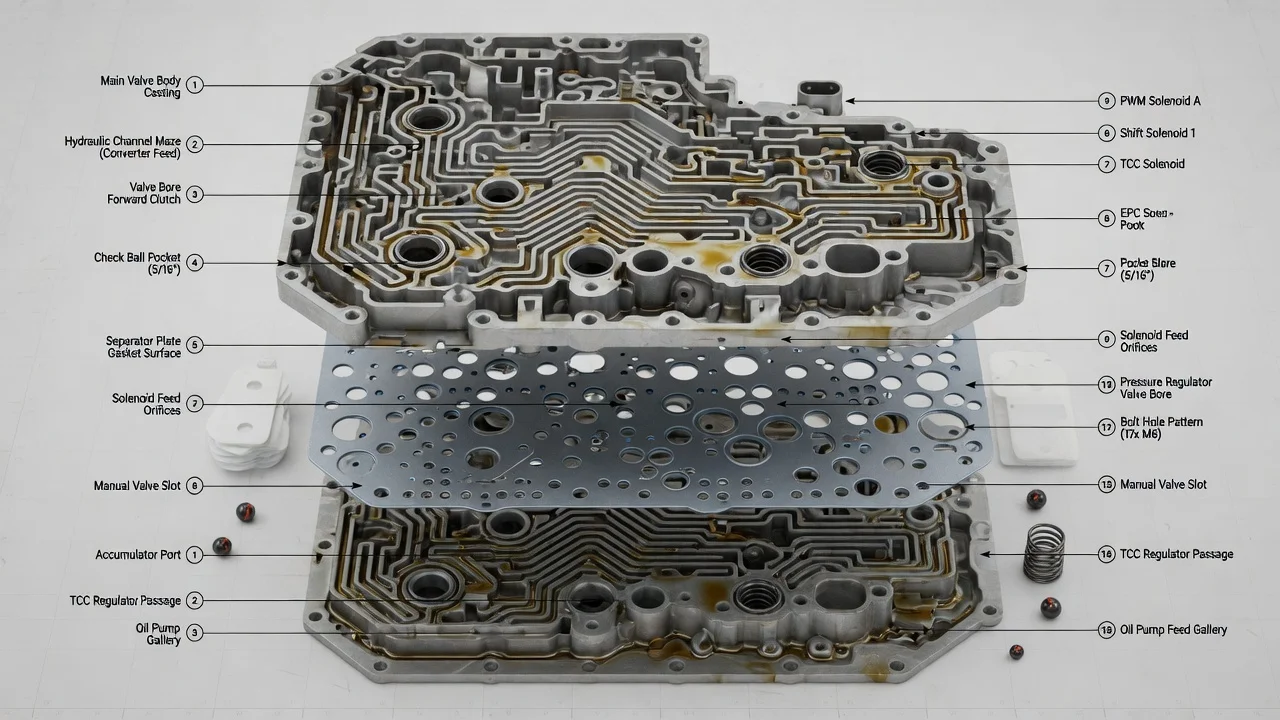
The valve body is the hydraulic control center of Ford's 4R100 four-speed automatic. Identifying the correct one matters whether you are diagnosing a shift problem or buying a replacement. The 4R100 was built for several heavy-duty trucks and vans with gasoline and diesel engines, so the right part depends on more than the transmission name. This guide explains how to confirm what you have before you buy anything or blame the valve body.
Short answer: confirm the transmission first, then the valve body
To identify a 4R100 valve body, start with the transmission rather than the valve body. Confirm the transmission type using the code on the vehicle certification label and the identification tag on the transmission case. The tag carries the model and calibration information Ford used to track assemblies. Then match the valve body to its application: engine, drive configuration, model year, and any part or casting numbers on the valve body and separator plate. A unit that only looks the same does not prove correct fitment.
The 4R100 replaced the E4OD in Ford's heavy-duty lineup. It was used in Super Duty pickups, the Excursion and E-Series vans, behind gasoline V8 and V10 engines and the 7.3L Power Stroke diesel. The two transmissions are closely related and are often confused, but their valve bodies, solenoid assemblies and calibrations differ, both between the two models and between applications. Be cautious with interchange claims unless the seller can match your exact identification numbers.
What the valve body does in a 4R100
The valve body is a block of machined passages, spool valves, springs and check balls bolted to the bottom of the case under the oil pan. Pressurized fluid from the pump flows through it, and the valves route that fluid to the clutches and bands that produce each gear. A separator plate with gaskets sits between the valve body and the case. Its holes help meter fluid flow, so the plate is also part of the identification.
The 4R100 is electronically controlled. The powertrain control module operates a solenoid assembly mounted on the valve body. Shift solenoids select gears, an electronic pressure control solenoid sets line pressure, a torque converter clutch solenoid manages lockup, and a coast clutch solenoid controls engine braking in certain ranges. Because the computer and the hydraulics work together, a shift complaint can come from wiring, a solenoid, the computer's calibration, worn valve bores, or problems elsewhere in the transmission. A symptom alone does not confirm a failed valve body.
What changes the identification
Several factors determine which valve body is correct. Engine type matters, because diesel and gasoline applications are calibrated differently for shift feel and line pressure. Model year matters, because Ford revised parts during production. Vehicle line matters too: a Super Duty pickup, an Excursion and an E-Series van may not use the same assembly. Two-wheel-drive and four-wheel-drive configurations can also affect the transmission assembly as a whole, so record the drivetrain when you compare parts.
Previous repairs can also change the answer. A transmission may have been swapped in from another vehicle, rebuilt with an aftermarket shift kit, or fitted with a remanufactured valve body that carries the supplier's own numbers instead of the original markings. In those cases the case tag may describe the original unit while the valve body inside is different. Service history and repair receipts are valuable here. If the history is unknown, the parts themselves need to be inspected.
How to identify yours step by step
Start with information that requires no disassembly. Write down the VIN, model year, engine and drivetrain. Then read the transmission code on the vehicle certification label on the driver's door or door pillar. Next, find the identification tag on the transmission case and record every number on it. Clean the area gently so you do not damage a worn tag. A parts counter or transmission shop can usually translate these details into the correct application.
If the pan has to come off for service anyway, photograph the valve body and separator plate before removing anything. Capture any cast or stamped numbers, the solenoid assembly connector and the check ball locations. Inspect the pan sediment and filter. Heavy metal particles or clutch material point to problems beyond the valve body. Refill with the fluid specification listed in the owner's manual or service information. Ford's later guidance for this transmission family generally calls for Mercon V, but confirm it for your own vehicle.
Gather evidence before you buy a valve body. Scan for diagnostic codes with a tool that can read transmission data. Note when the problem occurs: cold or hot, light or heavy throttle, and during which shifts. Check the fluid level and condition. Describe the shift behavior precisely, because harsh engagement, flare between gears, missing overdrive and converter shudder each call for different tests. A shop can then check solenoid resistance, line pressure and wiring before condemning the valve body.
Choosing a repair option
If testing does point to the valve body, there are three common repair options. You can install a new or remanufactured assembly that matches your identification. You can have the existing unit rebuilt with corrected bores and fresh springs. Or, if testing isolates the fault to the solenoid assembly, you can replace that part alone. Each option depends on verified fitment. After a valve body replacement, the computer's adaptive values may need to be reset or relearned. If the transmission has internal wear, a new valve body will not fix it.
Limits of this guide and when to get help
This article cannot tell you which part number fits your truck or van. That depends on the exact build, production revisions and any earlier repairs. Online interchange charts and listing photos are a starting point, not confirmation. Vehicle-specific service information, a dealer parts lookup by VIN, or a transmission specialist working from your tag numbers will give a more reliable answer.
Get professional help if the vehicle has no reverse, slips under load, has burnt fluid or debris, or sets codes you cannot resolve with basic checks. Heavy-duty trucks often tow, and a misdiagnosed transmission can fail with a trailer attached. Bring your recorded numbers, the codes and a description of the shift behavior. This speeds up diagnosis and helps you avoid paying for a valve body the transmission did not need.