4R100 Torque Converter Shudder Diagnosis
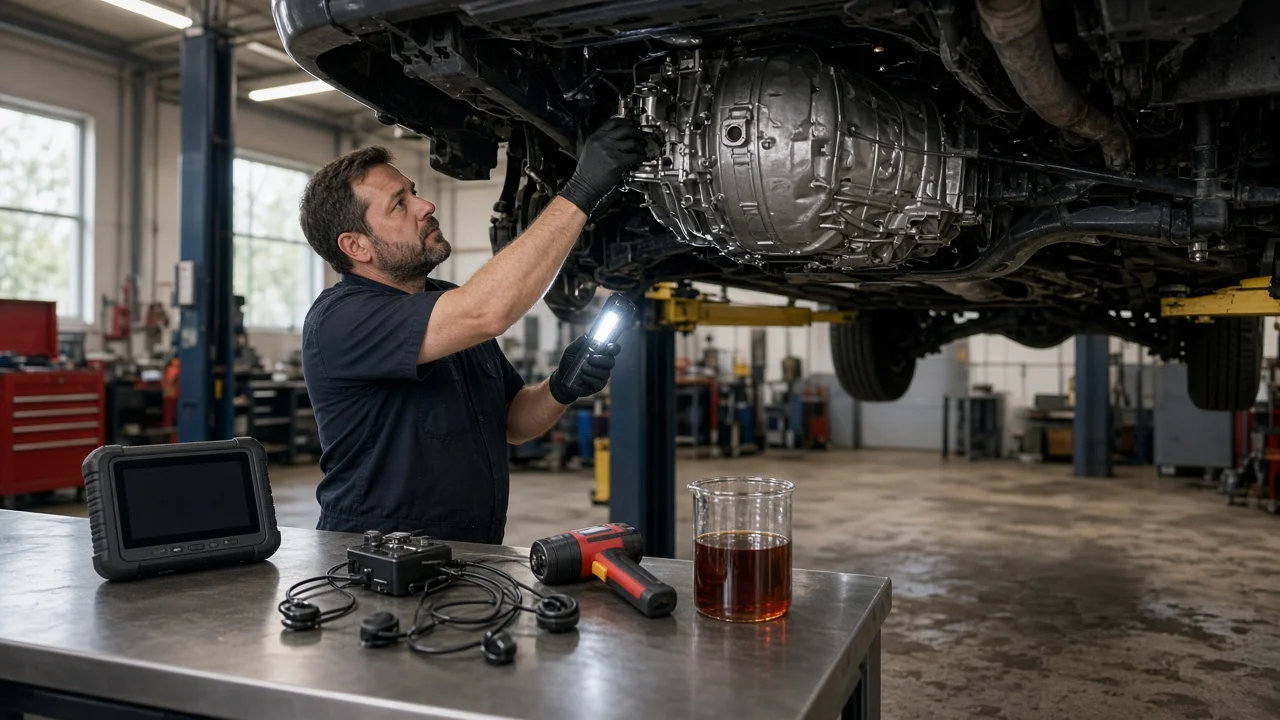
A shudder that feels like rolling over rumble strips at a steady cruise is a common complaint on Ford trucks, vans and SUVs with the 4R100 automatic. It often involves the torque converter clutch, but engine misfires, driveline faults and fluid problems can feel almost identical. This guide explains how to describe the symptom, weigh the likely causes and gather evidence before replacing any parts.
Establish the symptoms
Start by confirming the transmission type. The 4R100 is an electronically controlled four-speed automatic that replaced the E4OD in late-1990s to mid-2000s Ford heavy-duty applications, often behind the 7.3L Power Stroke diesel or gas V8 and V10 engines. The two units look similar, and parts, fluid specification and diagnostic details differ by year and configuration. The transmission code on the door-jamb certification label, the identification tag on the case or a dealer VIN lookup will confirm what you have.
Next, record exactly when the shudder happens. Torque converter clutch shudder usually appears at light, steady throttle once the converter locks, commonly in third or fourth gear at moderate road speeds, and it tends to be worse under a slight load such as a gentle grade or towing. Note the road speed, gear, throttle position, engine temperature and whether a trailer was attached. Also note what makes it go away: accelerating harder, lifting off the throttle or lightly touching the brake pedal. Record any associated signs, such as a check engine light, harsh or slipping shifts, a flare in engine speed or a burnt smell.
Finally, review the service history and recent changes. A fluid change with the wrong product, a recent transmission or converter replacement, new tires, a lift kit, driveshaft work or engine repairs can all change how the vehicle behaves. Knowing when the shudder first appeared relative to these events is one of the most useful pieces of information a technician can have.
Distinguish plausible causes
The converter clutch itself is the most frequent suspect. Its friction lining can wear or glaze, especially on trucks that tow heavily, and the clutch then grabs and slips rapidly instead of applying smoothly. Degraded or incorrect fluid produces a very similar feel because the clutch depends on the fluid's friction properties. Evidence that supports these causes: the shudder occurs only during lockup, stops when lockup is released, and the fluid is dark, smells burnt or is not the specified type. A clear improvement after a correct fluid service points toward fluid; no change makes worn clutch material more likely.
Hydraulic and electrical control of lockup is the second group. The PCM applies the converter clutch through a pulse-width modulated solenoid, and wear in valve body bores, a weak solenoid, wiring faults or low line pressure can cause an unstable, cycling apply. Diagnostic codes related to converter clutch circuit or performance, erratic slip readings on a scan tool, or shudder accompanied by other shift behavior problems lean this way rather than toward the converter alone.
Some causes are outside the transmission entirely. An engine misfire, including injector or combustion problems on the diesel, becomes noticeable under the load and low engine speed of lockup and is easily mistaken for converter shudder. Driveline problems such as worn universal joints, a failing center support bearing, an unbalanced driveshaft or incorrect driveline angles after a lift cause vibration tied to road speed. If the vibration persists with lockup released, or changes with speed rather than with engine load, these causes deserve attention first.
Checks in a useful order
Begin with safe observations any owner can make. Check the fluid level using the procedure in the owner's manual, typically with the engine running, the transmission at operating temperature and the vehicle level, and look at the fluid color and smell. Confirm the fluid specification for your model year from the manual or a dealer rather than assuming. On a safe, empty road, reproduce the shudder and then lightly press the brake pedal just enough to activate the brake switch without slowing much; on many Ford applications this releases converter lockup. If the shudder stops at that moment, lockup is strongly implicated.
The next step requires a scan tool. Read stored and pending diagnostic codes, including engine codes, since misfire or sensor faults affect lockup control. With a capable tool, watch commanded converter clutch duty cycle, engine speed, output speed or converter slip, and transmission temperature while the shudder occurs. A mismatch between command and actual slip, or slip that oscillates, is valuable evidence. On the diesel, a cylinder contribution or injector balance test helps rule out an engine source.
Some tests belong with a qualified transmission technician: line pressure testing against factory specifications, solenoid and circuit resistance checks, valve body inspection, and driveline angle and runout measurements. These need gauges, published specifications and experience interpreting results, and a few require removing components.
Interpret the findings
A shudder that disappears when lockup is released tells you the vibration happens during converter clutch apply, but not why. It is consistent with worn clutch material, poor fluid, control problems or even a misfire that only shows under lockup load. Likewise, a diagnostic code identifies a circuit or a performance condition the PCM detected, not a specific failed part; a performance code can result from fluid, hydraulic or mechanical causes.
Before buying a torque converter, the diagnosis should rule out the cheaper and more common contributors: correct fluid level and specification, absence of engine misfire, sound electrical circuits and normal line pressure. If a correct fluid service brings no improvement and pressure and electrical checks pass, converter clutch wear becomes the leading explanation. If pressure is unstable or valve body wear is found, replacing only the converter may not cure the shudder and a new converter could be damaged by the same control fault.
Urgency and next action
Shudder alone does not mean imminent failure, but it should not be ignored, because a slipping converter clutch generates heat that degrades fluid and can accelerate wear elsewhere. Stop driving and arrange inspection if you notice slipping or flaring between gears, loss of drive, a strong burnt smell, overheating warnings, fluid leaking under the vehicle or a flashing check engine light. Avoid towing until the cause is known. There is no reliable way to predict how many miles remain before a shudder becomes a larger problem.
When you contact a shop, bring the vehicle's year, engine, VIN and transmission code, the conditions that trigger the shudder, the brake-tap result, any diagnostic codes, the fluid type used most recently and the service history. Repair options range from a fluid service to solenoid or wiring repair, valve body work, converter replacement or a transmission overhaul, and the right choice depends on what the testing confirms rather than on the symptom alone.