4L80E Transmission Valve Body Identification
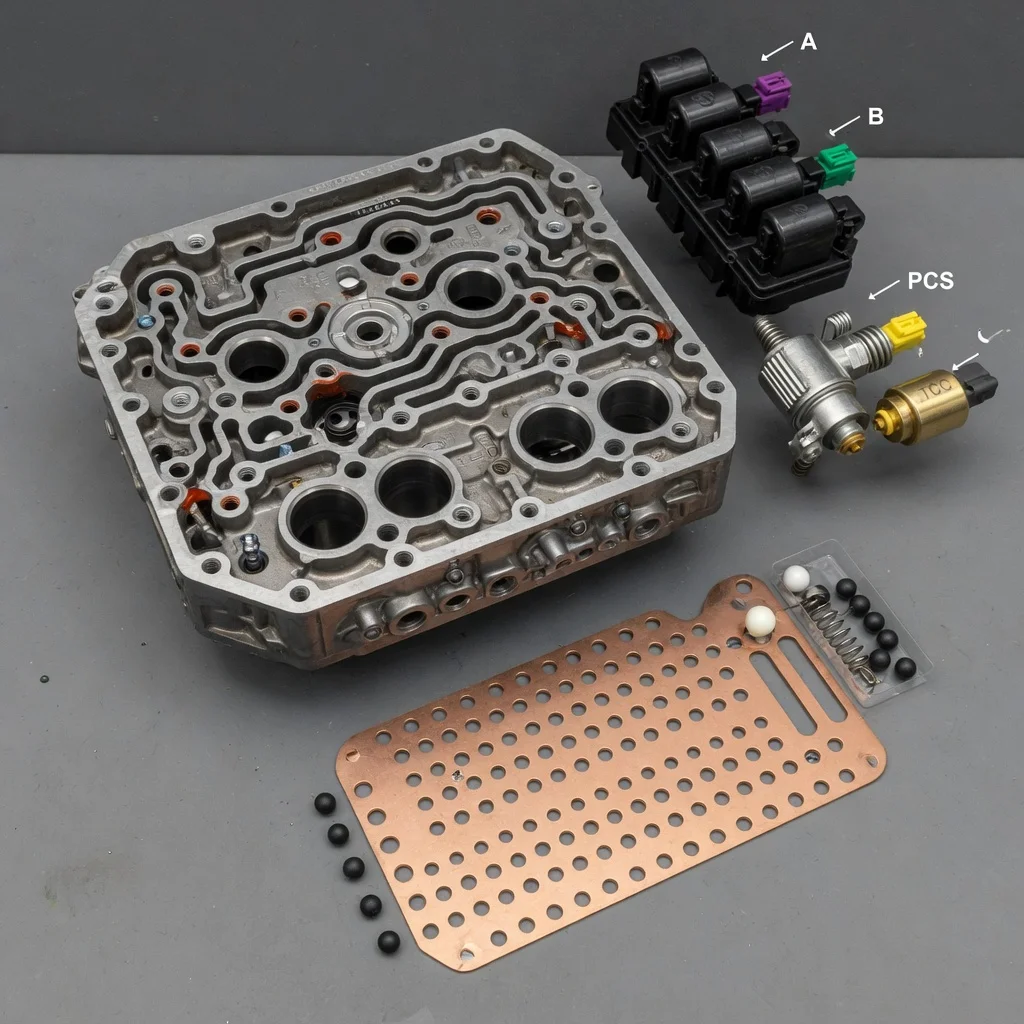
The valve body is the hydraulic control center of GM's heavy-duty 4L80E four-speed automatic. Identifying the right one matters before you order a replacement, swap one from another transmission or send yours out for reconditioning. Units from this family look alike, but solenoids, wiring, separator plates and calibration changed over the production run, so appearance alone is not enough. This guide covers how to identify the valve body you have, what it does, and how to avoid blaming it for a problem it did not cause.
How to identify a 4L80E valve body
Start by confirming the transmission type. A 4L80E is easy to confuse with the lighter-duty 4L60E or 4L65E, and its valve body will not fit either of them. Use the identification tag or stamped code on the transmission case, the vehicle's model year and its build information. If the transmission was swapped or rebuilt, the vehicle records may not match what is installed, and the case code is the more reliable starting point.
Once the transmission is confirmed, identify the valve body itself. Note the casting number on the valve body, the number stamped on the separator plate, the type and connector style of the solenoids, and the pressure switch assembly. Match these to the transmission's year range and application rather than to the outward shape of the part. Treat the valve body and separator plate as a matched pair: a correct valve body with the wrong plate can still cause poor shift behavior.
How the valve body works
The pump sends pressurized fluid to the valve body, which routes it through machined passages to the clutches and bands that produce each gear. The manual valve, moved by the shift lever, selects the basic range. Inside the valve body, spool valves, springs and check balls shape how quickly and firmly each apply circuit fills. The separator plate sits between the valve body and the case and uses calibrated holes to meter that flow.
Because the 4L80E is electronically controlled, the computer decides when shifts happen. It commands shift solenoids to select gears, a pressure control solenoid to set line pressure, and a torque converter clutch solenoid to lock and unlock the converter. A pressure switch assembly reports the hydraulic range back to the computer. If any of these parts, the wiring, or the computer's calibration do not match the valve body, the result can look like a hydraulic failure even when the casting is fine.
What changes the answer
Model year is the biggest factor. Earlier and later 4L80E units differ in torque converter clutch control, solenoid design, internal wiring and separator plate calibration, so a valve body that bolts in is not automatically correct. Older vehicles may also use an earlier diagnostic system that reports codes differently from later OBD-II vehicles, which affects how you confirm a fault.
The application matters too. The 4L80E was used in heavy-duty pickups, vans, SUVs, motorhome chassis and some non-GM vehicles, and heavier-duty derivatives such as the 4L85E exist. Fitment for one application does not prove fitment for another. Previous work also changes the picture: a rebuilt valve body, a shift kit or a modified separator plate may no longer match factory numbers. In engine and transmission swaps, the controller may be a standalone unit or a different computer, and its calibration has to suit the solenoids and hydraulics actually installed.
What the owner can do
Begin with information you can collect without removing anything. Record the case identification code, model year and any repair paperwork, since service history often reveals a previous rebuild, valve body replacement or shift kit. Scan for diagnostic codes with a tool that supports your vehicle. Codes pointing to a shift solenoid, the pressure control solenoid, the torque converter clutch circuit or the range switch narrow the search, but a solenoid code can come from wiring or the connector as easily as from the part itself.
Check fluid level and condition using the procedure in the owner's documentation, and confirm the fluid specification listed for your vehicle; the wrong fluid or level can mimic valve body faults. Write down shift behavior in specific terms: no upshift, harsh or delayed engagement, flare between gears, a missing gear, or a converter clutch that will not engage or release. Note whether the problem changes with temperature, which helps separate hydraulic issues from electrical ones.
If the pan comes off, look for metal debris or clutch material before anyone condemns the valve body, because internal wear points to a larger repair. Repair options typically range from replacing a solenoid or harness, to reconditioning the original valve body, to installing a remanufactured unit matched to your year and application, to a full transmission rebuild when clutches or other hard parts are damaged. Give any supplier the case code, casting and separator plate numbers so fitment is confirmed against your exact unit.
Limitations and next step
Identification numbers confirm which valve body you have, not whether it works. A symptom such as a harsh shift or slipping gear can come from the valve body, solenoids, wiring, the controller calibration, low pressure from the pump or worn clutches, and a code alone does not confirm a failed part. Sticking valves and worn bores usually need disassembly, cleaning and inspection, or pressure testing, to verify.
If the identification details do not match the vehicle records, the transmission has been modified, or diagnostics do not point clearly to one component, take your notes to a transmission specialist. A shop with pressure gauges, a capable scan tool and access to year-specific valve body and separator plate data can confirm the cause before you pay for a valve body that may not solve the problem.