4L80E Transmission Shift Solenoid Location
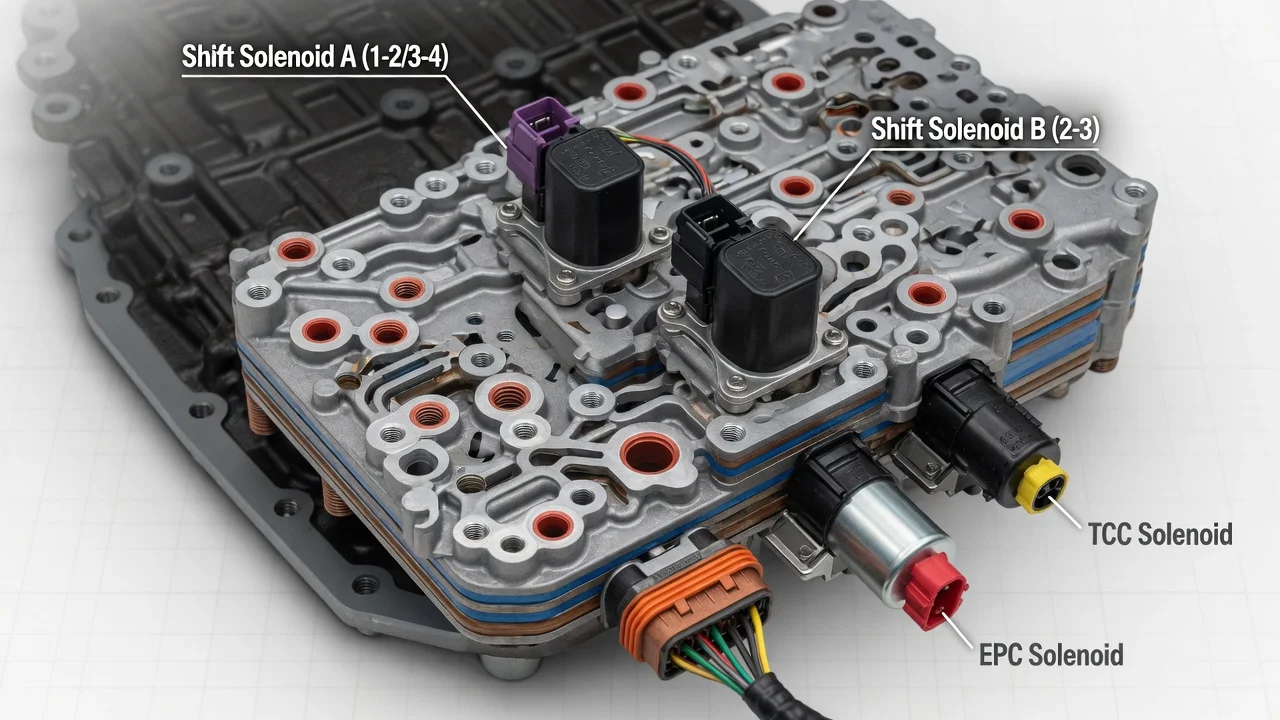
On the GM 4L80E, the shift solenoids are not on the outside of the case. They are mounted on the valve body inside the transmission, behind the oil pan, so reaching them means draining fluid and removing the pan and filter. Before you order parts or loosen bolts, confirm that your vehicle actually has a 4L80E and that the evidence points to a solenoid circuit rather than wiring, fluid condition or a hydraulic problem.
Where the 4L80E shift solenoids are located
The 4L80E uses two shift solenoids, usually called shift solenoid A (the 1-2 shift solenoid) and shift solenoid B (the 2-3 shift solenoid). Both attach to the valve body at the bottom of the transmission case. From under the vehicle, the valve body sits above the large pan on the underside of the transmission. With the pan off, the filter is still in the way and has to come out before you get a clear view of the valve body and its components.
The solenoids connect to an internal wiring harness. That harness runs to a single pass-through connector in the case wall, where the vehicle harness plugs in from outside. The valve body also carries other electrical parts, including the pressure control solenoid and the torque converter clutch solenoid. Trace the internal harness and identify each part before removing anything. Shift solenoids, pressure control and converter clutch components have different jobs and are not interchangeable.
How the shift solenoids control gear changes
The control module switches each shift solenoid on or off. Each combination of on and off states sends fluid to the shift valves in a particular pattern, and that selects first, second, third or fourth gear. A shift solenoid is an electrically operated fluid valve. It does not apply clutches directly; the shift valves and clutch packs downstream do that work. Line pressure is managed separately by the pressure control solenoid. This means a shift complaint can start in the solenoid, its wiring, the module's command, the valve it feeds or the clutches that follow.
Failure modes matter. An open or shorted solenoid circuit usually makes the module store a diagnostic code, and the module may put the transmission into a default or fail-safe operating mode that limits gear selection. Which gear you get depends on the fault and the calibration. A solenoid that sticks mechanically or leaks internally may set no code at all. It can show up only as a missed shift, a flare between gears or the wrong gear for the conditions, and those symptoms overlap with other hydraulic faults.
What changes the answer for your vehicle
Start by confirming the transmission type. The 4L80E was used in heavy-duty GM pickups and SUVs, full-size vans and several other applications from the early 1990s into the late 2000s. GM's regular production option code for it is MT1, which you can usually find on the service parts identification label. The related 4L85E is a heavier-duty version. The lighter-duty 4L60E and 4L65E can look similar from underneath, but their valve bodies, solenoids and service procedures differ. Parts or test values for one do not automatically apply to another.
Model year and control strategy also matter. Depending on the application, a separate transmission control module or the engine's powertrain control module may run the transmission. Vehicles built before the OBD-II era report codes differently from later trucks. Connector styles, internal harness versions and replacement part numbers changed over the production run, so check fitment against your exact vehicle. Service history matters too. A rebuilt or modified unit may have an aftermarket valve body, shift kit or replacement harness that does not match the original layout.
What the owner can do
Collect evidence before taking anything apart. Read stored and pending codes with a scan tool. On OBD-II vehicles, shift solenoid A circuit faults typically fall in the P0751 to P0753 range and shift solenoid B faults in the P0756 to P0758 range. Each code describes a circuit or performance condition; it does not prove the solenoid itself has failed. Write down the shift behavior: which upshift is missing or harsh, whether the problem appears cold or hot, and whether the truck starts in an unusual gear. Check fluid level and condition using the procedure for your vehicle. Confirm the fluid specification in the owner's manual or service information.
Inspect the outside first. Look at the harness connector at the case for loose fit, bent or corroded pins and fluid seeping into the connector. Follow the wiring along the transmission and frame for chafing or heat damage. Using the specifications in the service information, you can test solenoid circuits at the case connector before dropping the pan. If you do remove the pan, check the debris in it. Heavy clutch material or metal points to wear that a new solenoid will not fix. After any repair, fit a new filter and gasket, refill with the correct fluid, clear codes and road test the vehicle.
Repair options range from replacing one solenoid to replacing both, renewing the internal harness or the case connector seal, or servicing or replacing the valve body. Pick the option that matches the confirmed fault rather than replacing parts in hopes of a fix.
Limitations and next step
This overview cannot give the bolt torques, resistance values, connector pinouts or solenoid on-off tables for every 4L80E application, because they vary with year and calibration. Take them from factory service information for your vehicle. Get professional help if shifting is erratic with no stored codes, if the pan holds significant debris, if new solenoids did not cure the problem, or if line pressure testing is needed. A transmission specialist can compare commanded and actual gear on a scan tool, measure pressure and decide whether the fault is electrical, in the valve body or deeper inside the unit.