Choosing Transmission Cooler Lines for a 4L80E
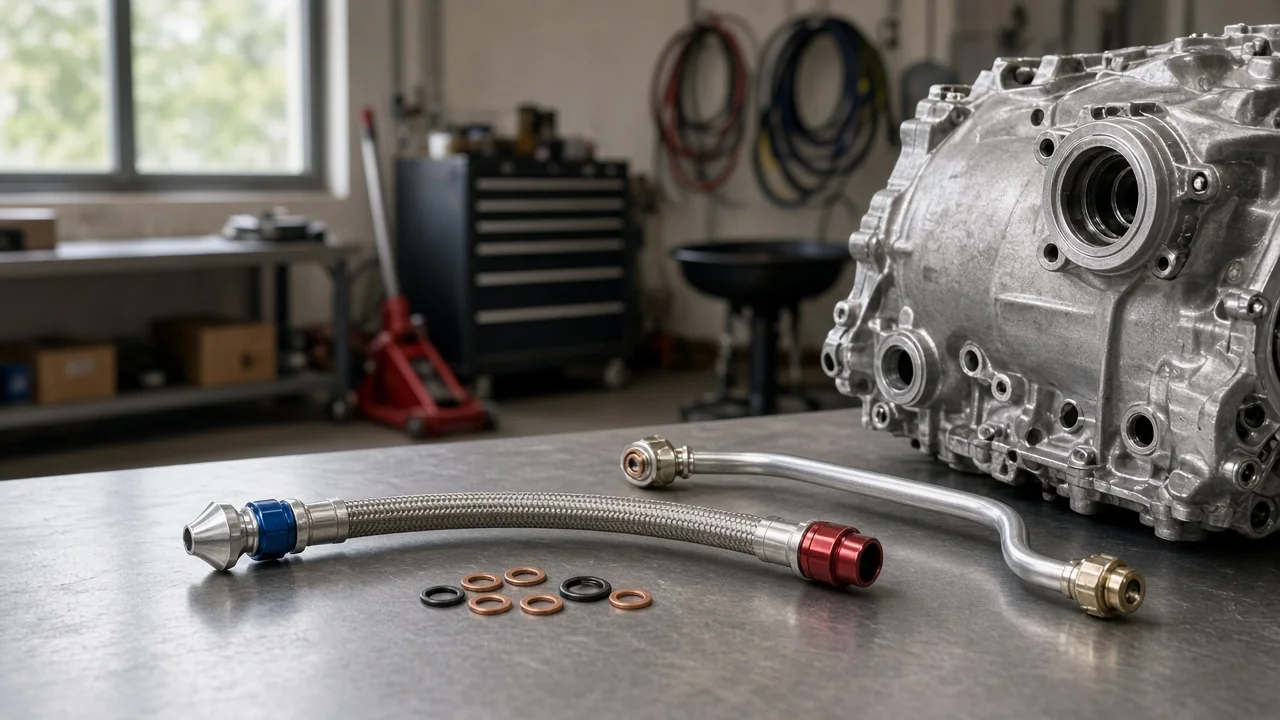
The 4L80E is a heavy-duty, electronically controlled four-speed automatic. The lines that carry its fluid to and from the cooler face heat, pressure surges, vibration and frame flex. You may be replacing a leaking factory line, rerouting for an auxiliary cooler or plumbing a swap. In each case, the right choice depends on your exact vehicle, how hard the truck works and which fittings your case and cooler actually use.
Define the job the product must do
Start by naming your situation, because each one points to a different product. Stock replacement: A stock truck or van with a seeping or corroded line needs a replacement that matches the original routing and connections. A direct-fit assembly is usually the least risky option. Heavy use: A truck that tows heavy loads, hauls a camper or works in hot climates may need lines that also feed a larger or additional external cooler. Swap or performance build: An engine and transmission swap into an older chassis often has no factory line to copy. In that case you will be building a system from hose, hard tube and adapters.
Before buying, confirm that the line is actually the problem. Wet fittings, drips at the radiator tank or fluid on the frame rail suggest a leak. The same fluid can also come from the pan gasket, the case connector or another component above the line. Overheating or harsh shift behavior has several possible causes: low fluid, a restricted cooler, worn internals or electrical faults. Stored diagnostic codes point to a circuit or condition, not a specific failed part. Check the fluid level and condition, review the service history, clean the area, and then trace the leak to its true source.
Check compatibility
Fitment begins with the transmission type and the vehicle. GM used the 4L80E across many years of heavy-duty trucks, vans and SUVs, and it appears in countless swaps. Line routing, length and connectors changed between platforms and model years. A line made for one model can be the wrong length or bend for another, even though the transmission is the same. Before comparing listings, have the year, model, engine, drive type and, where available, the transmission identification ready.
Next, identify both ends of each line. On the transmission side, confirm what fitting is installed in the case ports. Many factory installations use quick-connect style fittings, while swapped or rebuilt units may carry threaded adapters. On the cooler side, check whether the radiator tank or auxiliary cooler uses threaded fittings, quick connects or barbed ports. Measure the tube outside diameter rather than assuming it. A mismatch at either end is a common reason a part that fits the vehicle still cannot be connected.
Flow direction matters as well. One port sends fluid out to the cooler and the other returns it to the transmission. When rerouting or adding a cooler, confirm which port is which from service information. Then plumb an auxiliary cooler so fluid passes through it in the order intended for your setup. Avoid undersized adapters that reduce the line's inside diameter, since restriction cuts flow through the cooler circuit.
Features that affect the choice
Material is the main trade-off. Steel lines: Factory-style steel lines with formed bends hold their shape, resist abrasion and keep routing tidy. They can corrode at clamps and fittings, and a pre-bent replacement only works if its shape matches your chassis. Rubber hose: Hose rated specifically for transmission oil cooler service is flexible, inexpensive and easy to route. It ages with heat and needs proper clamps and support. Braided hose: Braided hose with threaded fittings is popular for swaps and custom coolers. It gives clean connections and abrasion resistance, but it costs more and needs the correct adapters. Many installations combine materials: steel along the frame, with flexible sections where the engine and transmission move relative to the chassis.
Look for concrete details instead of labels such as heavy duty or high performance. Useful information includes: • the hose's stated rating for transmission fluid and temperature; • its pressure rating; • the fitting type and thread; • the line material and coating; • the tube diameter; • the listed applications; • the included hardware; Fuel hose, heater hose and generic vacuum line are not substitutes. If a listing cannot tell you what the hose is rated for or what it connects to, treat that as missing information rather than a selling point.
Consider the fluid specification too. GM specified Dexron-family automatic transmission fluid for the 4L80E, and the current recommendation for your unit is in the owner's manual or service information. Quality cooler hoses are made to tolerate automatic transmission fluid. Still, confirm that every hose and seal you install is intended for it, especially on a rebuilt unit whose fill history is uncertain.
Limitations and ownership costs
Even a direct-fit line can take time to install. Older steel lines often seize at the fittings, and quick-connect retainers need the correct release tool or a new clip. Before starting, gather: • a drain pan; • line wrenches; • replacement clips or O-rings if the design uses them; • enough fluid to refill to the correct level; Route new lines away from exhaust heat, sharp edges and moving steering or suspension parts. Secure them with proper clamps, and leave slack where the powertrain moves. After installation, run the engine to check for leaks, then recheck the fluid level using the procedure for your vehicle.
New lines will not fix a worn torque converter, slipping clutches, an electrical fault or a clogged cooler. If the transmission failed internally, debris can remain in the cooler and lines. Flushing the cooler circuit or replacing the cooler is commonly recommended before a rebuilt or replacement unit goes in, and some rebuilders require it under their warranty terms. Lines also add no cooling capacity on their own; that comes from the cooler.
Ongoing cost is mostly inspection. At each fluid service, look over hoses and fittings for cracking, swelling, wet spots and rubbing marks. Check the clamps on new rubber hose after the first few heat cycles. In road-salt regions, pay extra attention to steel lines where they pass through clips and near the radiator. Replacing a weeping hose early costs far less than repairing a transmission that ran low.
Build a practical shortlist
Narrow your repair options with a checklist rather than a ranking. For each candidate, confirm that: • it matches your year, model, engine and drive type; • both ends connect to the fittings you actually have; • the tube or hose diameter matches or exceeds the original; • the hose is rated for transmission oil cooler use, with stated pressure and temperature ratings; • the length and bends suit your routing or auxiliary cooler location; • needed clips, clamps, adapters and seals are included or available separately
Then compare the practical factors. Check whether a direct-fit assembly exists for your truck and whether a mix of steel and flexible hose would be easier to install. Review return terms in case the shape does not match. Also decide whether to repair one damaged section or replace the full set. For a stock vehicle, an exact-fit line set is usually the simplest path. For a swap or a towing setup with an added cooler, a well-documented hose and fitting kit gives more flexibility. Whichever you choose, verify every connection before the truck goes back to work.